Anime/Manga Month Cheat Sheet

(Scroll down for new terms from the 7/16/2014 post!)

These are some commonly used terms when discussing anime and manga. Note that not all of these are Japanese words, for Japanese, just like English, is a language all too happy to straight up steal words from other languages and give them new meanings. Let confusion abound.

Anime – This is one of those stolen words. It comes from French and it means animation. Oddly enough it’s used in a straightforward fashion – it refers to any kind of animated story, much like we’d use the term “cartoons” except that it never refers to pictures that don’t move only ones that do.

Dono (see also Honorifics) – Not used much in modern times, this was the term you would use when referring to the person who was your direct superior in the feudal structure. If it is used in modern times it is often done in a joking fashion.

Honorifics – American culture is, by world standards, fairly informal. But by Japanese standards we’re downright hicks. The Japanese language uses a set of honorifics to define relationships and I’ve included a few of the more important ones here. These titles would usually be used after a person’s name almost like a suffix. Thus if I was your writing teach I would be Chen-sensei. These honorifics serve to set some social ground rules between people and generally say a lot about the structure of a group, plus they’re considered polite. Most Americans will get this. What they might not realize is that not using any honorific at all is considered either A) a sign the speaker knows the person he’s addressing very intimately or B) the speaker intends to be very rude. Something to keep in mind should you ever visit Japan.

Manga – This is a very broad term in Japan that refers to pretty much anything that’s been drawn. But for our purposes it covers the things American audiences would refer to as comic books, comic strips and graphic novels. The two are very similar but manga tends to be more image focused where American comics are very dialog heavy. The differences are very stark if you take, say, a page from DCs New 52 and place it next to a page from Shounen Jump…

San (see also Honorifics) – This is the catch-all, general purpose, polite honorific you use if you and the person you’re talking to are equals or your relationship is as-of-yet ill defined. The rough equivalent of Mr. or Mrs. in English.

Sama (see also Honorifics) – This term refers to someone more important than you. Your boss, the mayor, the Prime Minister, it can be pretty broad and how important the other person has to be before the speaker uses it varies, assuming it gets used at all.

Shoujo – This word basically means “young girl” and means a girl between the ages of 12 and 16, dealing with the new complexities of interpersonal relationships that define that age. It’s also a genre of entertainment. Shojo entertainment tends to focus on… well, romance. But also the societal pressures girls face in what Americans would view as highly regimented school systems play a major role. Gossip, appearance, grades and the like are very, very common themes.

Shounen – This word basically means “young boy” and refers to a man on the cusp of adulthood, somewhere between 12 and 16 years old. Anime and manga called “shounen” are just what you’d think – aimed at boys in that demographic.However shounen also tends to be the best selling and most popular genre in Japan, so this may be a bit of a misnomer. Shounen Jump, the most popular shounen publication in Japan, has the motto “hard work, friendship, victory” and that may be the best summation of the genre there is.

As the month goes on I will come back and add to this page as needed. Of course, I don’t expect you to read this straight through, although some of you might be doing just that right now, but rather look up the correct entry whenever you encounter something you don’t understand in the course of one of this month’s posts. So be aware that the contents of this post will be changing over time.

7/16/2014 Update

Bakumatsu – A roughly three year time period from 1866 to 1868 when the Japanese Shogunate was overthrown and the Emperor restored to actual leadership of Japan. While it’s sometimes compared to the American Civil War the only real similarity is the time period and that a formerly unified nation divided into factions that fought with each other before being forced back together in a sometimes uneasy peace. In truth it might be closer to the American Revolution, as it overthrew one kind of government and instituted another… but in all truth comparing the history of one nation to another is kind of futile. The Bakumatsu was a civil war that changed the government of Japan and ushered in the Meiji era. It is one of the most often romanticized periods of Japanese history. ‘Nuff said.

Ishin Shishi – The faction of the Bakumatsu set on overthrowing the Shogun and restoring the Imperial form of government. The ultimate victors of that conflict and, oddly enough, often cast as villains in stories set during that era.

Katana – This is the Japanese equivalent of the long sword. The blade has a slight curve to it, so that the force of impact is focused in a smaller area than it would be with a straight blade, and it is forged and tempered in such a way as to withstand incredible impacts without breaking. The weapon is sharp on only one side. The Japanese consider them works of art and those forged by Japanese smiths in the isles of Japan are actually national treasures that cannot be exported legally. There’s a lot of other technical stuff but basically all you need to know is they’re pretty and deadly.

Meiji Restoration – A period of Japanese history stretching from the late 1860s to the early 1910s. The samurai and other deposed ruling classes were still around and both causing and solving problems but, on the whole, the imperial government, along with growing militancy and modernization that would characterize the nation until the end of the Second World War, were the driving forces of the times. While the Bakumatsu wasn’t really anything like the American Civil War there are a lot of similarities between Meiji and the American West, particularly in how they are romanticized.

Rurouni – A samurai with no master and no place to call home. Samurai were the backbone of the Shogun’s feudal system and, with that system overthrown, all samurai were essentially homeless. To carry the analogy between Meiji and the Old West one step further, rurouni would be the Virginians of the era, part of a dying breed who still held just enough power in the minds of the people to have an impact one last time.

Sakabato – Roughly “a reversed blade” a sakabato is a katana with the cutting edge and the blunt edge reversed so that striking with it in the normal fashion hurts like the dickens but won’t kill you (much). In theory, this allows a trained swordfighter to enjoy the balance and heft of his normal weapon without running the risk of randomly chopping someone’s head off. He can just leave them crippled for life or something.

Shinsengumi – Literally “newly chosen group” these people were the elite of the Shogun’s defenders, a special police force pulled up to defend Kyoto (then the capitol of the nation) against Ishin Shishi activities. Historically they were about as nice as you’d expect hardline police to be during wartime but they were exceptionally good fighters and popular culture has romanticized them a lot. In fact, if there’s an elite fighting group in a Japanese work of fiction there’s a 50/50 chance both it’s structure and leadership are modeled on the Shinsengumi.

Keeping Sharp

Shannon Harrison was one of the most terrifying people Ashton had ever met.

As someone who had spent months in the Australian Outback, fought in the biggest weaver’s war the continent have ever seen and eventually been sworn into the Order of the Round Table before being sent to North America to endure his Trial, being scared at all took some doing. You wouldn’t think a fiftysomething housewife would be on anyone’s list of scary things, particularly when they answered the door with a half-finished blanket for grandchild number two slung over one shoulder wearing a short sleeved blouse and battered jeans that had seen better days. But, although he had not practiced the art as long some, Ashton could still see deeper than most.

He did not, for example, miss the fact that the entire building seemed to loom over him as if it was ready to topple onto and crush anyone who displeased its lady. Nor was he oblivious to the way Shannon was at the center of the house, at least in the pattern of things if not the physical center of the building, with everything that was there, everything that happened there, sooner or later tying back to her. As she stood in the doorway looking him over he understood how the knights of old could have so readily admired and served women who they had no romantic interests in at all.

They just wanted to stay out of trouble.

That and they recognized a kind of power they would probably never really understand fully. Ashton cleared his throat nervously. “Good morning, ma’am. I’m Ashton ap Percival. I’m here to see Janus?”

“Oh, you’re the grail knight?” She smiled and the whole building seemed to relax. “Come in. I’m not sure where he is at the moment but I’ll see if we can’t dig him up.”

Ashton quickly hurried through the door, not wanting to see how the house would react if he didn’t obey. He knew the Harrisons descended from a long, long line of Templars, weavers who had a special understanding of the power of place. Many people thought Templars settled in places of power but one thing he’d learned in the last few months was that it was the other way around. Templars found a place they thought was important and, in a very short time, made it powerful. He’d been to several of their meeting places – he’d even been to this house once before – but he’d never really appreciated just how much power Templars packed into their strongholds.

“You can wait there in the kitchen if you want,” Shannon said, waving through the door on the right of the entry hall. “I think he’s in the new addition. I’ll just pop through and check. Help yourself to something from the fridge if you’re hungry.”

He nodded and cautiously let himself into the kitchen. It was a big room with a small island in the center and a heavy wooden table at one end opposite the usual cupboards, counters and appliances at the other. The table in particular drew his attention for a minute. It was battered and worn, but so tightly woven into the house around it that it seemed like you could drop a nuke on the city of Fort Wayne and still find this table here afterwards, waiting for the family to sit down to dinner.

It was creepy.

The more Ashton looked around the more he saw the patterns of family life ingrained into the world around him. For someone who had pretty much grown up alone in a fifth story apartment with a family that was more like occasional roommates it was a little disconcerting. He didn’t feel unwelcome… but he wasn’t quite sure what he was being welcomed into.

“Hi, Ashton. Did Gary send you in for something?”

He snapped out of his reverie as Angie Harrison, the family’s only daughter, came into the kitchen with an empty cup in one hand and headed towards the sink. Ashton smiled reflexively, Angie’s three older brothers had made it quite clear that he was to Be Polite, or else. “Hello, ma’am. I’m sorry, Gary…?”

It took a second for it to click. Janus was a title, referring to the marshal or field commander of the local Templar order.  Gerald Harrison, or Gary to most people who knew him outside of weaver circles, was the person Ashton was there to see currently held the position. “No, actually he didn’t,” Ashton said after he worked out the question. “I just got here, in fact. Your mother thought he was in one of the additions.”

The Harrison house was over two hundred years old and, while Janus had once recited every addition and renovation in chronological order, Ashton had never made it a point to try and learn them. Knights of the Round who followed Percival we’re, by nature, knights errant, not knights who stayed in place.

Angie finished pouring herself a glass off orange juice and held up the container with a meaningful shake, raising an eyebrow. Ashton shook his head, declining the offer, and she put the juice away, saying, “Well I’ll take you out there, then. Just a sec.”

She let the fridge door swing closed behind her as she went to the doorway he’d entered through and yelled, “Mom, I’m taking Ashton out to Gary in the barn!”

A moment’s pause then Shannon’s voice drifted back from the other side of the house. “Thanks, honey. Come right back.”

The kitchen let out into the house’s massive garage, which was so close to being a barn on it’s own that Ashton wondered why the family might need another one. It was two stories and held a beat up pickup, an full size van and a four door sedan on top of a very serviceable looking tractor. With four people living in the house, and the house sitting on the grounds of a working apple orchard, he supposed they might really need all that space.

What he wasn’t sure they needed was the complex, many layered tapestries that ensured, among other things, that the vehicles would come back safe and sound every time they left. For one thing, if something ever did happen to one of those cars the resulting shift in the metaphysical threads surrounding the household could tear it apart. On the other hand, he hadn’t seen anything around the Harrison household that said “half measures” so maybe the setup shouldn’t surprise him.

Angie didn’t seem uncomfortable around all the heavy defensive weavings, stepping through the intangible web of protections without a second glance and leaving Ashton doing his best to keep up. He did have enough time to notice that the house didn’t defer to Angie the same way it did for her mother. Maybe just because she hadn’t lived there as long, maybe because it only had enough room for one lady of the manor. He wasn’t sure.

It wasn’t until they were out of the garage and crossing the stick infested expanse of crab grass that doubled as a lawn and a shrine to the orchard’s planter than he noticed Angie was watching him almost as closely. “Is something off?”

“I was just thinking you don’t move like any of the other Templars I know, that’s all,” she said with a shrug. “Dad mentioned there was a new guy in the order and I’ve seen you with Gary around Timeslip once or twice so I figured it was you.”

“Well, you’re not exactly wrong. Ashton, son of Percival, Order of the Round Table at your service.” He stopped long enough to sketch a formal bow.

Angie laughed and said, “Angela Harrison, hedge weaver. No need for formalities on my account.”

“Hedge weaver? You’re not affiliated with an Order?” Ashton took a closer look at the girl as she led him up a low hill towards the barn. Plenty of people didn’t like the more structured approaches to teaching, studying and regulating magic weaving that the Orders advocated and the Arbiter’s Councils legitimized, but most of them were long term outsiders. The Harrisons had been around Fort Wayne long enough there was a formal term for their patriarch – Third of the Five.

“Even the Five Families have their black sheep,” Angie said, apparently guessing what he’d been thinking. “If I did put in the time to make the physical baselines and weaver theory I still wouldn’t want to join the Templars. Staying in one place all my life just doesn’t appeal. And the rest of the local Orders don’t really feel like the right fit either.”

“There’s no rule saying you must stay in a given Order all your life, you know.” Ashton gave an depreciating smile. “You don’t think I started with the Round Table, do you?”

Angie’s answering smile was all mischief. “No, not if you’re a Percy. Percival was a grail knight, a knight errant, and people who wind up under his banner never sit still for long. They wouldn’t be true to his spirit if they did.”

“You find something funny about that?”

She shrugged. “Not really, but it does explain the Australian accent. You’re a long way from home, Ashton. What brings you to an apple farm in northern Indiana?”

“One of the best war weavers in the state asked me to drop by.” He paused with one hand on the door the barn. “Are you coming?”

Angie had already started back towards the house but she called over her shoulder, “My guess is this is strictly Templar stuff. Good luck!”

“Good luck?” Ashton shook his head, not sure what to make of that, and pulled the door open.

The Pattern of the Weave is always shifting subtly. Things are always changing and the Weave reflects reality in real time – or perhaps it is the other way around. Weavers study the pattern in its broad nature, its subtle variations and the many impacts humanity has on it. In short, weavers are simply people more attuned to the connections between things than is normal. And when patterns of those connections change, whether from natural causes or deliberate interference, weavers are the first to notice.

As Ashton pulled the door open he caught the barest tremors in the Weave that signaled such a change in the offing. That could have meant anything but, with all the heavy defenses around the Harrison house and a certain level of natural skittishness mixed in, it was enough to have him on high alert.

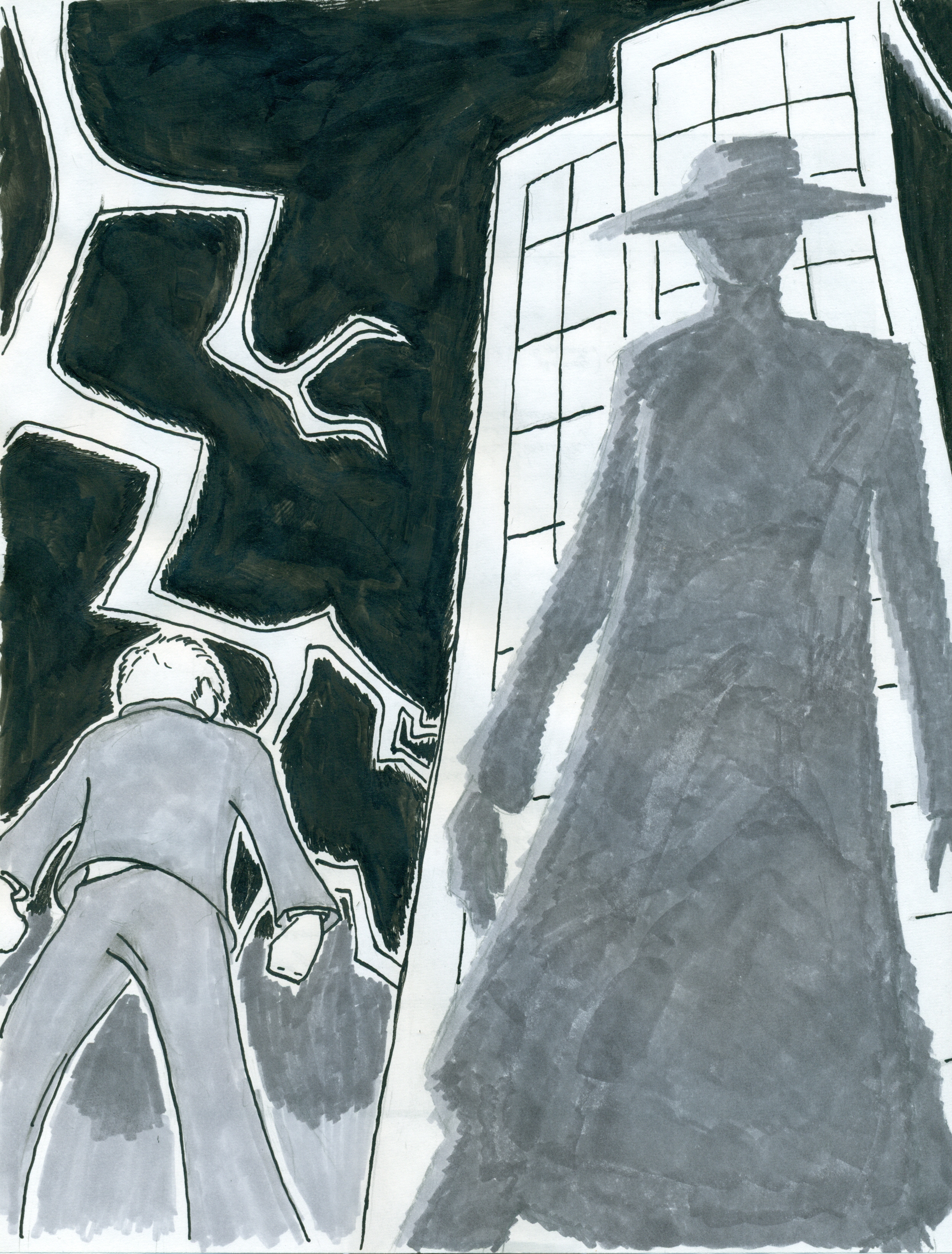
So when the man with the broadsword popped into existence two steps in front of him Ashton didn’t just duck out of the way, he reacted fast enough to get inside the swing and try to throw the other man to the ground.

He might as well have tried to uproot Ayers Rock. His assailant was more than just heavy, he was somehow rooted to the very fabric of the building and moving him against his will was going to be hard. Before Ashton could come up with a change in tactics his assailant drove a knee into his side.

Rolling with the hit, Ashton took a quick stock of his surroundings. He was just barely inside the barn door, in a room totally devoid of any of the boxes, tools, bales of hay or other farming junk you might expect. The ground was dirt, the walls were wooden and the glint of metal came from the wall to his left. Naturally, that was on the other side of broadsword guy.

Also missing were the complex networks of Templar defenses that made the rest of the property look so dangerous. Ashton had just enough time to smile before the ground brought him to an abrupt stop.

Teleporting wasn’t hard, just messy. All a weaver really had to do was find something connected to where they wanted to go and keep pulling until they had a hold of their destination, then let go of what kept them at their starting place. The Weave, which all that pulling would bend all out of shape, would quickly snap back to its original shape dragging the weaver along with it. The letting go was the hardest part and really all that kept normal people from doing it. The problem for most weavers was all the random stuff that wound up tangled around them in the process. That kind of mess could tie you up entirely, keep you from weaving any magic at all for a long time.

But in a clean environment like the barn Ashton had no trouble yanking himself across the room. Even when his assailant tried to stop him with a hastily woven net stretched between the ground and the rafters Ashton made it past with only a few stray threads wrapped around one arm. He found himself beside a long wall holding a half a dozen heavy swords just like the one his opponent was using. Each was about two feet long and a good six inches wide with no sissy weight reducing gutter running down the middle. One side of each blade had the brilliant gleam of silver, the other the dull matte black of cold iron.

They were stupidly heavy, incredibly sharp and only mildly magical. Also, much heavier than Ashton would have preferred, but any port in a storm. Whatever had been woven into the sword it didn’t look like it would be dangerous if a stranger tried to use the thing so Ashton snatched up the nearest and immediately whipped around to parry an incoming attack whistling down towards his left shoulder.

He countered with a waist high cross cut which drove his attacker back a step, letting Ashton get away from the barn wall for a bit more maneuvering room. He settled into a two handed stance, wishing he could swing the blade one handed like his opponent did, and said, “I hate to point this out but you invited me here, Janus. I wasn’t expecting to get jumped in the doorway.”

Janus, who had the advantages of two years of age, more in experience, at least ten pounds of muscle and an inch of reach, gave a cocky smile. “What does the title mean?”

Ashton groaned. “Roman god of doorways. So of course you attack me at the door.”

“See? I knew you’d work it out.” Janus casually waved the point of his sword at the door. “It was as good an ambush point as any. And, in case you’re wondering, yes this is how the Templars greet guests. At least, so long as those guests are interested in sharing field work with us. We do cross-training with the Hospitallers on a regular basis as well.”

“Oh? So this is just a bit of sparring, is it?” Ashton grinned wickedly. “My good luck then.”

Janus gave a curious tilt of his head. “How’s that?”

“You see, mate, this is the one place I’ve been comfortable since I got here today.”

Ashton immediately stepped in to press the combat again. And just like that, he was back at home.

Fiction Index

Introductions Are in Order

Do you remember the first time you saw Captain Jack Sparrow? Of course you do. It looked just like this:

Before this you knew nothing about Jack. He’s not foreshadowed at any point in the film until this moment. But within a few seconds you understand the basics. He’s a pirate, he’s a little out of it and he possesses incredible poise and chutzpah. Just look at the way he steps off that crow’s nest and onto the docks. Odds are that’s exactly the first thing you think about when you think about Jack Sparrow.

And that is the power of the introduction.

Or, as you’ve probably heard ad nauseum, first impressions matter. How your audience meets your characters is a vital part of how their experience with your story will be shaped. A good introduction needs to tell, in a nutshell, who your character is, set the tone he brings to the story and signal his importance to what is going on.

So go back and watch that introduction again. What does it tell you about Jack?

Well, he may be a pirate but he has a solid, even handed understanding of what that lifestyle implies. He even has a kind of respect for those who have lived it to the natural conclusion. And he tends to be a big picture kind of guy – looks up and out instead of down and around, or he might have noticed his boat was flooding sooner. Oh, and the man has swagger. No getting around that. It’s a testimony to Johnny Depp’s skills at characterization that he lets us know all this without saying anything at all.

There, in sixty seconds of cinema, is a character in a nutshell. Purpose, a way of thinking with attendant weaknesses, defining personality trait. Don’t brush off all the thought that went into setting all that up – I’m not reading too much into things. This kind of characterization is the best of the best and ever aspect of it is planned like a villain orchestrating global takeover. You or I might never reach this level of skill, because it’s very hard and requires both talent and dedication to reach, but the first step is acknowledging it exists.

So find the very essence of your character and try and show it in just a paragraph or two and you’ll be on your way to a good start. Usually it’s best to show the character in his natural environment, as we see with Jack, but sometimes showing them out of their element is more effective. Really, the particulars of where and when we first meet a character should be chosen to best cast the character in the audience’s mind. More on this later.

The second thing you want from an introduction is tone. Jack Sparrow is the soul of Pirates of the Caribbean. His light hearted, irreverent and cocky attitude permeates the movie and, no matter what the mood is before he appears, as soon as we see him swaying his way onto the screen we find ourselves smiling. In part because this was the man who stepped directly from sinking ship to dockside without even a backwards glance.

Every character, even your main character, brings a certain tone to the scenes they are in, whether it be tension, fun, unease or calm. Now central characters are certainly multidimensional but even they manage to hit all the notes they need to in a tone that is unique to them. The tone you set in their introduction is the tone your audience will expect.

Finally, introduce your character in a way that fits their importance to the story. Not every character needs a huge introduction that hints at the strengths, weaknesses and hidden depths of the character. If you plan to expand them in a later story that’s fine – do it then. Sure, keep their introduction and all the rest of their screen time in step with your plans for the future but don’t turn a side character into a red herring.

Interestingly enough, Jack Sparrow is an example of what can happen if you aren’t careful with a character’s introduction and development. He wasn’t originally planned as a leading character but as a supporting character to Will and Elizabeth. Depp took the role with both hands and ran with it, resulting in the movie we have. That may not have been a bad thing but the point remains – Jack became a central character because he demanded it. If you have someone who shows up demanding a bigger role and you don’t give it to him change the way he shows up or your audience will be very confused.

Making your characters real in the minds of your audience is a very difficult task and it begins when a new character is introduced. So give them the best introduction you can.

——–

Now for an announcement! The first of my summer vacations starts this weekend. This is the longer of the two and I won’t have any time for writing this week so I’m not going to post anything either. Sorry.

But I’ll be back on July 7th with a new set of stories and a month-long feature on Wednesdays to boot! It’ll be worth it to come and check it out. See you then.

Cool Things: Child of Light

It’s time for the rare video game review! Child of Light is a 2D Adventure RPG developed by Ubisoft Montreal that is notable for three things – it’s sense of whimsy, it’s beautiful presentation and a new twist on old game elements. Some people are going to call this game retro. I’m going to say they’re wrong. This game is, in fact, classic.

There’s a trend towards “realistic” or “mature” games among so-called hard core gamers these days. Usually what this means is an emphasis on first person or close third person viewpoint with a heavy dose of carnage and very little attempt at a higher ideals. Most modern games are, in fact, low fantasies with different varieties of window dressing and little attempt at creative gameplay. Child of Light is a refreshing change from all of these things.

As the name implies, the game approaches its story in a very childish fashion. The whole game is hand drawn and painted in watercolors, the character’s speech (with one exception) and the game narration are set in rhyme and meter and the story feels like it has been ripped straight from the pages of the Brothers Grimm. Aurora is the daughter of an Austrian Duke who’s mother is dead and who’s father has married again giving her, you guessed it, an evil stepmother.

When Aurora catches a cold one evening she winds up At the Back of the North Wind and finds herself in Lemuria, a land with talking mice and a race of people that have angler fish style lights sprouting from their foreheads. Once there she is issued fairy wings and a broadsword as long as she is tall and instructed to find her way home and set things aright.

Interestingly enough, I cannot think of a single video game I’ve played that has so blatantly stolen so many fairytale elements and woven them together and that’s a shame, because Child of Light does a good job juggling all the disparate threads and weaving them into a solid whole. I don’t know if the writers were inspired by George MacDonald but it sure feels like it. At the same time this is not every fairytale you’ve ever read, Child of Light stands on it’s own merits yet still does its source material justice.

What really makes things work is the game’s artwork. Layer on upon layer of beautiful watercolors and carefully measured water and cloud effects give Lemuria a feel of beauty and wonder. It seems totally natural that this is the kind of place where statues come to life, talking mice live on the back of a mountain man (no, not a lumberjack or trapper, he’s a huge man made of stone and the mice are human sized) and you can be asked to catch a wayward flying pig for a village lady.

The game could have stopped there but it also has a beautiful classical soundtrack and, while only the narration is voiced, the voice work is very good. It’s the kind of game you want to spend most of your time wandering around in, and possibly, occasionally, moving towards what is, in theory, your goal.

That brings me to the third aspect I love about this game, namely the unusual gameplay. Most video games that use flight as a mechanic use it either as the focus of the game, complete with complicated controls and often frustrating tests of skill, or just use it as a way to handwave getting from point A to point B most of the time. But Aurora can fly across all maps for most of the game.

This turns what could have been a rehash of most platforming games into something a little more interesting. Yes, Valkyrie Profile did this and it was interesting. And I originally thought adding an element of flight would make the overworld of the game less interesting by making the map more accessible. To my surprise, Ubisoft manages to keep things interesting by adding hazards, flying enemies, and violent winds to keep getting around just difficult enough to pose a challenge without being obnoxiously difficult. Add in all the interesting tricks you can do with your firefly familiar and exploring is rewarding enough that you’ll want to just poke around the map some and take in the sights from time to time.

Of course, when you’re not there are dark creatures out there that need dealing with. Yes, it’s a delightful fairytale flavored game. If you know your Brothers Grimm, though, you know the origin of the word “grim” and that fairytales are not all sugar and light. But on a more fundamental level, the potential for harm befalling your characters is one of the ways you, the player, are inspired to take care of them and get connected with them. As such, it’s hard to cut it out of games with a storyline.

(If the subject of violence in video games interests you David Baumgart of Gaslamp Games has written an interesting and thoughtful meditation on the subject which expands on this idea more than there’s room for here. Tags and comments on that post are not guaranteed to be interesting or thoughtful.)

Much like Aurora’s quest itself, fighting in the game is more about timing and disruption than outright contests of power. While the “active battle” system has existed in RPGs since the early days of the Final Fantasy franchise Child of Light tweaks it so that, in addition to having to wait between each character’s action, you must also wait a brief time between choosing what action you take and when that action occurs. In that short period of time enemies can take actions that interrupt you and, by the same token, you can interrupt enemies while they are preparing their own actions. Winning is often as much about orchestrating a clever series of disruptive moves as it is raw number crunching or twitchy reflexes. All in all, a nice change from most games produced of late.

So. If you like story driven games with a strong sense of whimsy and don’t mind reading in rhyme for a while, check out Child of Light. It’s both fulfilling and fun, something very few games can claim.

Motivation

Johnny Cochran dropped his magcycle down the far side of the massive tube, the gripping the handlebars has as it bobbed and dipped. The main launching tube of the mass driver threw off erratic magnetic fields as it warmed up and prepared for its next launch which made using maglev vehicles nearby difficult at best and downright dangerous at worst. Every couple of years some idiot thrillseeker misjudged the fields or his vehicle’s ability to compensate for them, or worse didn’t shy away from the tube before it launched and the sudden magnetic spike threw his ride like it was a toy. Regardless of what happened it ended with a dead magrider in the streets of Kalteisen and a brief period of tighter security around the mass driver that made it harder for all the other magriders to make good time.

Of course, the ones who didn’t meet that fate were the smart ones, and Johnny prided himself on being one of the smartest. There wasn’t a thing they could do with spaceport security that he couldn’t deal with. And like all the smartest magriders in Kalteisen, he knew the fastest way across the city was to run along, above or below the section of the Cochran Mass Driver that cut through the northern half of the spaceport. It was dangerous, sure, but it also cut almost twenty seconds off the time it took you to make the east/west run from Gaffer’s Rock to Canal Street. No one raced seriously without hopping the CMD Superhighway.

Besides, the mass driver was a Cochran and they stuck by their own.

But today it did seem to be playing favorites. He was having a hard time keeping the maglev output on his cycle optimized, not an easy task in any situation and made doubly hard by the facts that one, he was running alongside a gigantic electromagnet and two, the area surrounding the mass driver wasn’t intended as an access route. Keeping an eye on the shifting magnetic fields was hard enough without having to dodge support struts, antenna broadcasting keep-away warnings to autonav programs – helpfully disabled on his own magcycle – or the random junk that seemed to accumulate in any out of the way place in a major city on any planet.

Yet even though Johnny struggled he could see his cousin Pat a few hundred feet ahead bobbing along at top speed, threading his way through obstacles along the path of least resistance so fast you’d think he’d never even heard of wind resistance. Sure, he was two years older and he was in the military but that didn’t exactly lend itself to getting lots of practice magcycling. The Space Forces did make extensive use of magnetic drives but Patrick was in the Biocomputing Corps.

A little voice in the back of his mind pointed out that the ability to think twenty eight  times as fast as the normal human might have something to do with Pat’s performance but Johnny did his best to ignore it. He’d always been the better driver ever since he was old enough to be trusted with a cycle of his own. No way he was loosing just because Pat had some new hardware in his skull.

The Mass Driver fired every twenty minutes, barring maintenance or technical problems. Trying to keep a magnetically driven vehicle on course while the Mass Driver was engaged was suicide, it was big enough to throw fifty kiloton containers from ground to orbit after all. That was quite a feat, even with the nothing but relatively low Martian gravity and thin atmosphere to deal with, and it required a huge amount of power to make it work. Piggybacking on all that electricity as it primed the launcher was part of what gave magcycles the speed that made it an effective short cut.

Unified Field Theory said that the closer two magnets were, the stronger their attracting or repelling power. And on top of the mass driver was not the closest point to its magnetic drivers. If you drew a square through the circular tube so that each corner touched the circle of the tube, the magnets would be at each corner of the tube. There was enough junk sticking out of or scattered around the mass driver that  you couldn’t get close any of those lines of magnets, though.

Not until the last two miles of it, that is.

Johnny spotted the support strut he had been looking for coming up fast and dropped his magcycle off the top of the mass driver’s length, the autonav system running in his helmet heads up display – but not connected to his bike! – protesting as he momentarily strayed away from the strongest magnetic fields in the area. Then he fired the emergency compressed air thrusters to spin it almost exactly a hundred degrees and latched almost directly onto the magnetic line that ran through the mass driver at about eight o’clock.

Now he was hanging onto the side of his cycle for dear life and struggling to keep it in a more or less straight line as it hummed along, his head closer to the ground than his feet, knees clinging to the bike, front electromagnet pulling him forward towards opposite charges in front of him, rear electromagnet pushing him away from like charges behind, the autonav once again happily pointing him towards the strongest magnetic sources.

And that was all he had to do for the next fifteen seconds. There was nothing along this stretch of the mass driver – no support struts, maintenance buildings, diagnostic antennas, spaceport walls or random debris high enough to clip his head. In fact, there was just enough time to glance out at the spaceport itself and catch the sight of a Combined Orbital/Deep Space military drop ship coming down on one of the farther bounce pads like some kind of flying whale, graceful despite its bulk. He wondered if it had come for Pat. He was shipping back out in a day or two.

The walls of the city were coming up on them again. The mass driver was one of the oldest structures still standing on Mars, when it had been built there hadn’t been a city, just a spaceport and a preliminary settlement twenty miles away. Now the three were almost one and the same.

Since the Cochran Mass Driver was both a valuable resource and something of a historical landmark, not to mention still privately owned, the city had been forced build around it. Getting through the  the city walls, which held in the atmosphere suitable for human habitation, was the single most dangerous part of running the mass driver. Sure, there was the danger of loosing your helmet or suit integrity in the thin Martian atmosphere, or worse when diving through the vents that filtered pollution our from the city’s atmosphere and forced it into the world at large.

But the biggest danger was still the physical barriers humanity had to maintain between their living area and the more hostile world outside.

The wall of the city rushed up at them quickly. Pat was still at least twenty feet ahead, effortlessly bobbing his bike back and forth to take best advantage of the fluctuating magnetic fields around the mass driver. Johnny had gained some distance by taking the straight shot along the side of the tube but not nearly enough. The next hurdle would be going through the vents.

No one had ever come up with a scheme that would let Mars retain a breathable atmosphere so settlements on the planet were still enclosed. But buildups of toxic gasses from industrial processes that couldn’t be reprocessed into anything useful weren’t allowed to stay inside the biospheres and were instead vented out into the atmosphere. When Kalteisen had built around the mass driver the architects had apparently figured why not kill two birds with one stone and positioned vents in a ring around the mass driver tube. The Cochran Trustees hadn’t been happy about it but eminent domain left them with little in the way of legal recourse.

Magcycle racers loved them because not only did they represent a sizable shortcut by letting you through the city walls but they could kill you in three separate and exciting ways. Getting through them safely brought a corresponding level of admiration from other racers.

The first hurdle was catching them when they were open, since leaving them open all the time defeated the purpose of enclosing the city. Johnny could see over Pat’s shoulder well enough to tell that, for better or for worse, they were closed at the moment. They opened every few minutes, for about a minute at a time, but waiting for the vanes of the vent to snap open had changed the outcome of more than one race across the city.

Come in to fast and you slammed into the wall and an exciting new life as a cripple, best case. Come in to slow and gutsier racers would beat you through.

Pat suddenly slowed down, the front of his bike kicking up slightly to increase its wind resistance and it’s magnetic fields suddenly reversing polarity on the autonav readout. It was the maglev equivalent of kicking on the brakes and it was also a good time to pass. Sure, the shutters on the vents were closed but that didn’t mean you couldn’t speed up. It just meant it was risky.

But Patrick was a savvy magracer too, he kept his bike bobbing back and forth, its magnetic polarity fluctuating rapidly and always in opposition to Johnny’s so that the two magcycles repelled each other whenever they got close. Even when Johnny tried doing a complete loop around the launch tube to shake him off Pat managed to cut him off and push him back, nearly shoving him clear of the mass driver entirely and sentencing him to a fast meeting with the ground of the Martian desert.

They were less than a mile out when the vents to the city snapped open and started spewing out clouds of dark vapor into the world outside. Both racers kicked their magnetic drives into high gear and shot towards them, jockeying for position forgotten.

Those clouds were danger number two. The whole point of opening those vents was to pump all that toxic air out but the clouds only really cleared up as the vanes were closing again. By then it was too late to sneak through the vents. But the vents were barely tall enough to let a magcycle and its rider through if the rider crouched low. Since the smog clouded a driver’s ability to see it was easy to clip one of the vanes on the vent and spin out, pancaking onto the wall, the mass driver or the ground and giving the local EMT teams a new story to tell at the bar that night.

But, as he had with just about every other problem on that run so far, Pat plunged through the clouds without hesitation. It was hard to hear through the thin atmosphere but it didn’t sound like he’d wiped out, not that Johnny really had any time to change anything if he had. A split second later he kicked his magcycle up just a fraction, flying up at an angle through the vents in what experience and other magcyclers had taught him was the safest way to clear the hazard. For values of safety, of course.

Almost as soon as his brain processed the fact that he’d once again timed things perfectly and wasn’t going to paste himself all over Kalteisen’s outskirts he had to deal with third and final complication of reentering the city as he had. Gravity was rapidly cranking back up to normal.

After all, human bodies don’t function right in low gravity and Unified Field Theory, correctly applied, made keeping one G of gravity a simple matter of producing enough power. Not all local governments could afford to keep Earth standard gravity within their confines but Kalteisen could and did as a matter of public health. So as soon as Johnny was back inside the walls of the city he started falling, and fast.

Which was good, since for the racer speed equals opportunity. Patrick had been out on deployment for nearly a year and before that he’d been in training. He didn’t know the neighborhood as well as he once did.

The old Chinese restaurant on the corner of Laughlin’s Way and Straight Street had added in a new and outrageously powerful “back-up” generator two months ago. It ran all the time and gave new life to the rumors that they were connected to the Triad somehow. And gave it an outrageously powerful magnetic field bounce off of, cutting a loop off the route they’d used last time they raced. And it was nearly half a block away from the old route.

Johnny bounced his magcyle just enough to point it in the right direction then, instead of grabbing onto the local maglev relay that would pull him into the official “lanes” of traffic that crisscrossed the city he matched polarity with it and shot skyward in a long parabolic arc that took him towards the restaurant.

Too late he noticed Pat’s magnetic field on his autonav, not running down Ender’s Way like he should be but instead hovering just over the Chinese place! As Johnny dropped towards him Pat’s bike suddenly bounced up and matched polarities with his, sending Johnny hurtling off course. He caught a relay over Laughlin nearly a block out and wound up making Canal Street long after Pat, not only loosing the race but posting a time of 7:23, a personal worst.

Johnny broke the seals on his helmet and threw it to the ground in a flurry of cursing that fought to be heard over Pat’s laughing. Finally Johnny got a grip on his temper and said, “How did you do that?”

Pat threw one arm around Johnny’s shoulders and thumped him in the chest with the other, the impact mostly lost in the padded, airtight suits they wore for racing. “Simply strategy, Johnny my boy! Know the terrain and you’ll win the battle.”

“Not that! Well, okay, that too.” Johnny fumed for a moment. He probably should have guessed that Patrick would think to scout out the ground before the race, they’d only been promising to do this for the last two months, since the family learned his cousin would be getting leave. “But how did you bump me like that? You jumped straight up then pushed straight down again. I’ve never seen anybody that good at straight mag repulsion flying by the seat of the pants, it takes a nav program or something.”

Tapping one finger against his temple Pat said, “What am I again?”

Johnny groaned. “A biocomputer.”

“Exactly. Overclocking at 28X is good for more than just fast reaction times. And there’s other perks, too.” Pat gave his bike an affectionate kick. “While I can’t do a direct gel interface with this thing I did rig some modifications in the controls to suit me better.”

“You what?” Johnny stared, openmouthed. “That’s cheating!”

You upgraded your magcoils while I was gone,” Pat said. “It’s the same thing. I just tweaked out my bike in a different direction. Face it, Johnny Boy – you lost.” He turned Johnny back towards his bike and gave him a little push, then hopped back on his own magcycle. “Now as I recall, this means you owe me some Chinese!”

Johnny snorted and snatched his helmet up off the ground. “I’ll get you for this next time.”

“Dream on!” Pat snapped his helmet into place and then made his way back towards the restaurant they’d just passed over at a much more leisurely pace.

Eight Months Later

“Are you Mr. John Cochran?”

Johnny set aside the old balancing gyro he’d just pulled of his bike and looked over the top of the seat. An unfamiliar man wearing a ComODS dress uniform and a grim expression stood there. The drab gray almost let him vanish into the concrete walls of the garage and made the glimmering silver oak leaf that denoted his rank stand out all the more.

“I’m seventeen and I don’t have my citizenship papers yet,” Johnny said, dragging himself to his feet as a feeling of dread started to build in the pit of his stomach. “No one calls me mister anything.”

“Sorry. My mistake.” He took a few steps into the garage, his flat topped, black brimmed hat held in front of him like a shield. “Actually, your mother asked me to come out here and talk to you.”

“Is this about Pat? Because I can’t think of any other reason for a ComODS major to come out here and talk to us.” Johnny folded his arms over his chest and glared. “We’re not the important Cochrans, you know.”

“Yes, actually.” A ghost of a smile cracked the man’s stern face. “There are thousands of Cochrans just descended from Zachariah Cochran. Only a couple hundred are involved directly in running the mass driver. Everyone in the family is different. I served with several Martian Cochrans over the years. They all gave the same speech and it was true every time.”

Johnny cocked his head to one side, surprise warring with his other emotions briefly. “Yeah? Well. So why are you here?”

He glanced down at his hat briefly, then up to look Johnny in the eye. “I regret to inform you that your cousin, Captain Patrick Cohen has been declared missing in action.”

“Missing in action?” Johnny felt some of the tension relax. “Then you’re looking for him?”

The major didn’t break eye contact. “Son, he’s been declared MIA because we no longer intend to actively look for him.”

“Why not?” Johnny demanded, coming around the bike and stopping almost toe to toe with the uniformed man.

“Captain Cohen was on a deep space deployment when his vessel went missing. I’m afraid details beyond that are classified.” The major, who’s uniform had the name Williams over the left pocket, put a hand on Johnny’s shoulder. “Son, deep space is huge. We could look for your cousin for decades and never turn him up.”

“But-”

“Listen for a minute, son.” Major Williams turned and walked around the garage, looking at the tools, parts and programming equipment that made up a magcycler’s workshop. “Your mother tells me you two were close. Not just his closest living family but real buddies.”

Johnny nodded slowly. “Our dads worked space traffic control, they were buddies. Died when the Braggadocio wrecked in Katleisen Synchorbit. Pat’s mom… didn’t live long after that. So he lived with us.”

Williams nodded. “I remember that fiasco. Mr. Cochran, I know you’re probably never give up on finding your cousin. Honestly, we never will either. That’s part of what makes MIA cases so difficult. You never know when to give up hope. Every commander who takes a vessel through deep space keeps his ear out for signals from missing ships. But right now you need to focus on the family you’ve got left. If Captain Cohen is still alive out there he’s tough enough to make it until we can rescue him.”

“Yeah?” It took a lot of effort but Johnny managed to keep his voice from trembling. “And what guarantee is there that you’ll really keep looking?”

Major Williams ignored the question, instead poking at a half rebuilt maglev coil on the workbench. “You a racer or just a tinkerer?”

“A racer,” Johnny said suspiciously.

“Any good?”

He drew himself up defensively. “I’ve run the CMD Superhighway in under three minutes. Crossed the city in 7:09.”

Major Williams raised his eyebrows. “Better than good, then. So, here’s something to think about. No one has more time to sift through deep space background noise for traces of lost ships than fighter pilots flying battle space patrol on boring escort missions. A lot of the same skills you’ve gotten pulling stupid stunts on that bike will be useful as a pilot. If you absolutely have to look for your cousin, that’s the best way to do it. Just talk to your mother before you sign up. She’s already had enough holes punched in her heart for a couple of lifetimes.”

“There’s always been Cochrans in the military,” Johnny said before his brain caught up to his mouth. When it did a split second later he added, “But I’ll talk to her. If I were to sign up, wouldn’t I need a recommendation or something? Pilots are officers and that means the Academy, right?”

“Did you really make it from Gaffer to Straight in under 7:15?”

Johnny patted his magcycle. “Want to see me do it again?”

The major snorted. “You’re right under a major synchorbital space station and a military shipyards and the security there likes to watch races on the slow nights. If you’ve done it less than six months ago odds are there’s still footage of you doing it floating around. That’s really all the recommendation you need for the fighter program.”

“That’s all?”

He shrugged. “That and decent scores in math, science, physical ability and the rest. You plan to take a shot at finding your brother?”

“Yeah. Can you think of a better reason for taking a job that could get you killed?”

“This from a magcycle racer.” Williams laughed. “Well, greater love has no man than this, I suppose. Best of luck, son. Best of luck.”

Fiction Index

Investment Levels

A man and his wife are sitting in their living room, on a sofa in front of the coffee table. An argument commences in the way most arguments start – with little warning about something that’s probably not important. After a few minutes the man stands up a bit too fast and bangs his shins on the coffee table. Cursing, he limps into the kitchen and pours himself a glass of wine as his wife straightens the coffee table out and gets it back in its proper place. The two are yelling at each other all the while. The man walks back into the living room, sipping his wine, the cupboard door standing open behind him.

The woman gets up and stalks past him, closing the cupboard door, while he turns his back and walks to the window, shaking his head in frustration. There’s a moment of silence as she checks the kitchen for messes and he stares out the window. They meet back at the sofa for round two. As things ramp back up again he moves to slam his glass down on the coffee table, she grabs his hand before it gets half way and gently takes the wine from him.

Aggravated, he lays in harder, gesturing wildly. She grows still, quietly answering each point until finally he traps her and triumphantly calls her out on a stupid discrepancy. She fumes for a moment, then flings the glass on the floor and storms out, leaving her surprised husband with wine and glass all over the floor, the sofa and his pants.

This is part two of a two part set. Part one is here. We’re talking about action scenes, what they look like and how to do them. What you see above is the outline of an action scene. No, it’s not a traditional action scene with chases, explosions or fisticuffs, but it’s still an action scene. It’s not that long, although with dialog it might be longer than you think, but then action scenes don’t need to be long, just engaging.

The most important thing here, at least in my opinion, is the viewpoint. It’s a third person story and that’s part of what makes it work. While we could spend all our time in the heads of one of these characters the way they’re arguing would steal much of the action – it’s the point/counterpoint of their actions, leading up to the twist when the orderly woman finally looses it and makes a mess, that gives the action drive, purpose and timing. Change the point of view to first person with either character and you get a very different scene, and one that would probably be much harder to play with the same sense of immediacy and drive that being a fly on the wall would give you.

We often think of first person as the most immediate and engaging point of view. This is not always the case, however. If you look at the scene that opens this post from the first person point of view you find that it looses a lot of the action. The characters aren’t looking at each other during most of the action and their thoughts about their circumstances and how the other person is acting are going to slow down the pacing.

The climax of this scene is where the woman, who has been obsessively keeping the room meat, finally breaks down and makes a mess. There’s wonderful symbolism about the state of their relationship tied up in that moment. But it’s not going to come through unless we’ve seen the full interplay between both characters, and for that we need a detached third perspective.

Have you ever been to one of those movies that uses a constantly jostling, tumbling camera perspective to try and create the feeling that you’re right there, in the action? Ever notice how it’s mostly just nauseating and makes the action harder to follow? Writing action from the wrong perspective can be like that. Not to say action from the first person is impossible – it can and has been done. But like with all writing choices you have to keep your audience and the ultimate goal of your writing in mind.

First person gives us an investment in the person telling the story, but third person transfers the emphasis to what is going on – and that’s the heart of the action sequence. Even some first person stories find ways to tell action from the third person point of view, that way the audience is invested in what is going on and how it will affect the characters they care about, not what the characters are thinking or feeling. There’s often very little time for either in the heart of unfolding events, so it’s better to unpack that later anyways.

It’s much better to show than tell, so some books with well written action scenes that I would recommend include The Horse And His Boy by C. S. Lewis (pay particular attention to the battle scene at the end), Madhouse by Rob Thurman (the Sawney Bean fights), Moon Over SoHo by Ben Aaronovitch (chasing the Pale Lady and Peter’s first meeting with the Faceless Man) and any of the Cobra books by Timothy Zahn for gravity defying parkour at its best. Can you think of any I’ve missed? Be sure to let me know!

The Daedalus Incident

A “mashup” is where you take two things that seem totally unrelated and blend them into a seamless whole. The term doesn’t imply it but the blending has to seem natural to the point where the two things you’re working with almost look like they were always meant to go together. The term seems to have originated in contemporary music, where homages to previous musicians or blendings of styles seem much more common. But that doesn’t mean it can’t apply to other things.

The Daedalus Incident, by Michael J. Martinez is a great example. It takes fairly hard scifi and smashes it together with alternate history and low fantasy to get a story that is unique and charming.

We start on the venerable planet of Mars, where mining operations are interrupted by an unexpected and theoretically impossible earthquake. (Yes, technically it should be a marsquake but apparently that’s not a word.) As the multinational space command overseeing things there struggles to find a good explanation it quickly becomes apparent things are getting worse.

Meanwhile, Lt. Thomas Weatherby of the British Royal Navy is bound for Mercury. In the late 1700s. In a sailing ship equally at home on the sea or in the sky. And the story hasn’t even gotten weird yet.

The Daedalus Incident is everything you ever wanted if you’re into scifi with an X-Files twist. It’s got everything, from ancient alien astronauts to weird alchemy and beyond. The science here is pretty solid, to the extent it goes (and that may not be as far as you think) but more than that it takes pains to be believable enough to keep us from questioning it without demanding too much of us. There’s a very real element of believability to the nature of Weatherby’s ships – all the old-fashioned nautical terms are clearly well researched and consistent and the made up stuff is blended in seamlessly.

That said, if you’re one of those people who cannot stand, for whatever reason, anything that smacks of handwaving in your scifi this is not the story for you. (Honestly, I’m not sure how you can stand reading scifi at all.) Because frankly there’s a lot here that’s vulnerable to fridge logic and is liable to leave you with an upset stomach after you try and digest it. You’re better off leaving it on the shelf and admiring the pretty colors, because not everyone can handle that.

The plot here is suitably complex – there’s stuff going on in both narrative threads and a good pace and points of view are juggled to keep you interested in what happens next. Suspense is maintained quite well – I figured out who the mole in the ranks of the good guys was about half way through but I was still interested in how it would play out and there are enough other plot threads at work to keep you interested even if you figure it out, too.

All in all, this story is great fun and shows a creativity sadly lacking in a lot of politically or conspiracy oriented scifi these days. There’s a total of three books planned, the second of which is already out, and I plan to chase them all down. It’s probably worth your time, too.

Code Red (Part Two)

“Out of all the Euthanasia Wars, China’s was the worst.”

Herrigan stopped in the center of the amidships ballast pumping compartment to give Lauren a disbelieving look. “Euthanasia Wars? As in more than one?”

“Yes. That’s why there are two countries where the United States used to be. Several nations fought them as recently as ten years ago.” She gave Herrigan a little push aft before continuing. “But China’s was the worst.”

“Did they still have that stupid family planning policy with one kid each?” Herrigan asked, taking the hint and continuing on his way. “Even we never went that far and we had limited oxygen in the early days.”

“Yes, the one child policy still existed and yes, it was a big contributing factor to what made the war so vicious. The population was so heavily skewed towards young men at that point that, when the government started putting down the elderly, there were riots.” Lauren shrugged, although Herrigan couldn’t see it. “I guess they figured they weren’t going to put up with a society that didn’t care about whether population manipulation stiffed them out of a wife and wanted to kill them once they got too old.”

“No one saw this coming?”

“Some people think they didn’t, some think they had plans to deal with it that weren’t enough, and the possibilities go on.” Lauren paused a moment as they moved through a compartment with a few other crew in it. She didn’t want too many people hearing her story. It was common knowledge on the surface but that didn’t mean they liked talking about it. Once they were in the next compartment she continued. “Early on, while people were still picking sides, there was a mutiny on the nuclear submarine Guan Yu.”

“Nuclear powered or armed with nuclear weapons?” Herrigan asked.

“Both. It left port one day and no one heard from it for nearly two weeks. Then there was a string of massive detonations in or near the Aleutian Trench and-”

“Wait.” Herrigan tried to stop in the middle of the aft auxiliary electrical compartment but this time Lauren didn’t even let him come to a full stop before pushing him on. He didn’t let a little shoving keep him from his question though. “How can you have a nuclear winter caused by undersea detonations?”

“That trench is right along the tectonic plates. The detonations caused massive instabilities resulting in new volcanic eruptions and, in turn, warmer seas and much more violent storm seasons. To say nothing of the earthquakes and other problems.”

“The Big Shake was caused by this Guano ship? I remember that. I was six.” Herrigan tilted his head to one side. “But that was nearly forty years ago!”

“The most recent wars ended ten years ago, some of them have been over longer.” Another shrug he was in no position to see. “And some of this stuff has taken a long time to sort out.”

“And that was enough for an ice age?”

Lauren sighed and rushed through the next part. “Okay so some radical enviroterrorists released huge clouds of sun scattering nanoparticles into the upper atmosphere twenty years or so before that to try and combat global warming and the two may have stacked together to make undesirable results.”

“Like an ice age.”

“Yes.” She bit out the words. “Like an ice age. Now you know why your ship is illegal in most ports the world over. Can we please get my boss and work something out before he causes an international incident?”

“You realize we run on a small reactor. Can’t even melt down creditably, much less cause an explosion.”

“And you have no idea what the ice age has done to people. To civilization.” They were stopped outside a door marked “O.P.” that didn’t quite muffle the sound of shouting from inside. Lauren realized there was an edge in her own voice and did her best to reign it in. “People are going to be weirded out by this. Try to cut them a little slack.”

Herrigan gave her a strange look and said, “Right. Slack.” Then he grabbed the handle on the door, cranked it around to unlock it and pushed it open.

Chaos greeted them.

Bainbridge lay sprawled on the floor, he was soaking wet and covered with some kind of dull red lace or ribbon. An old man in a black jacket, the first of the color she’d seen, was yelling at him about meltdowns and responsible fissioning and qualifications all while shaking a stepladder at the harbormaster like some sort of geriatric lion tamer.

The captain, first mate and a third crewman faced off against the two harbor security men that Bainbridge had brought with him. The XO, Gwen, had pulled a knife from somewhere while both guards had drawn their ionizers. With a sudden twitch of panic Gwen wondered what would happen if they used the electrically based weapons in an environment as damp as Erin’s Dream. Especially with Bainbridge already sopping wet.

It was surprisingly easy to concentrate on the question since all shouting stopped as soon as the door banged open. Herrigan took advantage of the silence to say, in a surprisingly stern tone, “Put down your weapons, you two. You’re under arrest.”

The two security men looked at him in disbelief, something Lauren was sure was echoed on her own face, then one of them started to point his ionizer at Herrigan only to step back in surprise when a huge black blob appeared on his arm with a soft whuffing sound.

While Lauren had been distracted by what was going on in the compartment Herrigan had apparently drawn his own weapon, which was clearly not an ionizer, and was now carefully pelting the security men with whatever it was his gun fired. Whatever it was it crackled like popcorn and swelled up quickly, turning from a small black dot to a large sphere in just a second or two. The guard tried to bat it away only to wind up with his hand stuck to his sleeve.

Almost as fast as things had started it was over, with both security men tangled in a mess of black sticky foam, glued to themselves, the floor and sides of one tank and even each other. Neither one had their weapon pointed at anything important. Lauren cleared her throat and addressed them. “Why don’t you gentlemen go ahead and put the safety on your weapons? If they go off now there’s a good chance you’ll be the only ones hurt.”

“What’s that?” Bainbridge demanded, his tone not quite matched by his new reddish hairstyle. “Don’t be ridiculous, Lauren!”

“Mr. Bainbridge, we’re bordering on an international incident.”

He pulled a handful of red seaweed off his shoulder and tossed it aside, “The Living States of America won’t care if we impound an illegal nuclear vessel and arrest it’s crew.”

“No,” Lauren said, glancing at Herrigan. He nodded slightly and she said, “But the Alcatraz Pact might.”

“The what?” Bainbridge asked, going suddenly still and pale.

Lauren tried to remember if she’d ever seen him so disturbed. She didn’t think she had. “Former penal colony? They live under the ocean, around the Marianas Trench? Do you know something about this you’d like to share with the rest of the class?”

“There have been rumors…” The harbormaster glanced hurridly around the room, as if viewing it’s occupants in a new light. “I didn’t think the Marianas ghosts were real, though.”

The ship’s captain cleared his throat. “Deputy Cartwright? Could I have a moment?”

——–

“You told her about the Pact?”

“Just the name.” Herrigan glanced over at Lauren. At his insistence they’d moved the whole discussion back to the galley for the moment, in part because as soon as Bainbridge had remembered they were sitting next to an active and leaking nuclear reactor he’d gotten very, very nervous and edging close to some kind of breakdown. “Oscar, we’re running blind here and we’ve already made a lot of mistakes. We just didn’t know enough about the current situation up here to pass as surface men. It was better to tell her the truth than let her draw some kind of weird conclusions.”

Oscar looked skeptical but all he said was, “It’s your call to make. Just be ready to explain it when we get back. You cousin might not appreciate it, to say nothing of the Chief Zeke or any of the other Ward leaders.”

“I can handle Sam and he can handle the Chief Executive. The other Wards…” Herrigan shrugged helplessly. “We did start as a settlement of political dissidents. When have the Wards of Alcatraz ever agreed on anything?”

“Just remember that if the Warden ever calls you up to Alcatraz proper for an explanation. You’re deputized, sure, but I dunno if that was ever meant to cover something like this.” Duffy’s tone was light but his expression was grim. This was all new territory for everyone involved. “Let’s go talk to our friends, shall we?”

Bainbridge had put himself back together fairly well over the last ten minutes and he once again looked less like a frightened man and more like a self-satisfied official, albeit  a damp one. He harrumphed a bit as the other two men settled in across from him, breaking off a quite conversation with his assistant harbormaster. “Gentlemen, I think I have a better grasp on the situation now.”

“Excellent,” Duffy said with a quick and easy smile. “I hope that means we can set aside all this talk of impounding my ship.”

“Unfortunately, while I am convinced that you had no ill intent in bringing your ship and its…” The harbormaster hesitated for a moment. “Its dangerous power source here, that doesn’t mean I can just allow you to retain possession of it. It’s still my intention to impound Erin’s Dream until the government can decide exactly what to do with it.”

“Now wait a minute,” Herrigan said, holding up a hand. “Does the prohibition on nuclear power apply to warships as well? Because the Alcatraz Pact views all existing subs as part of its Reserve Navy as well – we just don’t have the resources to maintain a full Navy and a healthy construction fleet – so Erin’s Dream counts as a deep patrol sub in our books.”

“That’s preposterous! Little better than privateering.”

“There’s some similarities, sure,” Herrigan conceded. “But it’s not against international law as far as I know. ‘Course, our knowledge of surface law is out of date, hence our problem here…”

Bainbridge’s expression grew thunderous even as his voice grew quiet. “This ship is armed?”

“Maybe it is, maybe we have to install the right modules before we ship out.” Duffy spread his hands casually. “We’re not actually required to tell you, I believe.”

“Well think again-”

“Actually, sir, he’s right.” Lauren handed the harbormaster her tablet. “U.N Security Counsel approved it in 2033 in order to help deal with African and Indonesian pirate vessels, since good Navies were out of the price range of many countries involved. The laws are still on the books. And they’re right, warships can carry nuclear reactors.”

“There you have it.” Herrigan folded his arms over his chest and did his best to match Bainbridge’s grim expression, although he felt mildly ridiculous just having to argue about something as fundamental as keeping ahold of his livelihood. “Our ship is legal and safe. An attempt to impound it would be a blatant disregard of the rights of Marianas Trench Colony citizens. Our reactor is spinning down right now and will be ready for patching by the end of the day after tomorrow. Give us a little breathing room and we can be out of here in a week.”

“Marianas Trench Colony?” Bainbridge quirked an eyebrow. “Is that the official name for you fellows?”

“Not many people like it,” Duffy said. “Since all that’s really be done is scrubbing the word ‘Penal’ out. For all that it says pretty much the same thing most people like ‘Alcatraz’ better. Maybe because we picked it ourselves.”

The harbormaster braced himself against the table, as if to shove it away, but all he did was say, “Foreign warships are expected to declare themselves when they arrive in port, not sneak in and tie up with the civilian ship. Particularly not when we find they’re leaking radiation into my harbor. And-”

“My engines aren’t leaking nothing into your waters!” Old Phil bellowed from the other side of the galley where he and his grandson waited with the two security guards Bainbridge had brought along. He made as if to cross over to the other foursome’s table but the younger Phil restrained him. “You’ll be throwing-”

“You will all stop interrupting!” Bainbridge shouted. Herrigan bit his tongue and did his best to make the statement true. He was sure Duffy was doing the same beside him. After a moment’s quiet the harbormaster went on, his tone once again quiet and dangerous. “Furthermore the Alcatraz Pact has no relations at all with the government of Australia, the U.N. or any nation thereof. Correct me if I’m wrong.”

“No, you’re right on target there,” Herrigan said.

“So we could just as easily interpret your presence here, undeclared and possibly armed, as a declaration of war. Wouldn’t you agree?”

Duffy suddenly turned to one side and spat, a sure sign he was getting seriously angry. Lauren and Bainbridge started slightly at the sudden move and Bainbridge’s lip curled down in disgust but otherwise the silent tableau held. A part of Herrigan’s brain was already mulling over Eddie’s actual armament, the potential capabilities of the destroyers they’d spotted in port as they came in and whether the reactor could actually be patched when the ship wasn’t in port. If the harbormaster did decide to try and take possession of the ship was there really anything they could do to prevent it? Erin’s Dream wasn’t helpless but a daring escape under the nose of a working military port wasn’t exactly something she was designed for, either.

“Mr. Bainbridge.” The three men turned to Lauren as one. “Let me point out that the crew of the Erin’s Dream had just cause to suspect they wouldn’t be viewed in a friendly fashion. On top of that, they have still dealt with us in a fair fashion, to the extent they knew how, and haven’t threatened us in any way.”

“Except for attacking two security guards,” Bainbridge pointed out.

“In my defense,” Herrigan said, “Riot foam is proven nonlethal technology that came down with us from the surface. They were never in any danger.”

Lauren leaned in closer to the harbormaster, saying, “And they are a salvage vessel equipped with a nuclear reactor. If they wanted to be nasty I’m sure they have equally unexpected methods to do it with.”

Bainbridge mulled it over for a minute then finally said, “We would still have to notify the Commonwealth. I’ll admit I’m inclined to let you go, if for no other reason than to make sure rumors of nuclear reactors in private hands don’t get out. But I can’t just let you wander off without approval from Canberra.”

Herrigan and Duffy exchanged a look. The captain asked, “What do you think, Harry? You’re the closest thing to a government officer on board.”

“And don’t I know it.” He said it more to buy time to think than anything else. Ultimately there was no way for Erin’s Dream to escape New Darwin if the local authorities and the Australian Navy were determined to keep them there. Even a fully equipped war sub was meant to fight as much by stealth as power and, as much as he loved her, Herrigan knew he couldn’t count on his ship for even a quarter of the firepower of an Alcatraz tactical sub. At the moment their only leverage was having the harbormaster and assistant harbormaster on board and effectively in their power.

Announcing the existence of the Marianas Trench Colony to the Australian government just to get permission to leave port didn’t really appeal to him. But sometimes being smart meant knowing when to back down and see what happened. “We’ll want to keep working on repairs while we wait to hear.”

“Of course, Mr. Cartwright.” The harbormaster clearly liked that idea. “The sooner that reactor of yours is patched the better. How long do you think the patching process will take?”

“Two days to finish cooling the reactor,” Duffy said absently, “Maybe another day to patch it and three more days to spin it back up. About a week?”

Bainbridge raised his eyebrows. “That quickly?”

“If you banned nuclear power nearly forty years ago then you’ve fallen a fair bit behind the times.” Duffy shrugged. “Phil could explain the process better than I could, but I’m pretty sure he’ll back my numbers. Will we know if we can leave by then?”

“I’d expect to have the answer in three to four days, if not sooner,” Bainbridge said.

“Four days.” Herrigan leaned back and glanced down the narrow galley at Old Phil. “Can we be ready that fast?”

He nodded gravely. “If I have to break my heart to do it.”

“I expect to be leaving port in four days, Mr. Bainbridge.” Herrigan pushed himself up from the table and waved for the rest to gather up. “Now you two are probably very busy people so I’ll see you on your way.”

——–

To his surprise, Herrigan found himself out by the gangplank the very next afternoon, welcoming Lauren back to the ship. “I have to admit,” he said once the usual rituals were observed, “I wasn’t expecting you back quite so quickly.”

“No one was expecting an answer so soon,” she admitted. “But apparently someone in the Prime Minister’s office drafted a contingency plan for your reappearance about the same time the surface cut off contact with you and it only took a few hours of debate to settle on using it now.”

Herrigan absently rubbed his hand along his chin. “Really. After what, sixty years?”

“It may have been revised some.” She handed him a thick manila envelope. “The details are in there but the general gist of things is, they want you to take an ambassador down to you colony when you go home in order to facilitate opening friendly relations.”

He gently took the envelope out of Lauren’s hands and turned it over once or twice, as if that would somehow reveal that this was all a joke. “Who’s the ambassador?”

“We haven’t heard yet. I think that part is still being worked out.”

“Well.” Herrigan slipped the envelope into his back pocket and tried to think of what to say. He hadn’t really expected them to have a policy primed and ready. Hopefully he’d have at least another day to figure out what to do with an ambassador before one showed up on his doorstep.

“I need to be getting back to my work.”

“What’s that?” He jerked out of his thoughts and realized he’d been quiet for a minute or two while Lauren stood and waited. “Right. Sorry, didn’t mean to keep you. Thanks for letting us know the outcome so fast.”

“No problem.” She favored him with a very pretty smile. “Bainbridge is kind of chomping at the bit to get you out of his docks as soon as possible. Calm seas, Mr. Herrigan.”

“Wait.” She paused, turned halfway back towards the gangplank, her head cocked in an unspoken question. “I didn’t get a chance to ask yesterday. You didn’t seem to care much for us when you came on board but you still put in a good word with the harbormaster for us. Why?’

She thought for a moment, looking over the cluttered, kind of grubby deck of Erin’s Dream as if seeing it for the first time. Then she shrugged. “I suppose I just thought you should take second chances anywhere you can get them.”

Herrigan broke into a grin. “That you should, Lauren. That you should.”

Fiction Index
Part One

And Action!

At least half of all writing calls for an action sequence of some kind. We’re not just talking about a knock-down-drag-out slug fest here, anything from two kids chasing each other through the house to a particularly heated argument with fists banged on table tops and people pacing back and forth are opportunities for “action” sequences. With the right kind of writing a cross country race is not just a slog across back roads, it’s a gripping series of events that keeps the reader invested in what is happening to your characters.

If you’ve been to the movies on a regular basis in the last few years odds are you’ve seen a lot of action sequences so you already know that they have a lot of parts to them and can be done a lot of different ways. The construction of an action sequence is a big enough of a topic that I want to take two weeks to break it down, so this week we’re going to start with what an action sequence needs.

Action sequences all need a few basic building blocks:

  1. A character or thing that is taking action. You can’t have an action sequence based on a bunch of rocks baking in the summer sun. Ideally there will be a relatable character at the center of an action sequence, particularly if it’s early in the story, but compelling action sequences can also be built around an object or objects, like a coin being weighed and tossed about by the mechanisms inside a ridiculously complex vending machine. Or even better, a Rube Goldberg sequence that starts with that coin and ends with a bag of salted peanuts. While this sounds like a visual thing don’t underestimate how much a sequence of odd cause and effect events can interest readers, as well.
  2. A goal of some sort that everything will eventually lead to. Even if the whole point of the slip of paper making it’s way through 39 steps from the secretary who takes the message to it’s recipient is to introduce Luther Pendleton, Clockworker Supreme, when he picks it up out of his inbox, make sure all this action gets the readers somewhere. Action with no point comes across as frantic and quickly gets annoying.
  3. Things for the character (or thing) to react to. This usually comes in the form of an obstacle but can involve the character finding something unexpected and helpful, like a skateboard to use in the middle of a chase sequence. Remember, walking is an action. It doesn’t really become interesting until someone slips on a banana peel. Without something to react to, there’s no action.
  4. A sense of place. Where action takes place is as much a part of the action as what is going on. If you have any doubts about this I refer you to the clock tower sequence of The Great Mouse Detective. Your place doesn’t have to be quite thaaaat dramatic, but obviously you need something.
  5. A sense of timing. Just as with humor, in the action sequence timing is everything. You can’t just go from zero to hero in a couple of paragraphs or a few seconds of camerawork. Exactly how long is up to you but the ideal action sequence has something like fifteen to thirty ‘beats’ in it. (These are much like the beats in a beat outline, except each beat is a much smaller unit of time.) Like a plot as a whole your beats should ebb and surge, always building to the climax of your action scene.

On a very basic level, a plot is something happening. While it doesn’t necessarily follow that an action sequence, where more things happen than usual, equals more plot in a single scene it is true that people expect things to happen during a story. Unless, of course, your audience is the most elite of the literati, in which case things happening are probably actually a negative in your book. But for everyone else, a certain level of things happening is a must, and action sequences are a good way meet those expectations in a very attention getting fashion. Tune in next week and we’ll look at how to keep your audience invested in an action sequence.

Cool Things: Captain Phillips

Warning: Do not watch this movie if you do not deal well with stress.

While the packaging for Captain Phillips doesn’t have that warning anywhere on it, I really think it should. If you’re not sure who Captain Phillips is, or why a movie based on real events that happened to him should perk your interest, here’s a quick recap:

Richard Phillips was the captain of the Maersk Alabama when it was attacked by Somali pirates. He and his crew resisted as best they were equipped to and eventually got the pirates off their boat. But the pirates took Captain Phillips along with them as a hostage. It would take a Navy SEAL team to get him back.

The best genre to put Captain Phillips in would be thriller, but that does a huge disservice to the movie and the real man it’s based on. Perhaps the best way to think of it is a character study that runs over two and a half hours long. Or maybe it’s a meditation on the responsibilities that come with leadership. Or maybe it’s just a study of how good men stand up to hard times.

Phillips is not a particularly brave or exceptional man – and I say this in much the same way that Tolkien begins stories about hobbits by noting that they are not particularly brave or exceptional. Rich Phillips is a normal man with kids to worry about, a wife to worry with and a job where he’s spent many years working his way up to middle management. He’s a normal guy who’s job just so happens to involve moving cargo around the Horn of Africa.

I’m not going to dwell on the plot a whole lot, since it’s pretty much ripped straight from real events. It doesn’t have to be believable – it happened!

The cinematography, something I don’t usually dwell on in these segments, is ideal. It’s got that slightly jittery, almost homemade feel that reemphasizes to us that these are not your usual Hollywood glamourized characters.

Tom Hanks as Phillips gets to do something actors are almost never allowed to do – talk like a normal person. He hems and haws his way carefully and deliberately through his lines, not because he’s uncertain but because that’s exactly what fits a man who’s whole life has revolved around making haste slowly, so that the deliveries are made on time. There’s very little glamour in this movie. Frankly, it doesn’t need it.

Everything in this film is so realistic it’s scary. From the early laidback attitude of the crew to their later panicked intensity, the manic energy of the pirates that slowly builds into complete breakdown, we believe something about what we see that most movies can’t quite make us believe: That this happened somewhere, to someone. That something similar could easily happen to us.

So there’s a lot of nail chewing as the crew of Maersk Alabama struggles to keep the pirates off their boat with firehoses and flares, then sabotages them with broken glass and shorted out generators. But all this pales to the abduction of Captain Phillips and the eventual rescue at the hands of the US Navy.

There’s no way to explain the tension this movie builds. There’s no moment of frantic action, no clever twists of the plot. There’s just the integrity of Captain Phillips and our sense that, whatever happens, we’d like to have someone like him in our corner when our time comes. Like all films that focus on the heroism of a good man, the message is that we should strive to be that person, should the time come.

If you can manage to stand up to a couple of hours of pure tension, Captain Phillips will more than make itself worth your time.