Heat Wave: Short Fuses

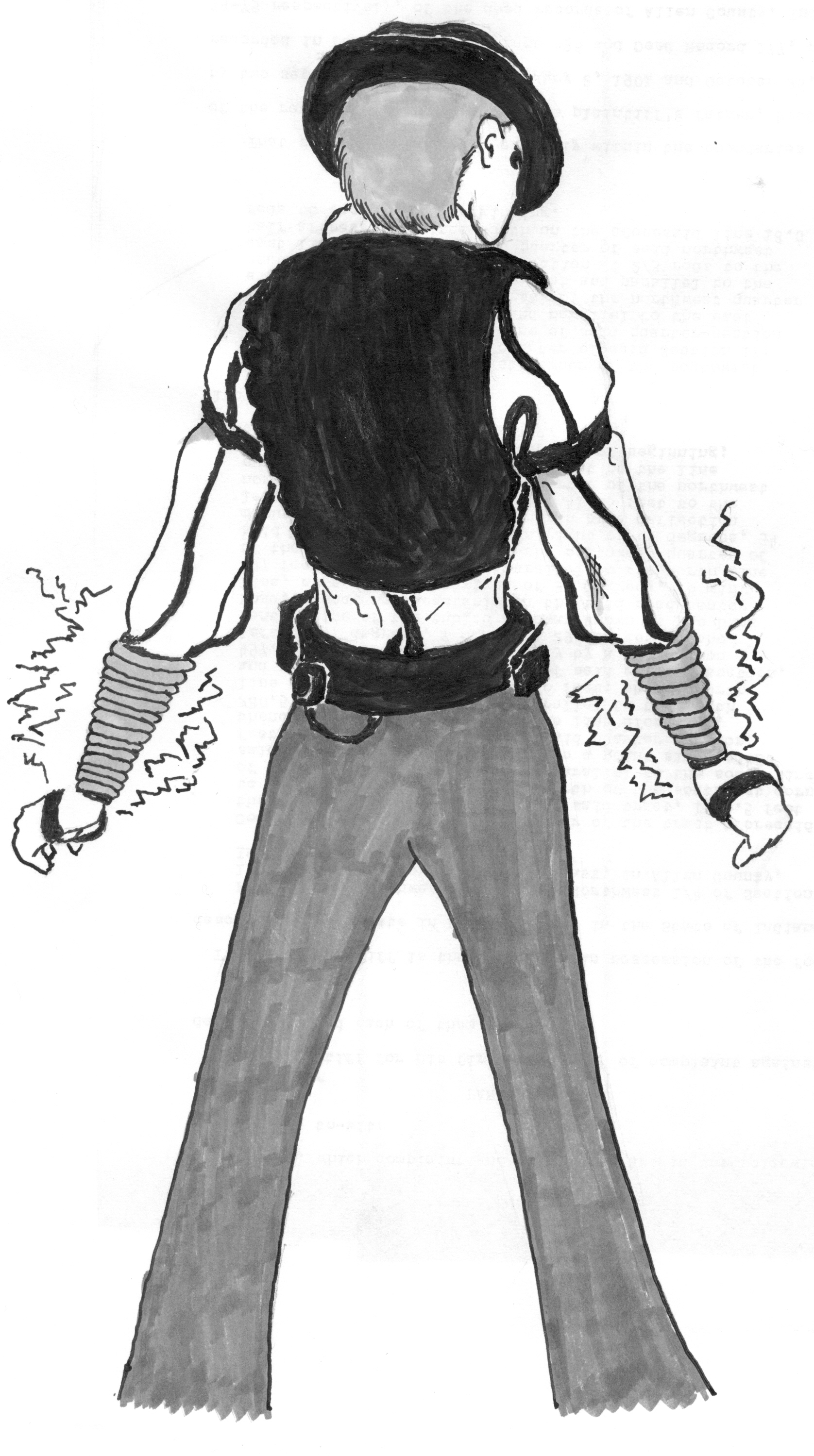
Circuit

A rush of garbled voices on the other end of the line met my announcement. I heard the unmistakeable sound of someone putting his hand over a handset and they became completely unintelligible, but I didn’t really need to hear much of what they were saying to guess the content. It probably boiled down to everyone asking, “How did we manage to miss that?”

“Helix.” I said, in a normal tone. The babble continued, so I raised my voice a bit and repeated myself. I had to repeat the process twice more until the voices quieted down.

A moment later, Helix’s voice came through clearly, saying, “What do you get out of doing our job, Circuit?”

“A lot of things, Helix,” I said, trying, and mostly failing, not to grin at his confusion. Even if he wasn’t there to see it, a sloppy habit is a sloppy habit. “The three most significant benefits are these. I keep the public blissfully ignorant of talents, a situation that benefits me just as much as you. I keep the Enchanter from gathering other people to his cause. And I do a little something to convince you that I’m not the villain you think I am.”

“Not a villain?” Helix scoffed, which is something you don’t hear much any more. “Not a villain? Have you forgotten what happened in Morocco already?”

“Do not-” I slammed the heel of my hand down on the console in frustration. I knew that was going to come up sooner or latter, but somehow it still managed to surprise and irritate me. Heavy Water was staring at me from the next chair over and I waved him back to checking his gear, then turned the motion into a general shaking to get the tingling out of my fingers.

Helix remained silent through the whole process, whether startled by my outburst or stewing as he waited for a real response I couldn’t tell. After a second or two, with my temper mostly under control, I said, with diction as careful and clear as I could make it, “Do not blame me for Morocco. What happened there was in total disregard of my express orders. Yes, the funding came from me but it was not properly used.”

Still irritated, I got up and paced to the back of the van, a journey of about two steps, then back to my seat, and repeated the process, nearly making myself dizzy as I went on. “Morocco was a mistake and I will not repeat it. But I saw what it was and I closed it down. I did, not you. Just like I did with Lethal Injection and like I’m doing right now, with the Enchanter.”

“All you managed to do in those cases was make bigger messes for us to clean up.”

“I stopped what was wrong, Helix. I don’t think even you will argue with that. The fact that my organization does not have the resources yours does in terms of containment and cover up does not change the fact that something needed to be done.”

There was a long pause and I leaned against the back doors of the van, trying to give my simmering annoyance a chance to cool by wondering what Helix was doing. Massaging his temples? Rubbing his forehead? Throwing paperclips at the other members of his team?

Unfortunately, I kept coming back to the little issue of his being completely correct. A couple of years ago I had tried farming money raising activities out to certain elements in Africa. Unfortunately, I hadn’t ever seen any return on that investment and I’d found my name and organizational weight being thrown around ways I never even dreamed of.

I shut that operation down. Permanently. Apparently Helix got stuck cleaning up afterward. I should have expected that, really, because who else would they send?

“I apologize for the inconvenience I’ve caused, Helix, but I do admire your capacity to deal with it. That’s one of the reasons I’m offering you my help this time.”

“Help?” Helix’s voice rose to a shout. “Is that what you call it? Circuit, I don’t care if you were outside of US jurisdiction, you still provided the funding, the training and the organization to let those people do what they did. That makes you responsible for what they did. The fact that you’re sorry about it doesn’t mean you’re not scum.”

“Scum?” My voice dropped down until it was barely a murmur. Heavy glanced up with a worried look and began shutting off the equipment at the work stations, which was probably a smart move.

“Do you know the difference between the two of us and people like the Enchanter, my late, unlamented associates in Morocco or even the Senator who runs your Project?”

Helix matched my icy quiet with an equally dry tone. “Enlighten me.”

“We do something, you and I. By any objective standard, the bandying about of words that passes for modern politics is as superfluous to society as the brutality of a dozen street thugs in the Third World. Enchanter and anarchists like him see the politicians and the thugs and they think they’re the problem, when they’re actually a symptom. The Enchanter wants to burn down modern society and replace it with the basest barbarism because they think that will make them free. What they don’t realize is that all it will do is make the politicians and the thugs swap places. But you and I, we know the real problem, and we’re doing something about it.”

“I have a newsflash for you, Circuit. If you think the problem is that there’s too many thugs out there sucking air, then we definitely aren’t dealing with the same problem. In fact, I’m not sure we’re even in the same zip code.”

Even though I was leaning against the back door of the van, far from most of the electrical wires in the vehicle, I could still feel the current moving through them, balancing potentials. There was a beauty and elegance to the simplistic focus of electrons moving through wires that I have always loved. It’s a trait Helix shares with electricity and, I think, one of the reasons why I’ve never taken his constant interference in my work personally. He can’t not do his job any more than negative charges can seek the positive.

But there’s a rhythm and pattern that even the simplest of computers brings to that single-minded electronic drive. It’s hypnotic, at times, and soothing at others. And it has a simple lesson to teach the attentive. “The key is control.

“In olden times, people had self control. The States never could have united if their leaders didn’t realize that giving up a few of their prerogatives to form mutually binding agreements would result in greater power, a power needed to gain any meaningful freedom from Britain. Back then, in a way, each man was a tyrant in and of himself, ruling his life with an iron fist so that the excesses that would prevent him from living meaningfully would be controlled.”

“So, what? Are you calling yourself a founding father?”

“Hardly.” I was distantly aware that Helix was trying to make fun of me, but I refused to rise to the bait. For one thing, it would do a lot to undermine my point. “The world you and I live in is nothing like theirs. People don’t learn to control themselves anymore, and they don’t believe in building anything. Instead of useful work we get empty protest, noble ideas are replaced with vapid “dialog” and self restraint is belittled while anarchy and indulgence are the height of culture. All the while the handful of people who do anything meaningful are expected to carry the burden of providing for everyone else.”

Helix grunted. “You’re not wrong. But I think a man of your abilities who really wanted to fix those problems would do more good as a teacher than as a… whatever you are.”

“Oh, but I am a teacher,” I said, feeling the electricity in the van begin to pulse in time with my words. “People today expect someone to look after them. They’re not even qualified to eat without a half a dozen rules to help them make the right choices. Well, we live in the information age, where power is in the hands of the one who can master the circuit just as much as the one who masters the gun or the dollar. Who better to run the show than a man even the government recognizes as a master of circuitry?”

“What are you saying, Circuit?” Helix’s voice had gone just as cold and low as my own. “That you’re the new Messiah? A one man army, come to set the world aright? Lots of other people have tried that, none of them have succeeded.”

I snorted and the surge of current shorted out the van’s dome light. “Don’t be ridiculous. It’s true that, to a certain degree, it will take a single man with a clear vision and immense power to create and enforce the new rules. But I need other people, just like anyone. I have some allies. I need more. You, and most of Project Sumter, are cut from the right stuff. You can keep secrets and know the importance of law and order. And, whether you like to admit it or not, the slipshod way you go about trying to find and educate talents right now is not going to be enough in the very near future. You can’t keep a lid on talents forever, but once the genie’s out of the bottle the government will never be able to deal with the backlash. You need me.”

“So we should put you in charge?” Helix actually sounded a little thoughtful at that, and I felt a spark of optimism. If he was taking the dangers I foresaw seriously, then implementing a solution in time to save society from total disintegration might not be a pipe dream. “Sorry, Circuit, but no dice. I’ve seen what your problem solving looks like. We don’t need more of that.”

“Let me prove it to you. Share your files on the Enchanter with me and I’ll run him to the ground. I have connections that won’t talk to you, and ways of gathering evidence shortsighted courts might not approve of.”

“How simple can I say this?” Helix bit each word out. “No. We will catch the Firestarter ourselves. And if you come anywhere close to this investigation, I will personally cuff you and throw you into a hole so deep you’ll forget what daylight looks like.”

“Fine.” I felt something in the van’s power locks short out under the force of my reply. “But the change is coming, Helix. It’s necessary and unavoidable. The people of America no longer know enough about governing themselves to ever hope to govern anything else. Once the society collapses it will be a new dark age unless someone does something to stop it. Someone willing to grind common sense back into them no matter how little they want it, who’s willing and able to force them to fight for their independence again. What it amounts to is, if they can’t or won’t rule themselves then they will bow to me.”

The stray charge that had built up in the wires near me as I spoke burst free and flooded the van for a brief second. My headset gave a brief click and then died. I absently pulled it off and threw it to the floor. “Heavy!”

“Van’s locked down, boss,” he called from the front seat. “Grappler got most of it sequestered before you started raving.”

“It’s not raving, Heavy, it’s telling people the truth. They frequently look very similar.” I pulled the disposable phone I’d been using from one pocket, checked to make sure the same pulse that fried my headset also fried it’s memory, then tossed it on the floor. “It seems like Project Sumter is unwilling to cooperate with us.”

Heavy raised one eyebrow. “Meaning?”

“Meaning, we have to do this the hard way.”

He rubbed his hands eagerly. “Boss, that’s just what we’ve been waiting to hear.”

Character Sketching

Okay, so we went all over world building last month/year. Worlds are an important part of speculative stories. But I, and many others with an interest in the category, feel that they are only a part of the story, created to help us examine the important questions. What is human nature, and what is our place in the world?

By showing a world that is different we get the opportunity to show the enduring nature of the human condition in what is hopefully a new light.

However, in order to do that we need something just as important as a good, believable and well imagined world. We need real, believable people to inhabit it. Unfortunately, building solid, believable characters is a much more challenging task that doing the same for worlds. As odd as it may seem, characters can be more complex than worlds. After all, people have free will, worlds don’t, at least not in the technical sense.

So how does one go about creating good characters?

Well, the answer is, it depends. Unfortunately, there’s no one magic recipe for making a wonderful character. The things people normally look at, things like back story, important figures in a characters life, defining events or ideas, are all important but not what really makes a character come alive. They’re the ingredients, but not the recipe. The key is that we relate to them, however those superficial circumstances make them seem different from us. Today, and on the next two Fridays, I’m going to look a little at how that’s accomplished.

Good, relatable characters have three things in common. They start off with little seeming relevance to what’s going on, they show growth and change over the course of the narrative and they make believable choices that hold up through the end of the story.

Let’s look at those ingredients through the prism of the classic film Casablanca. If you haven’t seen the film before, I highly recommend it. I’ll try not to spoil anything for you here, although if you’re genre savvy enough you might be able to guess anyway.

Casablanca starts with a MacGuffin, two letters of transit, being stolen from a pair of Nazis near the beginning of WWII. These letters work their way to the city of Casablanca, where many would like to use them to get passage to Lisbon and on to the United States. There, one Richard Blaine, an American with no political leanings, a self-professed tendency to stick his neck out for no one and who can’t return to the US, runs a night club.

Rick may sound like a very unlikely protagonist to exist in an era defined by its politics and sacrifice, much less to be placed in a story about an item he cannot use. But it’s those very things that make him so useful as a protagonist. He’s just trying to live his life, without all the headaches that stem from the investigation into the missing letters brings. We want to know more about him to find out why he’s avoiding the problem so studiously. Also, his avowed ignorance of the matter means everyone is trying to cajole and convince him – meaning the audience also gets to be cajoled and convinced. A protagonist who simply runs with anything set in front of him isn’t just kind of boring, he’s very hard to understand, as his motivations and reasoning is never likely to be expressed to the audience.

This applies to any character, not just protagonists. The best villains are those who’s goals are not immediately clear, who’s motivations are so dark we do not grasp them at first and who we may not even be able to identify at first. Supporting characters are often roped into their proximity to the protagonist or antagonist, and show us who and what they are in the way they deal with their friend/employer/whatever.

In short, to lay the foundation for a good character, you have to start with someone who makes the reader think, “Now who is this person and why are they here?” After all, they’ll never connect with a character if they’re never spurred to think about him.

Of course, one of the most important parts of learning about a character is looking at how they act. And that brings us to next week’s topic – characters who make believable choices. Hope you’ll drop by next week to hear all about it!

Cool Things: Fables

There’s a lot of takes on the Urban Fantasy genre, but one of the best and longest running is undoubtedly Bill Willingham’s Fables. Created and based on the enduring legends of Europe and the Middle East (and possibly even farther, more exotic places), Fables asks a simple question: What if all the characters we once knew and loved from the storybooks of our youth had to leave their simple, low tech, magical worlds and move to New York City?

I know it’s a question that has kept many of you awake at nights.

Well apparently Bill Willingahm has struggled with it too, because on a fairly unremarkable day over a decade ago the first volume of Fables was published, and a new benchmark for quality in the comics industry was set. In Fables, the story takes first place, as you might expect from a series that takes its name from a form of narrative. Further, while the story introduces many new elements to what happened after familiar stories ended, Willingham never changes the familiar narratives and, when dealing with the less familiar stories gives the reader enough to understand the story without causing clutter.

In this way Willingham sidesteps two of the most frustrating barriers to entry in modern American comic books, their tendency to stretch franchises out ad naseum, with no regard for where they ultimately intend to go with their characters, and their tendency to rely heavily on backstory established three to five decades ago which can be difficult if not impossible for new readers to find. There are other ways Fables is a nice change from the norm. No one character is constantly at the center of the story, and so they can’t become tiresome or require constant reinvention to keep them interesting. Neither is there constant narration to expound on the things that should be told to us by the artwork or dialog. While many comics forget they are visual media, Fables never does.

However, Fables also remembers that it’s there to tell a story. Willingham keeps things moving with drive and zest, moving quickly from establishing his setting to showing the dynamics of the Fable community, to exploring the threat from the Adversary, all while also managing to make stories very personal and character driven. While the bulk of the story takes place in New York in the modern day, he also gives us glimpses into the histories of his characters and the worlds they came from, as well as the extraordinary circumstances that brought them all to the world of refuge they now call home.

One of the most charming points of Fables is Willingham’s clear love for the forgotten stories. No Fable is sure why, but their life stories somehow became known to the people of the world they live in, passed from person to person until the details became blurred. And curiously enough fame translates to increased vitality and strength, making some Fables very difficult to kill. But it’s often the Fables without any fame, who you might not even have thought of when writing a story about storybooks, who step forward and surprise you. Little Boy Blue, the Frog Prince and even Snow’s mostly forgotten sister, Rose Red step forward and show us what their made of and, frequently, prove to be more personable, likeable and relatable than their better known costars.

If you like magic in the modern world, if you like clever writing and great characters, or if you just love a good story that’s written for the sake of good story, I suggest giving Fables a go.

Heat Wave: Crossed Wires

Helix

As the local king of disorganization, I learned pretty much everything you need to know about keeping Cheryl happy by not doing it. At this point, that should come as no surprise. But when I left Herrera’s office I had every intention of practicing what I preached. I spent the next hour and forty-five minutes writing up an after action report on the warehouse raid, and another forty knocking my notes on Amplifier’s debriefing into shape.

Thus armed with fresh computer print-outs, properly sorted, paper clipped and ready for filing, I made my way up to the top floor where the Records department perches over its nest of moldering files like some bizarre sort of carrion fowl.

The Records department is set up like this: You step out of the elevator into what’s probably the least welcoming reception area on earth, or at least the upper Midwest. There’re a door to the stairwell on the left and a desk built into the wall on your right an a whole lot of empty space. They don’t even have potted plants there. In the far wall there’s a secure door that leads into the department proper. Only people who are actually employed by Records can get in or out of that door.

Worse, because of the institutional paranoia that has grown up in the Project since our records were compromised a few years ago, if we want to do a search of files we haven’t contributed to, or files that are now closed, or pretty much anything that isn’t on our desk right that instant, we have to go through Records to do it. As a result, our Records people are the most over worked and underpaid Project employees. It’s not at all surprising that they’re also some of the grumpiest.

When I got there Cheryl was at the desk. No real surprise there, she’s almost always at the desk, on the front lines trying to hold the unwashed masses of clueless field agents and demanding supervisors at bay and let the Records people focus on the important work of trying to figure out bad handwriting and transcribe it into the Project databases.

Actually, we don’t turn in handwritten reports anymore, and haven’t in ages, but you wouldn’t guess that from talking to a Records worker.

As soon as Cheryl saw me coming out of the elevator, reports in hand and on time, a suspicious looked crossed her face. This is not the kind of punctuality I’m known for, and as a rule of thumb if someone’s making life easier for you it means they want a favor in return.

Cheryl probably learned that lesson early in life. She dresses real classy and has a great figure to boot, and when she first started working the Records desk you’d usually find a small crowd of people loitering around trying to make small talk with her whenever you filed a report. That was two years ago, and it’s mostly a thing of the past now. I was the only one there when I arrived.

“Agent Double Helix,” Cheryl said, crossing her arms and sitting back in her chair. “To what do I owe the honor of this visit? You don’t have anything due for another forty-eight hours, I wasn’t expecting to see you for another week.”

“You’re here pretty late, yourself, Cheryl,” I replied. “It’s after eight, I thought you’d be out of here hours ago.”

“Are you kidding?” She shook her head. “With a major raid today, in conjunction with local SWAT, accompanying evidence processing and two new Talent files to open, do you honestly think we have the time to take the evening off?”

I hefted the reports in one hand and set them on her desk. “Speaking of which. Write ups on the raid, after action report, paperwork for opening a file on talent #4322, notes on first debriefing of the same.”

Cheryl gave it a quick once over, then said, “What about #4323? You’re not about to let someone else open a file on a talent you found, are you? It’ll ruin your numbers.”

“Voorman beat me to it,” I said, offering a halfhearted shrug. I really didn’t feel like going over that a second time. “If there’s paperwork to be filed on Gearshift you’ll have to wring it out of him.”

With deft hands Cheryl racked the paperwork and added it to a small stack on her desk. She did it all without looking, instead evaluating me with a scornful glare. “All right, Helix, what is it you want?”

“Is this where I play coy?”

“Most people do,” she said dryly. “It doesn’t make them any more likely to get what they want and it’s not very original, either. Just insults my intelligence.”

I always got the feeling that Cheryl finds most kinds of banter insulting to her intelligence. On the bright side, that’s not problematic for me unless I’m trying to turn in paperwork with Sanders along. “I need access to an old file.”

Cheryl nodded and turned to her keyboard. Apparently this meant I’d passed muster. “What kind of file?”

“Operation East/West.” I leaned on the desk and did my best to look casual. “It’s appended to talent #4085, codewords Lethal Injection, Double Helix and Open Circuit.”

“You’re cleared for all of those,” Cheryl muttered, reading the information she’d pulled up on her screen. “But file #4085 has been closed and sealed. Lethal Injection is marked as dead. Is this relevant to an ongoing case?”

“Not exactly,” I said. “It’s got to do with something I’m looking into for Sanders.”

Cheryl frowned. “He doesn’t even have any cases assigned to him at the moment. You boys aren’t up to some kind of mischief are you?”

“We’re a clandestine government organization, Cheryl. Everything we do counts as mischief by definition. It’s for a worthy cause, though, and we’ve unofficially been formally asked to look into the matter by people high up.”

“Like who? Is this something the Senator put you onto during his visit a few days back?”

There’s a lot of politics in any job, but especially in one where you’re actually working for politicians. In my case, I don’t like it but I deal. It’s not what I’m here for but I don’t believe in letting it get in the way of what I am here for. But some people don’t like politics in any shape or form. With a job and attitude that focused on getting the facts in order, it’s no surprise Cheryl was one of them. Still, I’m sometimes surprised at how much she manages to miss sometimes.

“No, he didn’t.” In this case, I decided flat denial would work best. In fact, I like to go with flat denial whenever I can get away with it.

Unfortunately, Cheryl wasn’t willing to let me remain mysterious. “Well, what do you want it for, then? I can’t just sign out a closed file on a deceased talent on Sanders’ say so, even if both of you were involved in it.”

“It’s kind of-”

The rest of my explanation, which I’m sure would have been stunningly persuasive once I figured out what I was going to say, got lost in the sound of the stair door being shoved open. I turned to see Kesselman, looking more than a little out of breath. He spotted me as son as he came to a stop. “Phone call for you downstairs, big guy.”

Feeling like I must have missed something, I pointed at myself and raised my eyebrows.

“Yeah, you. Downstairs in the analyst offices.” He paused to gasp for breath.

“Well, why didn’t they just take a message?”

“It’s from someone who says he’s Open Circuit.” Kesselman motioned down the stairs. “Says he’s on a secure line, doesn’t want to transfer. He’ll hang up if you’re not there in two minutes, Herrera says hustle.”

When the boss says hustle, you hustle first and question later. As I sprang for the stairs I looked over my shoulder and said, “I need that file, Cheryl.”

Then I proceeded to go down four flights of stairs in under twenty-five seconds, which I don’t recommend for anyone who’s not a Hollywood stuntman, and burst onto the Analysis floor trying to run and keep weight off the ankle I’d just sprained at the same time. Darryl waved to catch my attention, he was standing by a desk with Herrera and Sanders.

Sanders was on the phone and as soon as he saw me come out onto the floor he said, “He’s here now,” and held the phone out for me as I ran over to take it.

The last thirty seconds had left me out of breath and in pain so I just grabbed the phone out of his hand and covered the mouthpiece as I took a second to steady myself. All three of the other people stared at me with naked impatience, which didn’t make gathering my wits any easier.

So I disregarded several Project rules of conduct, not to mention everything my momma ever taught me, and slapped the phone to my ear then said, “What the hell do you want?”

Circuit

“Quite well, thank you.” A moment of silence answered my non sequitur. I shrugged and wound up fiddling with my hands free headset for a moment until I had it properly settled again. There are good reasons for the things, I’m sure, but I’ve never found one that would sit on my head for any length of time unless duct tape was involved. For obvious reasons, I dislike that approach.

Helix still wasn’t saying anything after I got the headset settled again, so I decided I’d just have to keep going. “You know, in all the time we’ve known each other this is the first time we’ve actually spoken beyond the stereotypical police drama stuff. Being cordial would cost you nothing. And it would keep me on the line longer for your phone tracker to do its thing.”

“Sorry, Circuit, but cordial is not my thing.” I knew enough about Helix to know he wasn’t a big man, but he had a surprisingly pleasant baritone voice in spite of his stature. It sounded a bit raspy, though.

“I’m sorry,” I said. “Did I catch you away from your desk? You sound more than a little winded.”

There was a murmur of voices on the other end of the line. “What do you want, Circuit? I don’t honestly believe that talking to you for an extra thirty seconds is going to let us get any closer to tracing your location and I do think hanging up on you before you make your point is going to make you annoyed enough to do something stupid.”

I blinked. As a matter of professional survival I have a healthy respect for Helix’s capabilities. He’s a skilled man, with training from the largest talent watching agency in the nation and a wealth of practical experience. But I hadn’t expected him to be so blunt. “Very well. Did you find what I left for you?”

“The chair? Yeah, it was right where you left it. Wanna tell me what that’s all about?”

“The chair? I sit on it, of course.” I snorted and settled myself into my seat in an attempt to get comfortable, probably just a case of my subconscious acting up. The van I was sitting in was custom built, but not for comfort. “I wasn’t asking about the chair, Helix. Have you read the letter yet? If not, I can always call you later.”

“The letter?” Another murmured aside. “You mean the one from the Enchanter guy? Yeah, we found it, but I don’t have it here. You want me to run at get it from the forensics guys? Though I’m not sure they have it off the truck yet.”

As Helix was talking Heavy Water opened the side door of the van and slipped in, handing me a set of folded blueprints that had come to me through certain channels and that I would be needing in the near future. “Not necessary. Just tell me, what did you think?”

Helix made a funny little exasperated noise and said, “I think you’ve either got some really weird idea of a pen pal or you’ve finally decided to take up the profession of crossword puzzle setter. I have no idea what that was, Circuit. Now why don’t you answer me something.”

“Of course, Helix. We’ve worked together long enough for you to ask me one or two questions on this auspicious day. But before you fire away, I need to make a quick adjustment. You know, one of those things that keeps you frustrated and me from incarceration.”

The van wasn’t laid out in the normal fashion, with two benches in the back capables of holding a total of five people. Instead, the back was entirely open, leaving more space for whatever I might need to pile there, and there were two chairs facing computer consoles across from the sliding door, one of which I was sitting at. I put the blueprints down on my console and said, “This may be a little loud.” There was a sudden burst of static as I tweak electric potentials in various parts of the computer, feeding it various commands. A lot of the noise was purely cosmetic, something built into the repeater built into the van, but as I’ve said before, appearances are important. And, to be fair, I was actually doing something I didn’t want Helix thinking too much about. “There we are. Finished.”

I was answered by the sound of muffled cursing on the other end of the line. It took a second for Helix to wind down, then he said, “What are you doing, playing with Faraday cages?”

“That’s surprisingly astute of you, Helix,” I said. “I had no idea that you knew so much about electronics.”

“Don’t give me that. You handed my team the solution to our first major case, gift wrapped, and then you scoffed at the pardon that came with and proceeded to spend the next eight years wreaking havoc. You really think I don’t read those technical journals you leave sitting around? We’re not stupid, you know. Anything you’re interested in, I am too.”

“Which only serves to reinforce my high opinion of you.” As I spoke I pulled up a simple GPS tracking program, the kind of thing that will find anything, anywhere in the world, and tell you it’s exact latitude,  longitude and height above ground, and set it to work. “I want to try it again.”

“You want to leave me more trade magazines?”

I laughed. “No, not what I was referring to.”

I had intended to say more but a sudden rustle of sound on the other end interrupted. “Well would that tell me how you make a cellphone trace say you’re on the island of Malta? Because I, for one, would like to know how that’s done.”

“Generally, one books a flight to Malta and then places a call from his cellphone.” Heavy was already unfolding the blueprints and consulting them before the computer finnished it’s queries. “But let me restate that what I want is not to give you a new set if ideas to develop countermeasures for. Rather, I want you to consider letting me help with a little problem of yours.”

There was a split second of silence, then, “I’m not sure I follow.”

“It’s like this, Helix,” I said, looking over the places Heavy had marked out as potential entrance zones. I pointed to one and nodded. “You have a problem. You call him Firestarter. He’s both talented and destructive. Perhaps worst of all, he uses his talent to help his baser urges find expression. He’s not just a danger to the general public, he makes it difficult for the Project to maintain that lovely fiction that the world is a sane, predictable place without sudden surges and shifts in the evolutionary status quo.”

“I’m familiar with the Firestarter case,” Helix replied. “I was even on it for a little while.”

“Not at all surprising,” I said. “What’s more so is that you’re not on it now.”

“These things happen. I fail to see how the problems Firestarter is causing us can be any of your business. What’s one miscreant’s arsons to another’s armed robberies, money laundering, extortion, conspiracy, kidnapping and interstate flight?”

“You forgot several varieties of grand theft,” I said. “And surely, with all the crimes the federal government wants me for, the interstate flight warrants can hardly be germane anymore.”

“Of course. How could I forget?” Helix sighed. “I honestly don’t see where you’re going with this, Circuit. Do you think we don’t have the resources to chase both you and Firestarter at the same time? I know you have an incredible information network at your disposal, and if you have a tip on Firestarter that you’d like to share, we’re always willing to act on those. But what’s your angle?”

“You don’t see the difference between me and Firestarter?” I asked, affecting a wounded tone. “Honestly, Helix, I’ve always hoped you gave more credit than that.”

“More credit than what?”

Heavy Water is touchy about his plans, so I didn’t write a big fat X on which room our objective was in, just tapped the correct part of the prints twice, then did the same for places I thought we might want to avoid due to electronic surveillance.  “More credit than you give a two-bit miscreant like him.”

“Oh, I don’t know. He’s managed to perpetrate a number of arsons without getting caught, and unlike you he’s managed to leave a subtle pattern to annoy us with. You have no pattern at all, and perpetrate crimes strictly for your own gratification.” Helix’s tone was slightly condescending, as if he was unsure I was keeping up.

“Not strictly for my own gratification. And leaving patterns is the work of an amateur, I am a true professional. But most importantly, Firestarter is an example of society’s problems, I represent the solution. Did you read the Enchanter’s note?”

“Yes,” Helix said, dragging out the word in a way that made it clear he was still trying to follow the sudden subject change.

“Did you happen to look at the envelope it came in?”

“No, I didn’t. Should I have?”

“It’s return address was 1457 Ferntress Avenue, the home of Paul Moreau, the Firestarter’s first victim.” I gave that just a moment to sink in. “Sources tell me police Precinct 27 received an identical note returned addressed to the home of Peter Morrison. I wouldn’t be surprised if notes were credited to Amelia Morgan and Pritchard Mosburger as well.”

“You think this Enchanter and Firestarter are the same person.” Helix wasn’t asking a question. “And you plan to help us catch him for reasons of your own.”

“There is that incredibly sharp insight I have come expect.” I leaned back in my seat and laced my fingers behind my head. “We underground talents have our own ways of passing news around, you know. This is not the first I’ve heard of the Enchanter. He’s actually managed to make a name for himself in the last year or so, and not in the quiet, unobtrusive sort of way many of us get our start. No, he is, if you’ll pardon the pun, a real firebrand.”

Helix groaned. “You should get something added to your rap sheet just for that.”

“Do you know why he sent me that letter?”

“Because he can’t stand your puns?”

“That might have been a part of his motivation, but I doubt that was all of it.” Heavy handed me the blueprints, this time with a route from entrance to objective marked on them, and I sat back up and began to study them again. “He’s an anarchist, Helix. Everything there is to love about a structured, organized society, he hates. But in particular, he hates the idea that there’s someone out there who will come down on him like a load of bricks if he ever tries to use his talent for anything beyond boiling water.”

“So you’re saying he doesn’t like the Project much more than he likes you.”

“I imagine he wouldn’t, if he knew it existed,” I said, setting the plans aside for the moment. We were getting to the good part and, without any visual cues to clue me into Helix’s state of mind, I was going to need all my attention on the conversation for the moment. “But so far as the Enchanter is concerned, the person waiting to jump on him is me. I started stymieing his attempts to take his anarchist’s manifestos into public venues two months before his first arson. So in a sense, as far as he’s concerned I am Project Sumter.”

Previous Chapter
Next Chapter
Fiction Index
Writing Resolutions

Hey, it’s that time of year again! That’s right, it’s a brand new year and that means people are girding themselves up and resolving to do new and exciting things like loose weight, eat responsibly and in general make it easier to make it to the next new year. But me, I’m a writer and healthy living is an area of contractual genre blindness for us. So I figured I’d come up with some writing related resolutions instead. What kind of resolutions? I thought you’d never ask…

  1. I will maintain this blog, doing my best to continue to post on schedule, no matter how many toothpicks I break keeping my eyelids open.
  2. I will not poke myself in the eye with a toothpick. It impedes the writing process.
  3. I will try to read less garbage in my continuing attempts to understand what kinds of stories currently drive the writing market.
  4. I will read more garbage with the intent to discover what makes bad writing bad and how to correct those flaws.
  5. I will remember that finding ways to resolve apparent contradictions helps a person become more creative and flexible, it’s exercise for the imagination and every writer needs more of that.
  6. I will continue to offer shameless critique of people who have succeeded in an industry I have not yet broken in to, as well as people who work in industries I know little about. If they want to sell me stuff, they better make it a worthwhile product.
  7. I will do my level best to get an e-book assembled and available for purchase from Amazon.com, so that my work can be held up for ridicule in the largest forum available.
  8. I will add as much suspense to my stories as is humanly possible, because day to day life does not contain nearly enough uncertainty.
  9. I will add more romance to my writing, because write what you know is more a loose guideline than a mandatory requirement.
  10. I will hire a person to stand behind me with a rolled up newspaper and periodically whack me over the head yelling, “Make with the funny!” This should keep my writing from being overly gloomy.*

So there you have it. My authorial goals for the year. If you have any advice for how I might live up to these goals, I’d love to hear from you in the comments. Please feel free to add your own suggestions in the comments, as well.

*These resolutions void where prohibited. No exchanges, substitutions or refunds. Use only as advised. Keep hands and feet clear. Please resolve responsibly.

Cool Things: Braid

It’s been a while since I mentioned a video game in this spot. In fact, other than my first Cool Thing, Dungeons of Dredmor, I haven’t mentioned one at all. You can gather a few things from that. For one, I don’t play many video games. That’s mainly because I’m a writer busy with this blog, a job and occasional theatrical appearances. For another, there aren’t many games out there that really strike me as cool. I have standards. After all, I’ve played Contra and Ikaruga. It takes real work to measure up to stuff like that.

But Braid… Braid is special.

Braid is a 2D platformer, a la the original Super Mario Brothers. However, unlike the plumber chronicles, Braid is a puzzle game. The controls are incredibly simple. There’s a button for each of the game’s six primary functions, move left or right, climb up or down, jump and reverse time.

Yeah. Reverse time. I told you this game is special.

Everything about Braid is about manipulating time. The player can’t even really die. If you get injured or fall down a pit the level doesn’t reset, the game just waits for you to press rewind and back up to a point before you messed up. But backing up time is about more than just undoing mistakes. It’s also your primary problem solving tool.

You see, Tim, Braid’s hero, has discovered how  to reverse time and used it to smooth the problems from his life. Unfortunately, Tim now finds that he must wield his new-found powers to rescue a princess and crosses paths with a number of obstacles, monsters and weird time phenomena along the way.

What’s most impressive about Braid is not it’s visuals, which are beautiful 2D sprites, nor is it the game’s catchy soundtrack, which sounds good both backwards and forwards. It’s not even the story, which is both original and moving. No, what’s really impressive is the creativity and originality the game both shows to the player and demands of them.

Over the course of Braid’s six levels players will be confronted with places where time moves forward if they move to the right and backwards if they move to the left. They will find things that won’t be rewound no matter how hard Tim tries. And they will even find places where the actions they’ve taken leave echoes in causality, forcing the player to partner with shadows of himself in order to advance. No other video game in recent past has demanded so much of it’s players in terms of thought, planning and out-of-the-box creativity.

However, for those exact same reasons Braid is not a game for everyone. It’s not action packed, there’s not scoring system (although there is a time trial mode unlocked once you clear the game initially) and there’s no compelling sense of struggle between Tim and his situation. It’s amazing, but at the same time it can’t appeal to everyone.

Still, if you love innovative gameplay, clever mechanics or straight up challenge, Braid is a game worth your time and money.

Heat Wave: Fresh Fire

Helix

Everyone thinks you walk through a wall by making yourself some kind of fog and seeping through the cracks. Or some such nonsense. In other words, you get less dense than what you want to go through. In reality, the talents we refer to as matter shifts work the exact opposite way: You make what you want to go through loose density while upping your own. Then you walk through it like it was fog, which causes a lot of field agents to call them fog banks, and return the wall to normal.

Doing this with load-bearing walls is not recommended.

Because a matter shift relies primarily on making things less dense the first thing Project Sumter did when it started keeping records on talents was check to see if there was anything they couldn’t walk through. As it turns out, they’re unable to walk through anything denser than lead.

So, when Project Sumter moved into our current office building they installed a lead lined holding cell in the basement, on the off chance that we’d wind up hanging on to matter shift at some point. As far as I know, Gearshift is our first.

Of course, I know all of this through the family grapevine. I’ve never officially be cleared to see file on the matter shift talent in general, or the files of any specific matter shifts in Project history. And if I hadn’t there was almost no chance Herrera had. As we rode down the elevator I flipped through Gearshift’s file. It was no real surprise when I found that no information on the talent had been included in the file.

I glanced up at Herrera. “Did you get anything on this guy’s talent in your file?”

She shook her head. “No. All I know is that it’s a single digit.” She grimaced. “Since they’re numbered in the order they were discovered that doesn’t really tell us much either. But we apparently need Voorman’s clearance to get a rundown on what he can do. How they figure that is beyond me.”

I was saved from a response when the elevator door opened with a cheerful ding and we stepped out into a short, dark gray hallway of lovely concrete. There were a couple of doors on each side, which we didn’t want, and a door at the end, which we did. “Look at it this way,” I said as we walked toward it. “You’re already cleared for one single digit talent. They probably just want to avoid concentrating too much information in one person.”

“You’re probably right,” Herrera said thoughtfully. “But it would be nice to know what this guy can do. In case there’s trouble.”

“That’s what I’m here for, right?” I reached to open the door. “A talent to handle the problems, an oversight agent to ask the ques-”

My brilliant recitation of what I thought to be the ideal interrogation style, perfected after years of work with Bob Sanders, got cut off mid sentence when the doorknob yanked out of my hand the door swung inward to reveal pretty much the last person I had expected to see.

Herrera made a surprised sound behind me and I could feel my jaw hanging open. The first thing I did when I collected myself was snap it closed. Then I backed up a step and said, “Pastor Rodriguez. What brings you here?”

The big Hispanic man smiled at me and said, “I heard you were holding a young man that is part of our youth outreach program for something. He contacted me with his phone call.”

My eyebrows were going up in spite of my best attempts to keep a straight face. “And they just let you come down here?”

“I authorized it.”

I leaned to one side in an attempt to see around Rodriguez, who obligingly stepped back and to the side so I could see Voorman standing just behind him. I glanced back at Herrera, to make sure I wasn’t seeing things, but she apparently saw him too. Rodriguez stepped forward again and extended his hand, saying, “I don’t believe we’ve been introduced. I’m Pastor Manuel Rodriguez, from Diversy Street Church.”

“Senior Agent Teresa Herrera,” she replied, giving his hand a quick shake. “Pleased to meet you, Father.”

I suppressed a smile at the pastor’s expense but he took the mistake with good grace. Since he was now out of the doorway and occupying a large chunk of the hallway I figured it was a good time to edge around him and into the observation room. Unlike most rooms of its type, there was no one way glass built into the wall. That would be a point of egress for a fog bank.

Instead there was a bank of monitors attached to a number of cameras inside the room, along with a couple of guards to keep an eye on things. I didn’t recognize either of them but I nodded hello to be friendly while scanning the monitors to see Gearshift lacing his shoes back up while sitting at the table in the room. “Will you be observing Herrera and I as we debrief, sir?”

“Actually,” Voorman said, “he’s been taken care of and we’re releasing him into Pastor Rodriguez’s custody.”

The surprises just kept coming. Project rules say that talent has to be interrogated by both a talent and their oversight officer. Voorman was the only person I saw with the authority to debrief a new talent, and he isn’t anyone’s oversight officer, that’s not a Special Liaison’s job. If Gearshift had been debriefed by Voorman it mean there had been no one else in the room at all. That’s just plain stupid.

Apparently Herrera realized that too, because she said, “Sir, isn’t it unwise to conduct an interview without someone else in the room?”

“Ah, well, it’s something of an unusual case,” Voorman answered. “The young man’s family was anxious about him. Since Pastor Rodriguez was here already I conducted the interview with Agent Shelob’s assistance and authorized his release.”

I frowned. Shelob was an antenna, much like Broadband. Technically she wasn’t even a member of the Project, when we’d found here she running a private security firm, using her ability to hear and project most kinds of electromagnetic waves to monitor and control a host of custom built security equipment. She basically still did that, except she got paid more to do it for us. Between her senses, cameras and other equipment she can keep an “eye” on most of the building simultaneously from her desk in the lobby.

But if Voorman had gotten into trouble with Gearshift she would have been too far away to help quickly. There were the guards, of course, but I honestly doubt they could have stopped a matter shift determined to cause trouble. They may not be able to pass through a lead barrier, but I was never really clear on whether bullets hurt them a whole lot, either. Gearshift’s lack of body armor was one of the things that had tipped me off to him.

Not that I was bringing any of that up with Pastor Rodriguez in the room.

I slipped a hand around Herrera’s elbow and carefully pulled her back just a half step. I rocked forward onto my toes to get a few inches more height and muttered, “Not now,” into her ear, then said in a more conversational tone to the room at large, “Then I’ll let you get on with the paperwork.”

“Thank you, Helix,” Voorman said with a relieved nod. For once he looked me in the eye as he said it. Then he and Rodriguez hustled out of the room, leaving me with a very upset superior agent.

At least we were back to business as usual.

“Voorman can break with protocol on occasion. He’s the man in charge, making that kind of judgement call is part of his job.” We were back in Herrera’s office and I was leaning against her desk and watching her pace. “We’re just grunts, you and I. You less than me, but still it’s not our place to pry if there was something he wanted to handle himself.”

She stopped and gave me a level look, one I had a hard time interpreting. She leaned back against the half-empty shelves that lined the wall of her office and folded her arms across her chest, apparently taking her time in choosing her next words. The disembodied voice of Bob Sanders echoed in my head, telling me I could learn a thing or two from her. I tried to ignore him.

“Helix, I know I’m the new person here, and in spite of our relative positions in the Project you’re better informed and more experienced than I am.” Herrera tipped her head slightly to on side, as if taking my measure. “You have to know that the interrogation protocols are in place for a reason, and what those reasons are. And I’m willing to bet you don’t question why Voorman did what he did because you already know his reasons for ignoring them.”

“You get hired by the HSA because of that kind of insight?” It was a knee-jerk comeback and I knew it.

Apparently Herrera realized it too, because she ignored me and went on. “I’ve been around enough to know I’m not going to get anything from you if I pry, that’s the way of office politics. It’s frustrating, and I’d hoped I wouldn’t have to deal with it here, but it’s not like I didn’t have to play that game before. I don’t care about all that. What I care about is closing this case. So what I want to know is, will whatever game is being played here matter when it’s time to deal with Open Circuit?”

“We just call him Circuit,” I said. It wasn’t an answer, but I had to think about the question and I’ve found irritating people and then ignoring them to be a good way to find the time. Herrera didn’t rise to the bait but she seemed content to give me time. It was kind of spooky how well she had my patterns down after only a few days. Maybe that was the real reason the HSA had hired her.

I jerked my thoughts back to the issue at hand. Even after fifteen minutes to work on the problem I was pretty sure my original read on Voorman’s motives for handling Gearshift the way he did was correct. He was trying to limit how much Senator Dawson knew about the Project and our talents. It was part of his job to keep the Project’s secrets, and what Dawson would do with those secrets is something of a mystery.

On the other hand, I was growing less and less convinced that Dawson had placed Herrera here as some sort of spy. I wasn’t sure why she was here, other than that the HSA needs qualified liaisons as much as anyone else, but I was pretty sure she wasn’t a direct participant in any scheme of the Senator’s. In fact, I was beginning to have the sneaking suspicion she might be using the Senator, and not the other way around.

Voorman was harder to read. He had moved up to a senior position before I joined up and he hadn’t worked with any of the family, either. Outside of the formal chewing out sessions that typically followed my destroying something valuable in the field I didn’t interact with him much and his strange, withdrawn attitude kept me from getting much from him then. I could guess why Voorman had shut Herrera out of debriefing Gearshift. But would he deliberately withhold information to undermine someone who was just associated with the Senator? Or was he too good an agent to let politics get in the way of work?

Actually, I don’t think there’s any senior agent who can separate politics from work, it’s part of the nature of the job. One of the few reasons to be grateful that I’m ineligible for management.

In the end I just shrugged and said, “To be honest, I don’t know. Undermining any Project operation being run out of our office doesn’t make any sense for someone in Voorman’s position, so I’m guessing he’ll give us everything Gearshift said about his chasing Circuit. I doubt there was much there that we couldn’t guess from what we’ve already gotten from Amplifier and Mr. Movsesian. But information on his talent… well, we’re not likely to get much of that.”

“Because it’s dangerous,” Herrera said.

I grimaced. “Basically, yeah.” I braced my hands on the desktop and shoved myself up onto it, resting my feet on one of the guest chairs, then leaned forward with my elbows on my knees. That left me on eye level with her, and I noticed for the first time that her eyes were the kind of color some people like giving fancy names like cedar or hazel or something.

Obviously, I’m not one of the people that does that.

“Listen, Herrera, this is nothing personal-”

“Can I guess what it might  be?” She asked, cutting me off mid question. I shrugged. That was apparently all the permission she needed to continue. “I think there’s some sort of a power play going on between Mr. Voorman and Senator Dawson. It’s also pretty obvious you and a few other people around here think I’m a part of whatever the Senator is up to, whether I realize it or not.”

I opened my mouth to deny that, then realized that I’d just be insulting her intelligence and closed it again. Herrera graciously ignored my aborted interruption and kept talking. “What I know is that my job is to find talents that are guilty of crime, arrest them and bring them to justice. I’ve also read enough of your file to know that you will do pretty much anything you have to, within the law, to do the same. You’re not afraid of hurting you’re career, you’re already as far up the totem pole as you can get, so I’d be tempted to say you should be above this, but it sounds like you’ve got your own issues with the Senator.”

“Not bad,” I said, resting my arms on my knees and knitting my fingers together. “You’ve pretty much covered all the bases, proving you’re intelligent enough to realize the truth of what I’m about to tell you, idealistic enough to accept it and most importantly, not naive enough to tell me it’s not necessary. There are some talents that are so dangerous their abilities must be kept secret from as many people as possible. Even if some of those people are the good guys.”

“Really?” Herrera spread her hands. “Because I didn’t see any evidence of something that dangerous being used today.”

“It’s not that simple,” I said, sliding off of the desk and starting to pace. “I’ll admit, if Gearshift is what I think he is, until a couple of months ago I wouldn’t have thought anything of him either. But, as you undoubtedly know already, the Project has a number of programs underway devoted to researching and better understanding how talents function and what they are capable of.”

“With little success understanding the function part,” Herrera said, nodding. “I’ve read about them. You go to the Rose-Hulman Institute a couple of times a year, as I recall.”

“And while the eggheads there aren’t supposed to talk about other talents’ capabilities with their subjects, sometimes things slip out. Some of them are real geeks, they have rankings and who would win debates all the time. And they want opinions from the horse’s mouth.” I waved it off. “It’s stupid, but sometimes they come up with their best ideas doing it, so no one says anything. And some of their best ideas are really scary, Herrera. This is not the kind of thing you want to write down, much less tell other people about.”

“And you think Gearshift is that dangerous?”

“After what Voorman did today? I’m sure of it. Let the people who are actually cleared to deal with that mess handle his case.” I scooped up my copies of the folders on Amplifier and Gearshift and changed the subject. “I don’t know if you’ve met Cheryl down in Records yet, but she can make your life very hard if she wants and she likes her paperwork turned in on time. You should get on your after action report, try to get it too her by the end of the day. Get her your summary of Amplifier’s debriefing, too, and she’ll be your friend for life. Or whatever passes for friendship from Cheryl.”

“Thanks for the advice.” Herrera clearly wasn’t distracted by my subject change, but she seemed content to let me go. For now.

So really, I should have gone. But when I was halfway out the door I remembered and glanced back over my shoulder. “Did you want us to do any follow-up work on the note from Circuit’s warehouse? The Enchanter, or whatever it was?”

“Oh, that?” She briefly looked embarrassed. “I need to double check something first. I’m not even sure I’m remembering right. I’ll bring it in tomorrow, if it’s even relevant.”

Figuring that discretion was the better part of valor I just shrugged and got out of there while the getting was good.

Previous Chapter
Next Chapter
Fiction Index

Merry Christmas!

I hope that you have a wonderful Chirstmas! Even if you don’t celebrate the holiday you can still enjoy the day off. Like you, I’ll be taking a vacation this week, so look for the next installment of Heat Wave on Dec. 31st!

World Building: Start with the Basics

Okay, so we’ve covered original vs. derivative in terms of world building. But whether you want to be completely original or mostly derivative, you’ve got to do some of the work yourself, otherwise your story will be a flat thing in a flat world (and I’m not talking about Discworld here.) So where do you start?

There are obviously a lot of things to think about when you’re building a world. What’s the geography like? What’s the climate? Who lives there, what do they want, how old is the world and what’s the current political situation, what events led to the current status quo, and on and on. To be honest, it can be more than a little overwhelming. It’s important to keep some basic principles in mind.

Build From the Bottom Up

Start with the basic ideas. Where did the world and the people come from? Is it a colony created by Earth around a distant star in the far future? Or is it on a disk on the back of elephants, put there by bickering lesser “deities”? And how much of the world’s origin is even known to the average person? If it’s not known, what are the prevalent theories?

Who lives there? Are there other races beyond humans? Are there humans at all, or is the average person an oddity there? How much of the world is actually explored and understood by the people who your story focuses on?

Frame the Rules of Enagement

What do you want to your world to be about? While in the real world science, exploration, political theory and standard of living were all linked in their advancement, there’s nothing wrong with your distorting your world slightly to bring one of those elements to the foreground. But if you’re going to do that, you need to know that you’re doing it from fairly early on, or you’ll have to go back and make significant adjustments to bring things in line.

Also, if you’re going to have magic, metahuman abilities like telepathy or telekinesis, nonhuman races or even stranger things like lurking eldritch horrors, you’re going to need to decide on that at this stage. Adding these things after the world is mostly set can result in story elements that are wildly out of place.

Set The Scene

Choose a particular part of your world to focus on first. Choose a country (or a city or a county) to focus on first. Build that place until it’s what you want it to be, then think about other parts. It’s true that no country is an island (unless, of course, the country is a literal island(s), like Britain, Japan or Madagascar, but that’s not what we’re saying here) and as you think of ways for that your first area of focus ties to other places in the world, go ahead and write them down.

Eventually, you’ll need to think about places outside where you want to tell stories, unless you want to convey the idea that you’re dealing with one of the last places on earth or a small colony in space or something. When the time comes, don’t be afraid to go back and edit what you’ve already written about your first place. It’s important not to give the impression that everything in the world revolves around that one patch of ground. But there’s nothing wrong with having a very firm idea what one place is like before you move on. If you’ve done it right, you can actually follow the lines of commerce, politics and money from place to place until you have at least a general idea what the entire known world is like!

Establish the Core Conflict

There’s a conflict inherent to every setting. When looking at the part of the world you’re working on, find out what that is. As your characters explore that world later, they’ll have to encounter it at least tangentially, or their life won’t look real. For example, in Asimov’s robot novels, it’s the struggle between Earth and the Spacer worlds that results in the murders that Elijah Bailey must solve. Bailey’s conflict is between himself and the murderer but the larger conflict in the world around him defines those smaller conflicts in dozens of ways, including the constant presence of R. Daneel Olivaw.

On the other hand, few conflicts are world wide. It’s fine if one area has one overarching conflict, such as the local equivalent to Prohibition and the resulting organized crime, while another area is wracked with conflict between a petty tyrant and la Resistance.

Identify Major Players

I’m not talking about the characters your story will be about (although they may be in your story, and they may even be your characters, the just don’t have to be.) Rather, decide who’s important in your neck of the woods. Who runs the government, who owns major businesses, who heads la Resistance (if there is one). Sooner or later, you’re probably going to need one of these people to help your story along, and it looks much better if you can show their influence from the beginning, rather than having a major player in the military-industrial complex simply appear out of thin air.

With these five basic rules to help you lay a foundation you should be well on your way to making a decent world. Getting the broad strokes down is just as important as all the other minutia, and the one won’t look nearly as good without the other. There may be another few posts on the subject of word building, but for the time being, I hope that will be enough to get the wheels turning.

Uncool Things: The End of The World

As you’ve doubtless heard by now, calendars from the ancient Mayincatec civilization mysteriously end on December 21st, 2012. Most people believe this heralds the end of the world, as the Mayincatec civilization had incredible powers of timekeeping and foresight that allowed them to perform incredible feats such as worshiping feathered serpents as gods long after the dinosaurs were actually extinct. They also foresaw a number of significant astrological cycles like eclipses, which we now know happen at regular intervals. Unfortunately, they failed to anticipate the Spaniards, who are not cyclical (and who, by their own admission, no one expects.)

All in all this sounds like a pretty airtight reason to expect a cataclysm of some sort come Friday. (Although not to worry – not even the end of the world will keep me from my appointed posting time!)

Now the end of the world sounds pretty uncool. After all, you won’t get to open your Christmas presents this year, nor will you be able to party like it’s 1999 on the 31st. On the other hand, it also means you don’t have to worry about car or house payments!

Unless, of course, the Mayincatec were wrong…

But hey, when have ancient, extinct civilizations ever been wrong about the future?

So in order to prepare you for your local apocalypse, we suggest a few basic measures. First of all, learn the song. I cannot stress how important this is. If the world is ending, you want your last words to be as cliche and meaningless as possible, and nothing says that like REM.

Second, don’t stress out about having a bomb-proof shelter. Don’t worry about having enough food or being prepared for the new world order. The end of the world means the end of the who stupid world. There’s not going to be anything left to fight over. Again, get this: When the world ends there is. No. World. Left. So stop stressing! One way or another, when you’re gone, you’re gone!

So instead of blowing all that hard earned cash on pointless frivolities like canned food or guns and ammo, buy something truly worthwhile, like a Jacuzzi. If you’ve only got a few days left on earth you might as well spend them in comfort, right? Just be sure to order next day delivery.

Finally, consider just sleeping in. The most likely way for the world to end is in a spontaneous supernova. Given that it will take about eight minutes for the light from that event to reach our planet and it won’t take too much longer for the shockwave to to incinerate all life from the surface, there’s really no reason to be awake for it. There will be nothing to see, very little to do, and there’s no reason to live through the end of the world going through cardiac arrest or something. Why ruin the experience?

In conclusion, I highly discourage you from asking yourself any kind of meaningful questions at this juncture. There’s no reason to wonder if you really trust the kind of people who routinely cut out people’s hearts to mollify their deities, or if people who couldn’t figure out that something heavier than quilted armor and light bows would be needed to fight Conquistadors are really the people you should be taking long term planning advice from. You certainly shouldn’t ask yourself how you might be able to take advantage of end of the world frenzy.

That’s my job.

Enjoy your end of days!