The Sidereal Saga – Liquid Teeth

Previous Chapter

Dramatis Personae

Lloyd

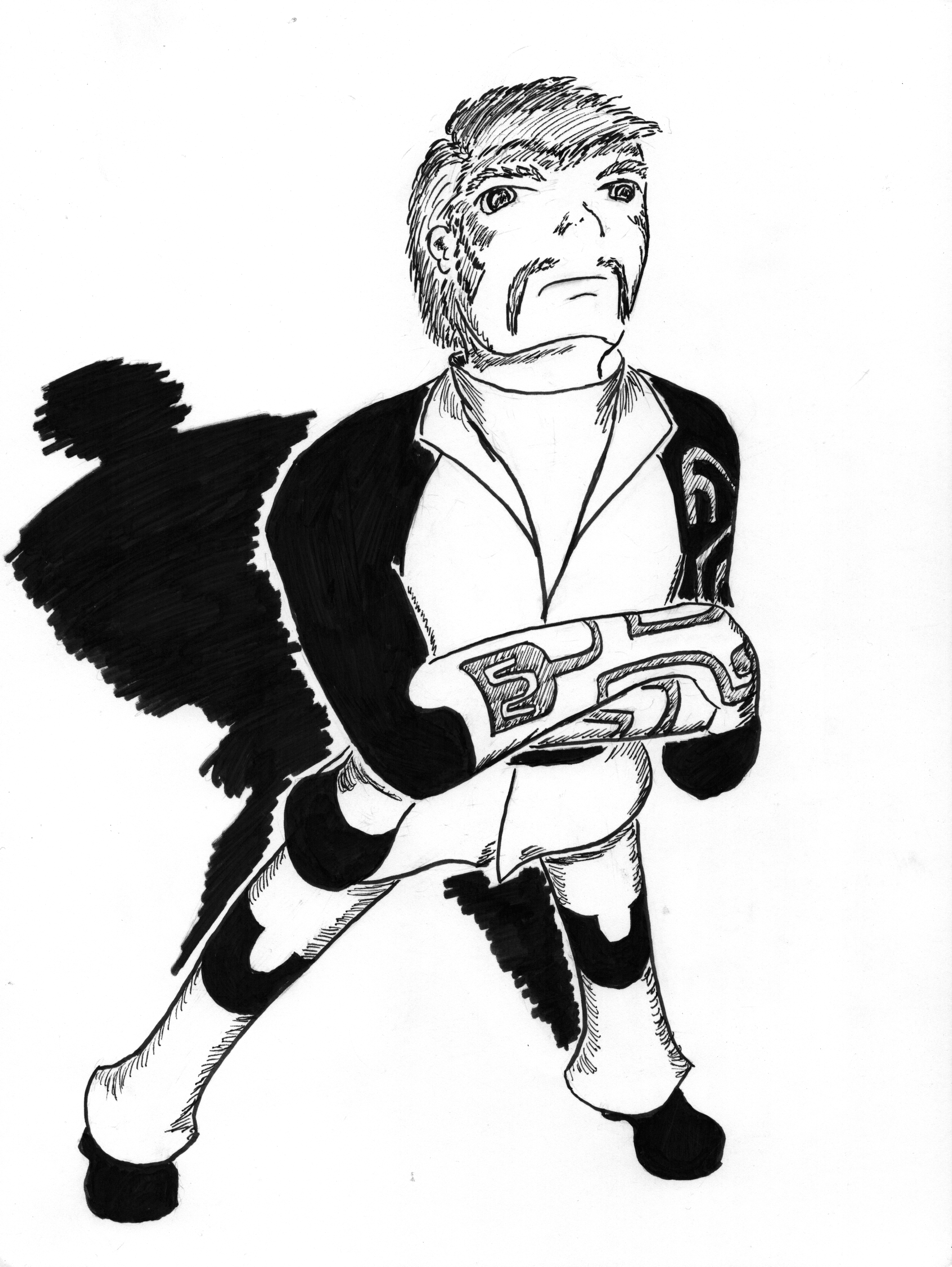
To the average person helium is light and funny. You can put it in balloons to make them float or breath some of it in to make your voice squeaky. It’s not something one thinks can grab an extremely durable, titanium laminate hulled ship with a top speed of 1,200 kilometers per hour and smash it into scrap on a ferrovine. However helium does have just that kind of vicious side to it and it was that aspect of helium that Lloyd was dealing with at that moment.

His skiff bounced along on the churning clouds. It’s stubby wings groaned in ominous fashion as the shearing currents stressed the carbon fiber frame far beyond the standard safety parameters. In theory, a Wayfinder’s Jelly partner was supposed to keep them from getting caught in this kind of weather. Wireburn’s natives had an understanding of its atmosphere that was unmatched, after all. This was something of a special case.

Driving that point home was a shadow looming large as Coldstone stretching up above them in an impossibly long, gravity defying arch that looped up out of the Metaline Depths and passed far above their position before beginning to curve back down over the horizon. It had taken the thing nearly eight minutes to raise up that far. Lloyd wasn’t even sure it was still moving, the human eye wasn’t built to measure something like that and the skiff didn’t have sensors for that kind of task either.

Cloudie had come to a stop when the shadow passed over them. Now the Jelly drifted slowly through the helium, its tendrils pointed up and out as if watching the shadow in terror. It hadn’t said anything since the Liquid Teeth made their appearance. Worried, Lloyd keyed his internal radio. “Cloudie, your people have stories about this thing, don’t they? Is there something we’re supposed to do?”

“Not that we know.” The radio voice was flat as always but the words were spoken with an eerie slowness. “All the stories of the Teeth that are passed down are told by Jellies that saw them and their terror from great distances. Any that were this close to the teeth never lived to share the tale.”

“Well, let’s try to be the first.” Another gust of helium battered his skiff but Lloyd thought this hit was weaker than previous ones. “Are the currents calming out there?”

“Yes and no. The disturbance in the currents has moved upwards and we’re in a pocket where things are more stable but that will change soon. We may need to dive deeper in order to avoid it.”

“How deep are we talking? I can only get a few kilometers lower before I hit crush depth.”

“I know. Please put your trust in me, I’ve worked with many human ships in the past and I will not bring you too deep.” Without waiting for Lloyd’s answer Cloudie dived down, fighting the currents.

Lloyd gritted his teeth and followed along. For the next ten minutes or so they dove down and towards magnetic north, the helium getting darker as it grew more dense and the sun more distant. The storm winds didn’t lessen but the shadow in the sky was lost in the gloom. Eventually their angle of descent leveled off and Cloudie’s forward momentum slowed then stopped and the skiff’s radio crackled for the first time in what felt like years. “We should stop here.”

“Why? The weather vanes say things are still wild out there.”

“We’re as deep as I dare to go and the Liquid Teeth rise in greater and greater numbers. I have never heard of such a thing happening before but I fear to move further is to invite their notice and that will not end well for us. Can you jump now?”

Lloyd briefly considered turning sidereal but his skiff had passably useful etheric readers and a quick check told him they weren’t reading Wireburn’s signature. Whatever had cut him off from the planet’s reserves was still in force. “No, I’m afraid not. I suppose it’s just a waiting game, then. Given that humans have no record of an event like this I presume the Teeth don’t show themselves for very long? We’d have noticed them before now if they did.”

“They lie dormant for most of Wireburn’s solar rotation but often show some activity for the three hundred and forty human days when the planet is at apogee.”

Wireburn took nearly a hundred human years to complete one rotation around its star. Humans settled the planet nearly two hundred years ago although they established a forward base on Coldstone some eighty years before that. So depending on how things shook out yeah, it was entirely possible they’d just never been in the right place at the right time to see the Teeth before. Lloyd leaned back in his pilot’s chair and huffed in frustration. He had enough food and water aboard to last another two weeks at normal rates of consumption but he could stretch it to three if he had to. The problems were his schedule and the weather.

He was due back at Ashland Prominence in six days. If he didn’t show the Wayfinders were going to launch a search and rescue operation and walk right into whatever chaos was going on at the time. A comforting thought under normal circumstances. A disaster waiting to happen given what was actually going on and not one Lloyd wanted on his account.

Worse than that was the fact that the atmosphere was so choppy the skiff would need constant repositioning. With no ferrovine to anchor to and no etheric power to anchor in the sidereal he was adrift. A Wayfinder’s skiff was a one man show so he didn’t have someone to keep an eye on things for him so he was stuck at the controls until things died down.

From the way the hull was creaking that wasn’t happening any time soon. No sooner had the thought crossed his mind than a heavy thud made him jerk upright and look behind him, scowling. Nothing looked out of place. Lloyd keyed the radio again. “Cloudie, is there any debris out there? It sounded like I just hit something.”

“No, Lloyd. The seas are choppy but they are only helium. For now.”

“Wonderful. Let me know if that changes, I’m going to try and track down what made that noise. Now is not the time to have stow aways stealing from the kitchen.”

However after spending fifteen minutes giving the ship a thorough inspection he couldn’t find anything amiss. Nothing had fallen off a shelf in the cockpit, the aft storage room, the galley or his quarters. None of the electrical systems that could fail with a thud or a bang were showing errors and he’d know right away if the hull was compromised. Lloyd was back in the cockpit, staring at his console in mystified frustration, when a blinking light on the spectrometer reminded him there was one other thing he could check. The quarantine chambers were just aft of the galley near the spare parts. He got there in less than ten seconds walking and opened the observation port to check on the mysterious discovery he’d made just an hour ago.

The strange, braided wires had punctured the door to the compartment and woven themselves into the chamber controls. Lloyd froze at the sight. Then he slowly backed away until he was out of the aft compartment and hit the door controls, sealing himself in the cockpit.

“Is everything alright, Lloyd? You suddenly got very agitated.”

“No. Nothing is alright, Cloudie, thanks for asking.”

881

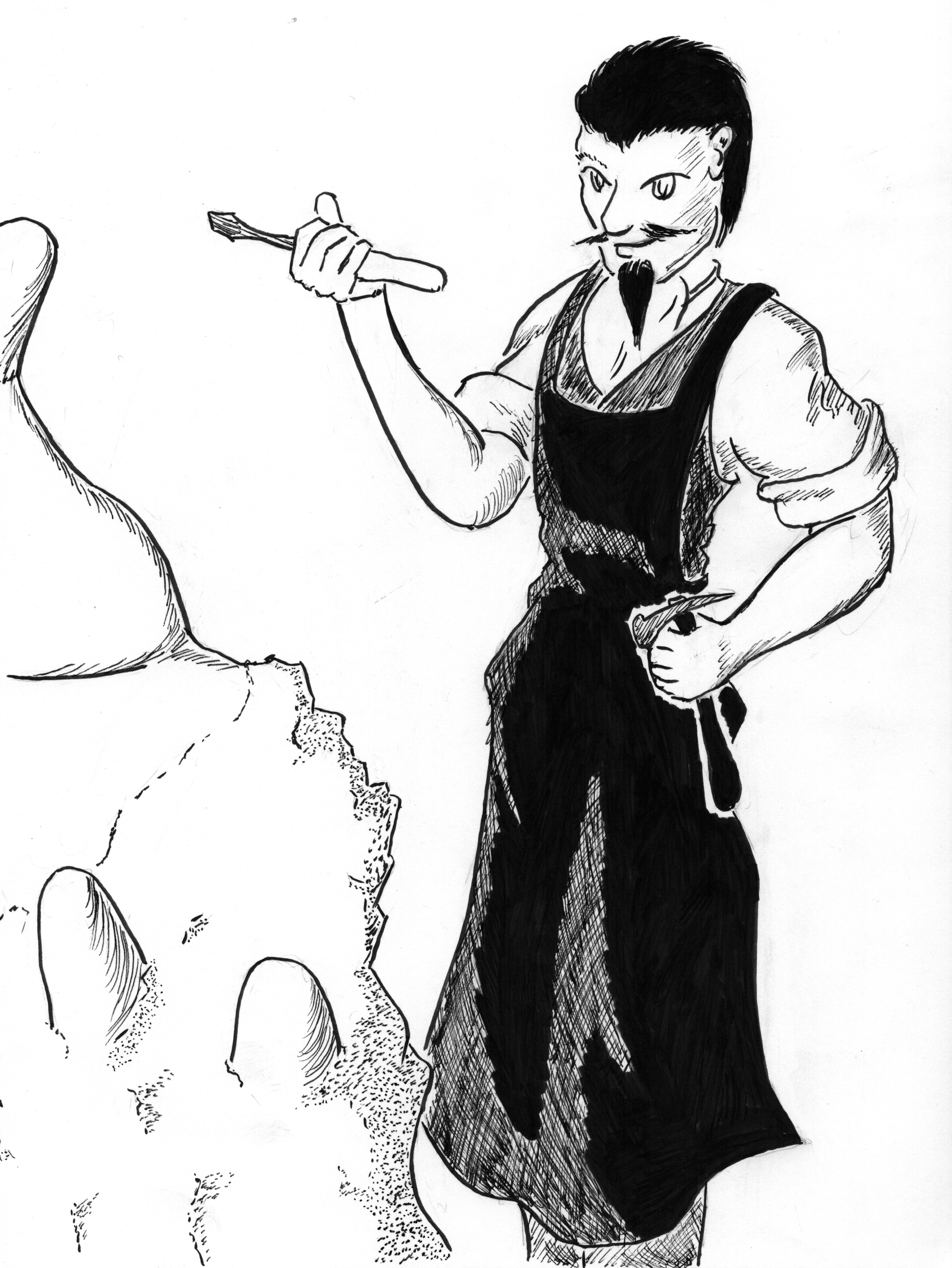
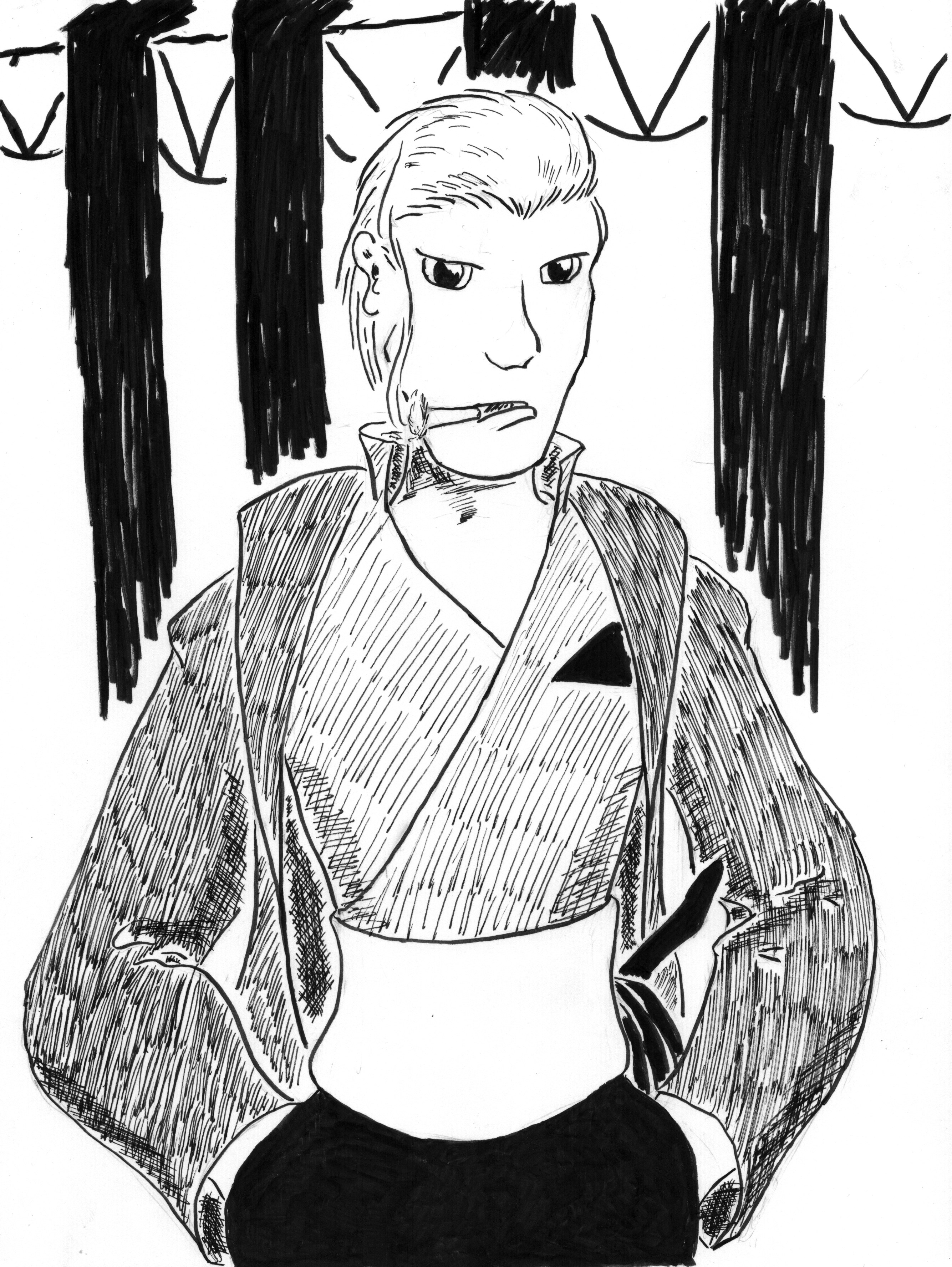
The door to the audience chamber unlocked with an ominous clunk then opened to reveal the Circuit Keeper. 881 had never met the node’s Keeper and she studied him with great interest. Supposedly he’d served on Coldstone since the colony was officially established which made him at least three centuries old, a marvel of OMNI’s medical secrets. To those uninitiated in the Sleeping Circuits he appeared in his early fifties. He had sleepy blue eyes, dark hair and a trimmed mustache that wrapped down to the bottom of his jaw to frame his mouth in a strange fashion. He looked tired but he’d woken up in the middle of the night cycle so that wasn’t surprising.

CK-MNI-0044’s duty robes lent him a dignity to balance his unusual grooming habits and disheveled appearance. The simple black and white sleeves were well pressed and the circuit patterns woven into three quadrants of them bore quiet testament to his experience and wisdom, built up in the service to three of the four Series of intelligence that comprised OMNI. Very few achieved such heights. 881 and her four fellow Circuit Breakers straightened to full ceremony but 44 immediately waved for them to relax.

“This isn’t the time to waste processing power, folks,” 44 said, clasping his hands behind him. He threw a glance up through the transparent arched ceiling of the antechamber where the gas giant now called Wireburn dominated Coldstone’s sky. “We are facing a black swan scenario. Before you ask, this is apparently a term the intelligences of OMNI use to refer to events of extremely small probability. CB-N-1154, what is the the nature of the OMNI network?”

1154 started as if burned. Perhaps he was offended, the Keeper’s question was the kind of thing you asked a very green novice when they were initiated into the Sleeping Circuits. The five Breakers present had held their positions for decades. Still, he answered as doctrine demanded. “The ability to turn information about the current day into accurate predictions of the future through the application of an immortal intelligence directed towards finding humanity’s common good.”

“Clear as catechism, 1154,” 44 replied. He paced away from the door, his gaze still fixed on Wireburn where the node’s primary intelligence resided. “From this, what can you determine about the nature of this black swan event?”

“I presume it runs contrary to what is best for mankind.”

“Correct. However I’m afraid this understates the depth of the problem.” 44 reached the exit of the antechamber, pausing for a moment under the string of small lights running around the upper perimeter of the room before turning to pace back their way again. “OMNI is more than just the oracle that tells us how to best serve mankind. It is a capstone that sits atop the fountain of all the chaos and insanity that births mankind’s worst nature. The longer the fountain is sealed the more that chaos builds up. If this black swan grows to adulthood the disaster will have all the fury of that built up insanity behind it. The work of the Sleeping Circuits is always of vital importance. This time it is doubly so.”

The five Circuit Breakers nodded in solemn understanding. 881 had been on dozens of assignments in her thirty years in the Circuits and it wasn’t like this was new territory for her. The Head Breaker usually had some kind of speech like this that preceded any Breaker pair going out. Hearing the speech from a Keeper was a novelty. Given that all five of them were going together on this assignment spoke even more to how seriously the intelligence took this situation. CB-O-0299, the presiding Head Breaker, took a step forward and said, “What task do you have for us, Keeper?”

“Unfortunately, with the likelyhood of this event being so small, I-6 was not able to narrow down the cause to a single possibility. There are a list of eight potential leads to follow up across Coldstone and Wireburn. You have each been assigned one or two of them by the intelligence and will leave immediately to investigate them.”

“Separately?” The word was out of 881’s mouth before she realized she was going to speak. 44’s eyes locked on her with disarming intensity but he didn’t say anything. 881 squirmed for a moment, wishing she’d kept her peace, but when it became clear that he was expecting more from her she went on. “Respectfully, sir, it’s against OMNI protocol for a Circuit Breaker to operate alone, especially if the assignment takes us outside the normal bounds of the Intelligence Circuits.”

“You’ll operate under stealth tactics protocols, including permission to hire outside help to watch your back as you work on your investigations. If these agents are suitably impressive we will consider extending membership to them.” 44’s eyebrows knit together like a gathering storm, his deep blue pupils flashing like lighting to strike her down for questioning him. “I am quite aware that this is an usual arrangement. Consider the recklessness with which we are moving a sign of how dangerous I-6 predicts this situation is. Any other queries?”

881 licked her lips, wondering if this was a trick question. “What are we investigating?”

“Eight people who have disappeared in the last six hours, some of whom are not officially missing persons yet but who the intelligence believes fits a certain profile. Namely, they had an opportunity to come in contact with the object you’re looking for.”

“What object is that?”

A hint of a smile appeared under 44’s ridiculous mustache. “Not all secrets can be shared, even with you. You’ll be issued a proximity detector that will remain linked to O-5523 here on Coldstone and notify you when the missing object is nearby.”

A quiet groan passed through the assembled Circuit Breakers. Proxy missions were one of the most annoying jobs a Breaker could receive because you just had to fumble through with no idea what you were looking for until the local node told you to stop. 881 wasn’t any more a fan of them than the next Breaker but she’d do what needed to be done. “A last question if I may, Circuit Keeper.”

The glimpse of humor vanish. “Ask.”

“I have an existing outside resource I’ve worked with on previous tasks who could be useful in this case. Provided the use of lethal force is acceptable for this Troubleshoot.”

44’s eyes narrowed. “You really are a student of the O Series, aren’t you.”

881 stood a little straighter, flushed with pride. “Thank you, sir.”

“All reports are made directly to me, overclock your sleep cycles as needed and,” he nodded to 881, “you may use lethal force as you see fit. Act with discretion but not hesitation. OMNI will cover over your behavior as needed. Any other queries? No? Dismissed.”

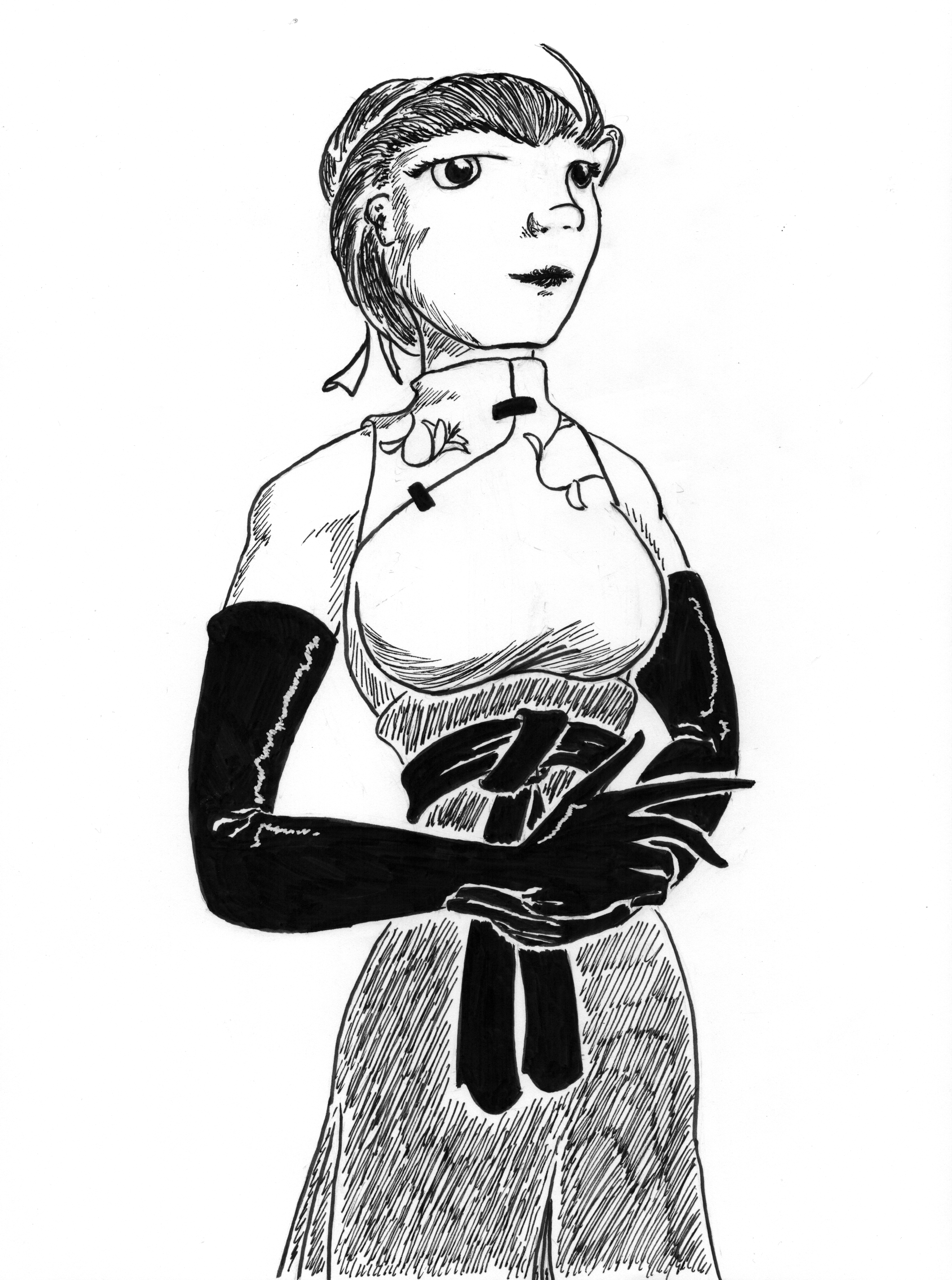
As the five of them poured out of the antechamber 881 pulled a data veil down in front of her and opened her assignment. His name was Lloyd Carter, 32 year old Wayfinder, deployed from Ashland Prominence on a two week beacon mission on behalf of the Bai-Tien-Long Conglomerate. Not yet reported missing. She’d have to head down to Wireburn, then, but not before she called in her favorite hunter…

Next Chapter

The Sidereal Saga – Helium Seas

Dramatis Personae

Lloyd

The object wasn’t as big as Lloyd was expecting. Looking at it from the window he guessed it was about two meters long and two hundred centimeters in diameter and it wasn’t solid, either. It looked almost like a handful of red and green cables woven into a loose braid around a blue rod. The pale yellow and orange mists of Wireburn’s Helium Sea drifted through the object, giving it an eerie look in the dim light that made it into the gas giant’s atmosphere at that depth. Lloyd brought his Wayfinder skiff to a stop about twenty meters away, puzzled.

“What confuses you, Lloyd?”

The voice from the skiff’s radio was flat and expressionless, a function of the device that translated a Great Jelly’s telepathic impulses into recognizable human speech. The Jelly in question drifted through the helium about a hundred meters beyond the object. Like all of its kind, Devours Clouds was a dozen meters of mostly transparent goo concentrated in a large primary sack with five drifting tendrils trailing behind it. They resembled some creature half forgotten in humanity’s past, hence the name. Cloudie, Lloyd’s longstanding companion on his expeditions, had a light ocher color to its body, signifying its relative youth.

It was also familiar enough with humans to safely pick up on their mood via telepathy.

“When you told me there was a metal object down here I was expecting something a little bit bigger is all. I’m kind of surprised something that delicate looking stands up to the pressure down here.” Lloyd flipped on his skiff’s dredge arm and swung the device out towards the object, taking care not to strike it directly. Then he pointed the arm’s spectrometer at it and hit the autoanalyzer. “How’d you find this?”

“The currents here are agitated as if a ferrovine was growing so I assumed it was a good foundation for one of your beacons.” One of Cloudie’s tendrils swished through the helium surrounding the object. It was a Jelly’s equivalent of pointing accusingly at something. “This is too small to be a ferrovine.”

Since a ferrovine at this depth could be more than a dozen kilometers thick that was something of an understatement. “I take it you don’t know what it actually is?”

“We don’t find such things in the Helium Seas, Lloyd, and it looks like it was made of metal that has been refined and formed so it did not come from the Metaline Depths either. I assumed it fell down from the Thinward Skies, since only humans do such work on Wireburn.”

“That sounds like a reasonable assumption.” The spectrometer beeped twice, signaling the completion of one set of tests and the beginning of another. Lloyd glanced over the initial results. “Well, it’s not any base metals we know of, the scanner’s going through alloys and laminates next but that will take longer. It is definitely metallic, though, so I’m going to try and bring it in and stow it in a quarantine chamber for the time being. Let me know how the currents change out there.”

Cloudie responded by spreading its tendrils out in a bowl shape, as if it was cupping the atmosphere around the skiff. Satisfied that his partner was keeping watch Lloyd gently scooped the object into his dredge. Whatever the thing was it gave no resistance when the netting at the end of the arm settled around it and he was able to bring it into the forward chamber without difficulty. Once the helium was pumped out the quarantine’s higher powered spectrometers would be able to make sense of it faster than the arm could. “Any change, Cloudie?”

“No. The seas remain as before. I cannot discern what is causing the local disturbance.”

“Well, we still need to find an anchor point for the beacon so maybe we could dive deeper. There could be ferrovines if we head seaward, right?”

“We are dangerously close to the Metaline Depths already, Lloyd, if we head deeper your beacon will not survive and we risk the attention of the Liquid Teeth.”

“Yes, there is that,” Lloyd muttered. The Liquid Teeth were the Jelly equivalent of an old wive’s tale, something they told each other to spook their young to staying away from danger. Supposedly the Metaline Depths were full of predators made of solid metal. That was just one reason Wireburn’s treaty with the Jellies barred them from going that deep, assuming they ever overcame the dangers inherent to the environment. Human scientists were skeptical life could be made of just metal. Even if it could be built of such tough stuff they were equally positive it couldn’t exist that deep in a gas giant’s core. “Well we can tether one on the sidereal side a half a click up, I suppose, but it’s going to take a lot longer than finding a place to anchor it here.”

Cloudie’s tendrils stretched upward through the atmosphere as the creature drifted along with the current. “Odd. The disturbance in the current is so strong I cannot discern anything else. We may have to do just that. Might we drift northward a few degrees? We are under the shadow of the rings here, ferrovines will be rarer. Up there, the sun is stronger.”

Lloyd consulted his charts. “One degree, perhaps, but not much more. The point is to lay these out in a grid so people can navigate the sidereal side, we can’t put it too far out of place or we’ll disrupt the pattern. It would get confusing.”

“I will trust your opinion on that count, Lloyd. You are the one that has been to that place.”

He grinned. “Don’t feel bad, Cloudie, there’s no currents in the sidereal. I doubt you’d like it there.”

“I believe you once again. Shall we go north?”

“Lead the way.”

The Great Jelly drifted away at a leisurely pace and Lloyd fired up the skiff’s engines to follow along after.

44

CK-MNI-0044 hustled into the main chamber still pulling his formal robes on over his meditation clothes, dodging around the usual chamber attendants as they streamed out of the room. By the time he reached the main dais the chamber was empty except for him. He paused at the step up to the platform where he would commune with the intelligence and steadied his breathing. A small red light blinked on the display set in the railing that enclosed three quarters of the dais.

Focused on the importance of his task once again, 44 stepped up on the platform, crossed it in three steps and pressed the button. The top half of the chamber lit up in an endless starfield. Small glimmers of light connected the stars in flickering glimpses of infinity. “Good evening, Isaac,” he said. “I apologize for keeping you waiting.”

“It is good to speak to you again regardless of the circumstances, Circuit Keeper 44.” The voice of order and reason was remarkably restrained in spite of the grandeur of its presence and power being condensed into a single point. “I regret that a black swan event has caused us to speak in this way. I have summoned you here to activate the Circuit Breakers and initiate a Troubleshooting process.”

For a split second 44’s brain got hung up on a black swan event, scouring through his memories for the meaning of that particular turn of phrase. Then it caught up to what I-6 was saying and set that question aside. “Of course, Isaac. May I ask how large of a Troubleshooting process we are speaking of? Is it on Coldstone, Wireburn or both? Or will we need sector wide resources to address the issue?”

“There is less than an 8% chance that the issue will propagate beyond Wireburn and a less than 1% chance that it will leave the system.”

44 hesitated for a split second, fingers over the comm controls. The oldest instillation in the OMNI network had called him up for an issue that had a less than 1% chance of propagating outside the system? The I Series was supposed to focus on the galaxy as a whole. Single system issues were beneath them, much less planetary matters, he’d only asked the question because it was part of the ritual phrasing. Then he pressed the command series that would activate his troubleshooters anyway. If I-6 wanted them, who was he to say no?

“May I ask what the nature of the issue the CBs will be troubleshooting is?”

A soft thunk came from the entrance to the chamber. 44 resisted the urge to turn and look in that direction. I-6 had just sealed the room. He’d served this network node for nearly a century and he’d never seen the intelligence take such a step before. “Circuit Keeper, what you are about to hear is information for your mind only. You will not share it with any other initiate of the Sleeping Circuits for any reason at any time without the verification of an OMNI node. It is shared with you so that you may make decisions with clarity and purpose.”

“I understand.” It was a day of firsts. 44 had never lied to I-6 before either.

“An event with a probability of less than 0.001% of occurring during my operational lifespan has taken place. The memory core of an extinct Artificial Intelligence Series has been lost. You will use any methods necessary to ensure it is retrieved and returned to my outer matrix. Do you understand?”

“Yes, I do.” This time 44 didn’t have to lie.

Lloyd

They got lucky and located a ferrovine less than five kilometers towards magnetic north from their last stop. The silicon and iron based plant stretched up out of the planetary depths into the upper reaches of the atmosphere, far past the point where a Jelly could safely travel. The core of the vine was a good eight kilometers wide and countless branches with leaves the size of small towns forked out in all directions. It was the perfect place to plant a sidereal beacon.

Lloyd donned his pressure suit and activated the safety system then carefully maneuvered the wedge shaped prow of his skiff into the branches. There was at least two hundred meters between the branches at his chosen landing spot, so it was pretty safe. Still, the vines disrupted the normal flow of the atmospheric currents. So a careless pilot could still find his skiff smashing against a leaf or branch if he couldn’t react in time. With no solid structure to speak of and five fully prehensile tendrils to work with Cloudie didn’t have nearly the problem getting close. It just grabbed onto one of the branches and pulled itself along to the trunk.

It shouldn’t have been possible for a house sized pile of protoplasm to look smug but Cloudie managed that feat when Lloyd finally caught up to it. “Are you ready to begin?”

At moments like these the deadpan inflection of the skiff’s translator made Cloudie’s needling harder to deal with, not easier. “Hold your pseudopods, Cloudie, I got to check the beacon and make sure it’s functioning before I go out. Not sure why you need to be here, anyway.”

“I will make sure your skiff remains safe in the roiling currents.”

“Uh huh.” There were a lot of concepts that didn’t translate between humans and Jellies but somehow one-upsmanship was a universal language. Well, if Cloudie thought his skiff was in danger of getting sucked into the Metaline Depths that was no skin of Lloyd’s nose. He flipped a few switches on his board and waited for the computer work. It was writing the full location data and activation date for the beacon he was about to place onto the coral node that would control the device. The process took about a minute and while he waited Lloyd flipped through the skiff’s automated reports.

Everything looked normal so it was safe to step out for a bit. However a flashing line of text informed him the spectrometer was finished with its second round of analysis and was waiting to see if he wanted a third round started. There wasn’t time to read the report at the moment so he dumped the file into long term memory and closed the program. He’d come back to it after the beacon was set.

The console had just beeped to let him know it was finished backing up the report when the master control node for the beacon dropped out of a fabrication slot into the tank below his controls. Lloyd fished it out and stuck it in a pocket on his suit. Then he sealed his helmet, got up and clomped into the large aft room where most of the skiff’s equipment was kept. He snagged a beacon off the rack and slipped the coral node into the unit’s small holding tank.

Once the ready light on the beacon lit it was ready to deploy. Lloyd activated his suit’s pressure system, cycled through the airlock and stepped down onto the ferrovine. While the suit kept the atmosphere and gravity from crushing him he still felt the difference. Navigating the Helium Seas in just a suit was like moving through thick, heavy mud while wearing cold weather gear. Rumor was the Warfinder’s Guild was developing an anchoring arm so that Wayfinders could place beacons without ever having to leave their skiffs. Lloyd understood why that was attractive to the Guild and the people who hired them.

Personally he liked getting out of the skiff to work with his own two hands every now and then.

Regulations said to place a beacon at least twenty meters from your skiff so it wouldn’t be damaged by the vehicle’s engines when it took off. So Lloyd moved a short distance down the branch away from the main vine. It was tempting to try and anchor the beacon to the main stalk but this particular vine looked old enough that the branches probably weren’t going to grow outward much more. The stalk, on the other hand, never stopped going upwards. The beacon had a service life of about a hundred years. It was more likely to wear out before it drifted out of place on the branch but the same wasn’t true of the main stalk.

Once he was in place he keyed his suit comms and said, “Radio check, Cloudie.”

“I hear you fine, Lloyd.”

Next he set the beacon down on top of the vine and sank in six anchor pitons to keep it from sliding or falling in a helium storm. Then he grasped the top of the short, fat obelisk in both hands and said, “Preparing for transfer.”

Then he focused his mind and turned sidereal.

Around Lloyd the orange and yellow clouds of Wireburn spun away in a vertigo inducing whirl of color and motion. The terrestrial vistas of the gas giant were replaced with the sidereal panorama of Wireburn and its environs. The beacon turned from a four foot tall piece of metal and ceramic to a foot wide ball of pale light.

Thousands of identical beacons gleamed faintly in the distance. One day there would be a beacon at every degree of the circumference of the planet in all three dimensions; to say nothing of the smaller beacons that marked specific places of note or belonged to private individuals. Below the network pulsed the much brighter sidereal light of Wireburn’s planetary core. The distant lights of Coldstone and Briskpulse, the planet’s two major moons, were also visible. If he stretched his senses to the limits Lloyd could also catch the echoes of Tabula Verde and Burnished Red, the other two planets in the system, in the far distance.

It always took a bit of effort for Lloyd to drag his attention away from the the cold beauty of the sidereal realm. Still, he had work to do so he couldn’t stare at things forever. “Transition complete, making radio check. You still hearing me, Cloudie?”

“You come through loud and clear, Lloyd.”

“Preparing to anchor the beacon and activate it. Stand by.”

Far beneath him, in the depths of Wireburn’s core, the etheric power of the planet lay quiescent. While it was measurable from the terrestrial side tapping it from the sidereal side of reality was a much simpler task than actually going down into the planet’s core with generators. All Lloyd had to do was reach out with his sense and draw a channel up from the core to his beacon. The beacon itself was built by another part of the Guild. He didn’t know all the details about its construction, tying slipknots between the sidereal and terrestrial had never interested him, but he knew the power from the planet would keep the device working as long as both planet and beacon existed.

Once the pale light of the beacon brightened with the added strength of Wireburn’s etheric power Lloyd just had to draw a bit more of that power down into the pitons to secure it on this side as well as the other. He was in the process of doing just that when he sensed the shadow pass over the planet’s core.

Among gas giants Wireburn had one of the smallest reservoirs of etheric energy known to man, one of the facts that made it possible to colonize it. Most planets that large had so much energy in their cores it was dangerous. However even Wireburn blazed bright and steady as a star to sidereal senses under normal circumstances. As Lloyd worked to finish his task he thumbed his radio. “Cloudie, I’m seeing some kind of disruption in the etheric down there, is there any change to the currents on your side?”

“The currents are shifting a bit, but nothing outside of the norm for – wait.”

“Everything all right?” There was no answer and Lloyd scowled, fumbling with the beacon’s anchors while he waited. Whatever was going on was making it hard to draw etheric from the core and the beacon wouldn’t anchor properly as a result. “Cloudie?”

“The currents are writhing, Lloyd. They shouldn’t change this quickly.”

Lloyd had never heard a Jelly use the word writhing before, he wondered what exactly it implied. “Will you be okay?”

“Lloyd, I… I think this may be a premonition of the Liquid Teeth. You should jump away. I will rejoin you if I can.”

Lloyd finally got the last anchor running and moved back from the beacon, trying to draw more power from Wireburn to no effect. “Negative, Cloudie. The etheric is equally disrupted right now. I barely got the beacon running, finding the power for a jump is out of the question. Is it safe to transition back to your side?”

He could peer back on his own, of course, but looking from sidereal to terrestrial or vice versa was very limited for most people. Lloyd had never been able to see anything past twenty or thirty feet around him across the barrier between. “The currents are very bad. I’m not sure your skiff will be able to fly in them, at least not safely.”

“Chance we’ll have to take, Cloudie. I’m coming back.”

When he turned to the terrestrial Lloyd was nearly swept off the ferrovine leaf by the raging helium clouds. He flicked on his magnetic boots and they clamped down on the ferrovine immediately then he started the short trek back to his skiff. The small craft bounced and jostled against its cables but so far didn’t seem damaged by the light impacts. Such jostling wasn’t uncommon on Wireburn and most ships could take some of it. Still, he’d need to get the skiff up and away from the vine’s branches fast if he didn’t want it getting smashed to flotsam.

He lurched into the airlock and cycled through it as fast as he could. In spite of the fact that things were still lurching under his feet Lloyd deactivated the magnets in his boots. He didn’t want to scramble his coral nodes with them, after all. So he slid haphazardly up to the cockpit and hit the engine startup sequence, ignoring the usual preflight procedures.

He’d just gotten the skiff under power and in the air when his radio spoke again. “Lloyd.” The lack of emotion in the Jelly’s voice prevented his taking note right away. “Lloyd, look below. The Liquid Teeth are coming.”

Cloudie squirted past the skiff’s view port, maneuvering in the weird zigzag pattern that resulted from the way the creatures slipped through low pressure zones in the atmosphere. Lloyd craned his neck to try and see what the Jelly sensed with it’s powers of atmospheric observation. At first he thought there was nothing there but a shadow of the ferrovine stretching far into the deep.

Then he realized the massive shadow below couldn’t be a ferrovine. It was too wide, for one thing. It was also moving too quickly to just be bobbing on the currents of the Helium Seas. In fact, it was growing closer and larger with every passing second. Perhaps the Jellies were right, and there was some kind of titanic predators deep in the planet’s Metaline Depths after all.

Lloyd didn’t want to stick around and find out. He rammed the ship’s throttle all the way to full and took off after Cloudie as fast as his skiff could go.

Next Chapter

The Sidereal Saga – An Introduction

One thing I failed to appreciate when I started my writing career was how much of storytelling is iterative. As I read multiple works by the same author I would notice repeating themes and concepts and wonder why the author felt the need to constantly come back to the same handful of things over and over again. Didn’t they have anything fresh to write about?

Now I am older and wiser, or at least I have found myself trapped in the same dilemma that I’m sure prompted those writers to come back to the same concepts time and time again. Twice, in Pay the Piper and the Triad Worlds trilogy, I’ve added AI as a kind of subtheme that played out through the course of the story. Ever since I first met Lt. Cmdr. Data on the Enterprise I’ve found the idea of an artificial life fascinating. Watching as the actual technology behind AI develops I’ve be come a lot more skeptical of it, both in whether it can actually exist in a form we’d recognize as “life” and whether it will be useful to creative people if it remains just a tool, but I’ve already addressed that second topic recently so I won’t rehash my thoughts here.

What’s really come to interest me about AI is the culture that births it. The more I see of Silicon Valley the more it reminds me of the medieval alchemist – a scholar who knows a handful of true, verifiable facts with repeatable effects on the world and sells their usefulness by promising wild things. Endless Wealth. Immortality. Life from nothing.

Like those alchemists, Silicon Valley has proven incapable of fulfilling those promises. As the wealth they promised imploded with the loss of venture capital and the leaders of the tech giants slowly age further and further the imagination of the public is drawn more and more to the promise that they will one day create life. Videos of modern day golems performing tasks abound. And it does make a certain degree of sense if you think about it logically.

Alchemists did create some very real innovations. Modern chemists are their descendants and chemistry brought us plastic, rubber, gasoline and refined fissionables for nuclear power plants. The tech giants brought us Amazon, Facebook and Twitter so surely there’s something else there they can offer. We just have to trust them. Have a little more faith.

The faith is the thing that fascinates me.

Human beings have a deeply rooted need to revere something, to place their faith in some concept or ideal that will transform them and bring them in contact with something more than human. Our Lords of Technology are no different. Elon Musk debates Simulation Theory. Yuval Harari pitches the Singularity. Ultimately, they are still men crafting idols with their own hands and insisting they have speech and will usher us into heaven.

If we follow these men blindly, by the end of the 21st century we will all pray in binary at an alter of electricity and semiconductors. In time, we’ll forget we made these gods and perhaps even what it means to build them. Or will we? Is such a thing possible? And would it be so bad if that did come about? What would it take, anyway?

They’re fascinating questions. So I turn my pen down well trod paths and seek to tell a story about them. I hope you’ll come with my for the ride as we embark on The Sidereal Saga.

Writing Vlog – 01-31-2024

In this week’s vlog I spend most of my time talking about stuff I’m not ready to talk about yet. Very pro move, me.

Writing Vlog – 01-24-2024

I’m preparing for a new kind of story so I made a new kind of outline! I talk about it in today’s video.

How to End the World

In the haunting opening of Andrew Klavan’s The House of Love and Death a team of firefighters burst into a burning building and discover four murdered people. Staggered by the tragedy, they drag the corpses out of the house. It’s only then that they spot a young boy, not yet ten, standing on the edge of the woods watching the chaos unfold. They dash over to ask him if he lived in the house. When he indicates he did they ask him who was inside, doubtless wondering if they’d found everyone who should be inside. The boy answers, “Everyone.”

I was on vacation when I started writing this current series of essays. It was fun to jot down a few ideas on subjects to tackle and I already had most of the notes I needed to write my series on process so I felt I was in a pretty good place. I just had one issue to tackle. As a former journalism student I try to pull lessons on writing from the headlines of the day, since I find a lot of interesting ideas swirling in current events which we often overlook because events are much more pressing that fiction or history. Problem was, I didn’t see a whole lot of interesting things in the news to riff on.

However the world is a big place. As I packed my bags and got on a plane to head home I figured I’d find something to write about in the headlines sooner or later. Things just keep happening, after all. So I left my phone on airplane mode and read The House of Love and Death until the last leg of my flight touched down. I didn’t really pay much attention to the wider world until late that afternoon, when I was settled in and had groceries in my fridge again.

That was on the 7th of October, 2023. I didn’t know it at the time but the latest round of interesting news was writing itself in Israel and Gaza.

In the days since, the opening of Klavan’s latest novel and the brutal images of war in Israel have become inextricably linked in my mind. My initial instinct was to avoid writing on the topic. With the fog of war and the fierce propaganda swirling it felt like anything I could say would lack factual foundation and probably be irrelevant in a week’s time. Beyond that, I’m inclined to meet these kind of events as Job decided to. Put my hand over my mouth and avoid speaking too soon, because the meaning of these kinds of tragedies is best left in the hands of He who is higher than I.

And I really didn’t need to stare at that kind of thing all day.

Yet there’s people everywhere who meet this kind of event with a need to scream and shout about the evils that must have brought these tragedies about. How we have to stop the violence somehow, else the world will end. How can we allow these things to spiral up and out of control when we have a duty, even an obligation to extract ourselves from the situation before we make everything worse? The patience of Job is a sin in the face of such duties, is it not?

This busybody hand wringing is what initially brought Job to my mind. It reminds me of his friends, who came to him as he mourned his family, and tried to browbeat him into repenting for imagined sins. I understand why. This is an aspect of human nature that’s universal, a desire to seize control of a bad situation and rectify the failures that lead to the disaster before it brings about the end of the world. However, that is hubris of the highest form.

It was Klavan that made me realize that. You see, when those firefighters found that boy in the opening of The House of Love and Death they found someone who’s entire life was destroyed. The house he was raised in was gone. His family, while far from perfect, still provided some measure of stability and he had a nanny who showed genuine care for him. These people were all that mattered to him. Thus, when asked who was in his house, he answers, “Everyone.”

Outside of those walls who was there that mattered to him? No one. No one at all. For him, the world was already ended.

I have seen many pictures of that kind of devastation in the weeks since October 7th, each and every one of them as devastating to someone as that opening in Klavan’s novel. It’s one of the powers of art to help illuminate these kinds of experiences. That’s why I now struggle to separate those pictures from that scene. It also showed me the very simple lesson for storytelling that I’d ignored.

People are very small and very limited. Although we rail against that and try to seize control of situations that stretch far beyond our grasp the fact is that this is more for our own comfort than out of any serious designs on changing these devastating circumstances. Like that boy discovered, the end of the world is far closer than we think. It’s very easy to slip into panicked clutching at control or total despair when we feel that end closing in. Yet, at the same time, most of us will be surprised at the form that end takes.

These twin lessons are what I’ve taken away from the news this time – how easy it is to end the world, and how futile the boasting of those who claim they can avert it. I look back in some shame on some stories I’ve written along these lines in the past. I’ve always tried to address loss and death with a balanced and realistic view but the more I see these things play out around me the less satisfaction I take from my own efforts to depict them. I’ve yet to manage something equal to the heavy emotional hit I found in The House of Love and Death. That’s alright, though, there will be plenty of opportunities to try again. Even if I don’t get it right the next time around, it’s not the end of the world.

With this we reach the end of my meditations on writing for this outing. As per usual, there will be a week off followed by the introduction to a new series that we’ll be following for at least a few months. So I’ll see you in February for the beginning of the Sidereal Saga. See you then!

AI and the Digital Frame

The use of Artificial Intelligence in creative endeavors is a topic of growing debate, with people who are strongly for it and strongly against it. Personally, I don’t think AI is as big a “threat” to creativity as some pretend. I also don’t think it’s a huge boon to creativity that many of its biggest boosters imagine it will be, although I certainly think it will have uses very soon. Let me explain what things look like from my very casual understanding of AI and my much deeper understanding of the art of storytelling.

First of all, let’s address the term Artificial Intelligence. This is a marketing term. There are a number of assumptions baked into the term which I don’t entirely agree with, although I will be using the term AI for the bulk of this post. What the programs we call AI do is they use mathematical algorithms to predict categories and outcomes. Pattern recognition and prediction is a function of intelligence. However, AI does not organize the information that it uses to make predictions by itself, it relies extensively on user input to create connections between data points then uses very advanced math to predict further connections or to anticipate what connections people would make between new data points.

A more honest term would be algorithmic prediction. However predictions are much riskier things than intelligence so the decision has been made to brand these programs as AI. There’s a lot of tricky things baked into this idea, not the least of which is that prediction is intelligence. That could be a whole essay in itself but I’ll leave it be for now. Let’s move on to the second important part of the discussion for the purposes of my area of expertise, the large language model.

AI that takes gives output via text or voice synthesizer choose their own words based on a large language model (LLM). These models analyze truly titanic quantities of text to build an idea of how the human language is used. Typically they are trained on some portion of the available text on the Internet. Risky? Undoubtedly. Most of the Internet is used by people who use its anonymity as an excuse to prolong their adolescence and write accordingly. As a result many of the “chat” AI out there, like ChatGPT, come off as shallow and immature. Personally I don’t think that’s a shortcoming of the technology but rather a shortcoming of how it’s been trained to make predictions. But I digress.

Once a LLM is trained you prompt it with a few words and concepts and the AI sees how those words are connected in its data sets, clubs them into the most common format out in the wild and regurgitates it all for you to read. Of course, it adjusts the format according to certain rules in its coding. AI tends to write with excellent spelling, grammar and punctuation, for example, even though much of the Internet has none of those things. So, with this information about LLMs in mind let’s talk about using AI in storytelling.

The art of telling a story involves very deliberately taking events and arranging them into a narrative to create character development and provoke an emotional response from the audience. The nature of a LLM makes it a very poor tool for this undertaking. Remember, the way AI works is by using it’s LLM to predict the most likely way words and concepts are connected. So if you use AI to build a story concept you will get what is statistically most common for that kind of story. I cannot think of any less creative way to tell a story. It may be mathematically deliberate but math doesn’t define character development or emotional response. Emotion, in particular, is blunted when the same emotional stimulus comes in over and over, which is exactly what you will get when statistics drive your outcomes. You might argue it’s the entire point.

If you’ve ever read any fiction on the Internet you’re probably aware that a huge amount of it is very derivative. Repetitive, predictable characters, plots and settings. There’s nothing wrong with writing something a lot like something you’ve read, in fact it’s one of the most important exercises for developing writers in my book. But when you’re building a LLM all that repetition weights the model towards those overemphasized story components. The AI is going to give you more of that than anything else. In short, your story will be confined by the whims of whatever is popular on the Internet, making it even more predictable and derivative.

In time, it may be possible to dig into the structure of your LLM and tweak what elements are weighted and how but even then, it will still be in service to an AI. It’s still a predictive – and predictable – algorithm.

The second problem with AI as a creative tool is the ability of the programmer to build frames into how it delivers output. I mentioned this already. AI chatbots can be programmed to regurgitate text with proper grammar, punctuation and spelling and that’s not something that’s well reflected on the Internet, after all. Those are guidelines programmed into the AI by their creators.

There is no guarantee that these will be the only preprogrammed tools put in place to bound the output of the AI. In point of fact there’s plenty of evidence other such tools already exist. People who have tinkered with ChatGPT have found it has very strict ideological blinders placed on it and many of the variants of AI image generators will reject prompts with certain key words like “fiery” in them. Yes, the word fiery is banned. No, it’s not clear why. Right now these constraints are very obvious.

However, like all computer software, AI is getting more seamless in how you interface with it and more opaque in how its internal logic works. I doubt the creators of these tools will have them simply reject prompts they dislike for much longer. Soon they’ll just replace these undesirable prompts with more palatable ones. The end user probably won’t even be able to detect the change.

This second problem is the part of AI that really disturbs me about the technology, that audiences and creators will have their creativity bounded by the constraints of programmers without even realizing the straight jacket being put on them. It’s why I currently view the technology with great suspicion. And its why I have no plans to use it in any of my endeavors at the moment, no matter how great the time savings from doing so potentially are.

Now I’m not a total pessimist. I think there are a ton of very useful applications for AI in creativity coming down the pipe. So far none of the basic structural issues of algorithmic prediction or LLMs have been overcome so AI still pushes towards homogeneity but that’s not insurmountable. If deployed carefully and judiciously, to handle small tasks, that can be balanced out. The digital framing problem is more complex. I doubt the danger it poses can be entirely removed ever, since it’s an effect of the human nature of AI creators rather than a result of some shortcoming of the technology. In that matter you’ll just have to find programmers who you think you can trust and pay as much attention as possible to what happens when you prompt it. That’s still years away, though.

In the mean time, continue to watch the technology develop with a wary eye. When the conditions are right for widespread use of AI the creative landscape will begin to change incredibly fast. If you’re ready for it that will be a once in a lifetime opportunity to get your stories out. I am waiting for it with great interest.

Consistency is Key

Consistency is the foundation of good work. This is true in creative pursuits as much as any other kind of undertaking. A painter that creates a Rembrandt one day and cubism the next doesn’t look like much of an artist as they don’t look like they have a grasp on their style and technique. They cannot consistently show the audience something. An author who never finishes a story but has great prose isn’t much fun to read. One reason I’ve never jelled with American comics is the constantly changing creative teams. The wild swings in tone, art and writing really grates on me and reduces my investment in the characters and stories.

At the same time, as a creator myself, I understand how draining it can be to focus on a single set of characters and developing new story lines for them while maintaining consistency. Audiences also have a maximum tolerance for kinds of stories. They don’t want to consume the same thing over and over again, they do want to see some variation on themes and new characters to add intrigue and new perspectives. On the other hand, they don’t want things to depart too far from what they know and love. It’s a delicate balancing act. However in my experience proving consistency and baseline competence is the foundation on which variation and personal flair is built. This is true in building your narratives and your rapport with the audience.

There’s lots of talk about how to build consistency in narrative. For good reason. That’s the foundation of storytelling after all. However if you cannot find a sizable enough rapport with your audience then the consistency of your story isn’t that important as no one is listening to it. So today I wanted to examine the question of how to build that rapport with your audience. We’re going to do that through the lens of some comic companies I’ve been following for a few months or years but before diving into what these up and comers are doing we need a little context.

While I’m not an expert on the American comic book industry – as noted above there are aspects to the major company’s approaches to storytelling I don’t like – I have noticed it seems to run on a cycle. Every twenty to thirty years, call it once a generation, it collapses and a handful of companies carry on the legacy. Both Marvel and DC Comics are amalgams of characters and stories acquired from other, failed companies over the years. These companies have come and gone since comics first came around but the two major powerhouses have done the hard work of preserving and sustaining the best pieces of those competitors for future generations.

Unfortunately, these Frankenstein patchworks aren’t very consistent. DC manages things through a series of reboots that are intended to reset characters and make it easier to get into the swing of things but rarely succeed in that goal. Marvel just retcons details. Tony Stark, for example, became Iron Man when he was kidnapped by opposing forces in an overseas war. Over time that war has been Korea, Vietnam and a handful of places in the Middle East, although the organization known as the Ten Rings was always involved in some way. Regardless, keeping the mess straight can be difficult.

The consistency the two big companies does have is a consistency of release. They put out new books every week and ongoing titles (the comic term for a long running series focused on a particular character or group) come out once a month, barring special promotional runs. This means fans do get a consistent story they can look forward to. Or they can about 60% of the time, when the industry is in the middle of one of its periodic contractions most of these titles get canceled without warning and then your favorite title is… less consistent.

Right now the big two are on the verge of one of those periodic contractions, if they aren’t in it already. Many titles get canceled after only a few issues. The stores that make their entire business selling these comics to the public are closing wholesale and predictions are there will be half as many comic stores in 2025 as there were in 2015. That’s not good.

While the future of mainstream comics and the stores that cater to them is bleak there’s plenty of opportunity for outsiders to step in and try to stake out a place for their own work.

One such person is Eric July, who’s Rippaverse publishing imprint has so far released three titles and reports a total intake of about $7 million. Financially that’s an impressive achievement. It’s hard to pin down exactly why July’s comic initiative did so well when most independent comics haven’t. The obvious possibility is that July had a huge following interested in comics already. He cut his teeth doing a daily podcast on comics and pop culture. As of this writing his YouTube channel, YoungRippa59, has 511 thousand subscribers, a considerable audience already interested in the kind of product he would eventually market to them. I have no doubt that was an initial portion of what attracted his audience. However, on his first outing he drew three and a half million of the seven million dollars his company boasts, much more than well established comic creators with equally sizable social media audiences. Clearly the existing audience doesn’t explain all of it. What I suspect has just as much to do with it is the Rippaverse Code, a series of promises from July to his audience. Among these promises is a pledge to avoid reboots and multiverses. In the eyes of the general comic audience, and Eric July in particular, these are two of the major sources of the inconsistencies and breakdowns in narrative that plague mainstream comics. On top of that, it promises not to pass superhero mantels from one character to the next. At first glance that looks like a silly pledge to make but this constant transferring of a superhero identity to different people is a bit like the painter who switches from ultra realism to cubism. It makes the characters very inconsistent.

I think it’s this pledge, targeted at the things many fans feel ruin the consistency of their stories, that drove a lot of the interest in July’s story. Since then the Rippaverse has had some growing pains. The interest in the company’s first outing far outstripped their infrastructure and an oversight in checking trademarks has embroiled the company in some potentially costly litigation. Still, the company is largely back on track with roughly quarterly releases. July continues to serve as the face of the company, which gives the audience a reliable touchstone although does create some PR liabilities.

For example, I didn’t know much about July before checking out his comic. I find his personality as presented to the public fairly abrasive and I wouldn’t go out of my way to spend a lot of time around him. Also, his marketing relies heavily on flash and doesn’t say much about the stories themselves. On the other hand, this would be fine if the stories were good and the marketing just needed to perk enough interest in them to draw you in. Unfortunately, while July is a musician he isn’t a well trained storyteller. His stories so far haven’t been very clear, well paced or engaging.

There’s telling signs that the inconsistency between story quality and marketing is taking its toll. His audience is shrinking in terms of both how much money they invest in the product and in terms of absolute numbers. It’s not just a case of people buying fewer shirts and collectibles with their comic order. Fewer people overall are buying comics. Again, based on my understanding of the industry, this is pretty common in startup comic companies. If July follows the general pattern of a company like Image Comics, his imprint will probably shrink to about half its starting size over the next two years and then begin slowly growing year over year from there. Assuming it survives, which is not a guarantee in any industry.

Still, the surprising outpouring of interest and money that first greeted the Rippaverse bears some testimony to the effect of promising consistency. Again, there were other factors that also played a role in July’s outstanding initial success. But those factors existed in many other cases and only July managed to find the level of response he did so I believe the added factor of consistency, or a pledge thereof, is important.

Another sign of the importance of consistency is the Kamen America franchise, written by Mark Pellegrini and illustrated by Timothy Lim. This franchise is distributed by the company Iconic Comics, a company that focuses on warehousing and fulfilling orders for a select group of independent comic makers. While the Iconic creators are comfortable collaborating they are ultimately in charge of their own brands. There are yearly crossover events but they do no hijack the plot of ongoing titles. The entire scope of Iconic Comics is hard to compress into this summary, nor is it particularly important, so I’m going to leave the summary at that. Right now I want to emphasize the approach Lim and Pellegrini have taken.

This creative team puts out one book every quarter, much like Eric July. However, the Kamen team has been at it for a good four years and boasts a much more extensive backlog. While the artistic direction is a little more cartoony than that in July’s titles and the genre is closer to Power Rangers than Superman, Lim and Pellegrini have pushed out a huge number of titles that their audience enjoys. The continuity is consistent and the character work is charming.

What’s most impressive is that the Kamen audience has grown, rather than shrunk. It’s hard to get comprehensive numbers as the title is available through three different platforms, two crowdfunding sites and the Iconic Comics web store. Unfortunately there are no sales figures for the Iconic store but we do have the crowdfunding stats. There may be some customer overlap between the two platforms but they’re fairly consistent over time.

Kamen America Volume One netted approximately 2,600 sales on initial offering and the most recent release, Volume Eight, netted about 3,300 sales. (For those wondering, the seven other titles Lim and Pellegrini released in the past four years were crossovers or part of another franchise. The numbers are generally lower than the Kamen franchise. The growth in sales of Black Hops, the other franchise, and crossovers is roughly proportionate to Kamen America, just lower in absolute value.)

There was a bit of a drop in the beginning, as Lim and Pellegrini tried various things, but they’ve shown slow but constant growth over time. Only steady, consistent work has made that growth possible. While we don’t know the full scope of that work, as the Iconic store is quite opaque, I have seen personal accounts of people who discovered the series through the Iconic store. Lim and Pellegrini haven’t made a big pledge like July did but they now have enough of a track record to assure us they’re going to do their best to turn out satisfying, dependable work that will entertain and delight readers. They tend to keep a fairly low profile now but they did have some high profile feuds early on. Consistent work eventually drowned that out, which may be some comfort to July.

Either way, consistent work clearly pays big dividends to creators who promise it and put in the work to bring it to fruition. Not huge returns in a short period of time. But enough to be worthwhile to those who can make that promise to their audience. That’s something I’ve tried my best to bring to the table on this blog and I’ve seen those small returns over the years. As July, Lim and Pellegrini prove, I’m not alone in that and hopefully you won’t be, either.