Captain Marvel – A Case Study in Manifesting Bad Story

Last week we talked about the role I feel the creeping influence of New Thought – more commonly known as “manifesting” or “affirmations” – had in the collapse of American storytelling. I originally intended to include a short discussion of what an affirmation film looks like but things got a bit out of hand. Last week’s post was nearly double my usual target length for an essay on writing without that section. It was already late and adding another 1,200 to 1,500 words to it wasn’t ideal. So this week you get that part of things.

Today we’re going to look at Captain Marvel (2019), a film from the MCU that was released near the peak of that franchise’s popularity. Also, a film I had not watched until just a few weeks ago. The things I do for this blog…

The story of Captain Marvel revolves around Carol Danvers (portrayed by Brie Larson), an American fighter pilot who is kidnapped and brainwashed by an alien race called the Kree so that she will use her abilities in service to their interstellar empire. 

In the beginning of the tale Carol was test flying a faster-than-light craft when it crashes, irradiating her in supernatural energy from the engine when it explodes. Instead of dying instantly, she gained superpowers. The energies that suffused Carol came from the Tesseract, one of the MCU’s six Infinity Stones, objects that govern the universe. 

As a fallout of this, Carol suffers from amnesia and is discovered by the Kree. They brainwash her to believe she is a Kree soldier and her different appearance and superpowers are a result of an accident. She wears a regulator that helps her use her powers safely and is told to control her emotions. She’s put under the command of a superior named Yon-Rogg, who answers directly to the Kree supercomputer called the Supreme Intelligence.

Eventually Carol returns to Earth, the lies that have been told to her are revealed and Carol chooses to control her power no longer. She awakens to her true potential, beats Yon-Rogg and throws the Kree off of Earth. 

As a story this narrative is not really interesting. Carol goes through the each stage of the narrative without playing much of an active role. She goes from place to place, listening to other people tell herself about herself. The events of the story in the present don’t have a lot of thematic ties to her past, revolving largely around Carol hunting a lost Kree on Earth while dodging shapeshifters called Skrulls. These events catalyze her learning she’s been brainwashed but don’t do much else.

However, as a vehicle for New Thought concepts the story is very interesting.

The first element in this is the kind of power Carol has, power drawn from the Tesseract and, from there, from an Infinity Stone. Carol is a literal conduit for a cosmological force. This is about as direct an analogy for the manifestation belief that you are a shard of the divine as you can get without putting the concept directly into the story.

The story itself, however, doesn’t establish this right away. It begins by showing us the “illusions” that Carol is surrounded by, the things that keep her from expressing her full potential right away. The movie opens on her talking with Yon-Rogg. In the course of this discussion he tells her not to get angry, avoid fear and most of all, don’t express humor. These are all framed as things that interfere with a soldier’s duties. Finally, Rogg points to her heart and tells her to stop thinking with that. Instead he points to her head and tells her to think with that, instead.

In affirmation calculus, clamping down on emotions is a way to cut you off from the divine, as negative emotions are signs you’re far from the source of your power and positive emotions help you draw out divinity. This is the first “lie” that New Thought insists people are taught. Modern society makes people too intellectual and too emotionless.

This leads directly to the movie’s second illusion, which comes about when Carol meets the Supreme Intelligence. Most of this exposition has more to do with the film’s plot than its themes, but it ends with an illuminating line. The Intelligence warns Carol, “What was given can be taken away.”

Manifesting is all about using the power you already have to get what you want using the divinity that is yours already. Since all things are divine by the nature of the universe, your divinity cannot be lost. However, the fear of losing something is presented as one of the most negative emotions a person can experience and one of the things most likely to keep you from realizing your own divinity.

The Supreme Intelligence directly threatening Carol in this way is an empty threat in this calculus, to be sure. But just making the threat can keep her under control.

Both of these themes are occasionally reinforced throughout the movie, especially in a flashback sequence where we walk through a jumble of Carol’s early memories. In this sequence she’s repeatedly told she can’t, or she’s too emotional. As Carol begins to remember her life on Earth she asks Rogg about it, who tells her she’s getting emotional and she should remember her training.

Finally, when Carol knows the truth and confronts the Supreme Intelligence about what happened to her the computer tells her, “Remember… without us…you’re weak. You’re flawed. Helpless. We saved you. Without us… you’re only human.”

Carol replies, “I’ve been fighting with one arm tied behind my back. But what happens… …when I’m finally set free?

During this sequence Carol removes the regulator that the Kree gave her and manifests her true abilities, allowing her to defeat all the Kree in and around the planet without significant effort. This sequence is obviously the moment when Carol realizes she is divine and embraces it. With the power of the cosmos on her side she easily tramples over the lies that tried to hold her back. This is the emotional and narrative climax of the film.

As climaxes go, it’s not a very inspiring one. There’s not a whole lot of build up to Carol’s decision to stop controlling herself and cutting loose. She just goes around talking to people until she decides to change sides. Her self control is never shown as an impediment, keeping her from connecting to the people around her. In fact, most people who meet Carol like her immediately. She manages to make her way through life just fine before finding “freedom” so it feels as if she just has an epiphany and chooses to do something else.

That’s a feasible path for a person to go down in real life but it isn’t the most satisfying story to hear. Carol’s personal journey is surrounded by events but those events don’t feel very impactful either. She meets Nick Fury and Phil Coulson, agents of the SHIELD organization that runs day to day things in the background of the MCU. She meets some Skrulls, one named Talos being the most important. Most importantly, she meets Maria Rambou, her former wingman in the Air Force.

These characters are the third interesting New Thought thread in the movie. Fury, Coulson and Mari all serve as reflections of Carol as she goes through her journey. It’s harder to see with the first two, as they are already preestablished characters who are written somewhat in line with their previous appearances. Discrepancies can be papered over by pointing out both men are younger in Carol’s story than they are in other portions of the MCU. Maria is a new character and her presence is more informative.

We never see Maria Rambou on her own, pursuing her own ends. When she speaks it is almost always to Carol, almost always about Carol. She’s not an independent character, but rather a mouthpiece to speak affirmations into Carol until she’s ready to sustain them on her own. Consider one of Maria’s longest lines of dialog in the film:

You are Carol Danvers. You are the woman on that black box risking her life to do the right thing. My best friend… who supported me as a mother, and a pilot when no one else did. You’re smart and funny, and a huge pain in the ass. And you are the most powerful person I knew, way before you could shoot fire from your fist. You hear me?”

Even when Maria talks about her own life in that line it is entirely about Carol’s impact on it. Carol is the only person who matters. It’s eerie, but very indicative of how manifestors look at other people.

Skrulls are another interesting element in the film. They can shapeshift, making them a simple metaphor for how affirmations shape our lives. They want to be someone else and then instantly manifest it, something that is noteworthy in affirmation culture. The fact that Skrulls are recast from definite villains in the comics to sympathetic figures in this film plays into the positive ideas the writers have for this idea. The fact that it might bother other people is never explored.

In fact the film doesn’t engage with many of the questions the movie sets forth. It doesn’t ask the hard questions about when emotions are more important than self control or vice versa. The movie isn’t interested in the effects Carol’s long disappearance might have on her friends and family. It doesn’t ask about the nature of the Kree-Skrull conflict. The idea that shapeshifters who lie about their appearance on a daily basis might be naturally more dangerous than people who don’t is hinted at but never expanded on. Carol simply strolls through all these things, decides how she wants to see them and proceeds as if her assumptions are true. These assumptions are never challenged.

In short, the movie simply manifests around its protagonist.

When Captain Marvel was first released I didn’t see much point in watching it. While I’ve enjoyed many offerings from the MCU I’ve never sought to partake right away and I’ve found the franchise in general to be a mixed bag. It has some high highs but there are very low lows in there as well and Marvel’s hit rate was fairly average to begin with and has declined drastically over the last five years. Captain Marvel was definitely near the beginning of that declining trend and reviews of the film didn’t inspire me to check it out. Now that I finally have watched it I don’t imagine I’ll go back to it again.

I don’t think Captain Marvel was the first New Thought film. There are probably many others, some that I suspect are much older than this one. Yet going back and looking through it was very informative for me. I hope you’ve found this discussion of the film’s religious threads interesting but we’re not quite done with it yet.

You see, affirmation culture isn’t just about manifesting the story. It’s about manifesting positivity around that story. That’s very, very important. So, if you’ll spare me just a bit more of your patience, in the next week or two we’ll take a look at how critics reacted to the movie, both positively and negatively. More importantly, we’ll take a look at how the critics reacted to each other, and try to draw some conclusions from that.

Since this will require a bit more work than just watching a movie and pulling up the film’s script I’m not sure when I’ll have this final installment into the New Thought Saga prepared but it will be before we return to fiction again. In the meantime, thanks for reading!

The Gospel According to Southern California

I’ve spent a lot of time over the last ten years or so trying to figure out how the art of storytelling has entered into such a prolonged decline. Any art form goes through swings and roundabouts, of course. Mediums ebb and flow. Trends are just that, trendy, and the public rarely hews to them for a long time. However, beginning somewhere around 2012, stories in all forms began to slip in quality in pronounced, drastic ways.

It began with novels and comics, where most storytelling trends begin. These are low risk mediums outside the mainstream, where experimentation is quick and cheap. However, over time this bizarre collapse in quality began to spread. What happened? Was it some kind of mass psychosis? A conspiracy of cultural revolutionaries? Perhaps the Aztecs were right after all and 2012 was just the end of the world as we knew it.

I have not been alone in my quest to understand the change in culture. Many, many other people have tried to analyze the trends and crack the code and, over the last five years or so, a few conclusions have been reached.

First, and most importantly, it’s not just a question of a decline in talent, although a certain amount of that has certainly taken place. However, some of the people producing terrible stories have produced excellent work in the past. Now they do not. Furthermore, the ebb and flow of talent is a part of any artform but this kind of collapse in artistic merit far outstrips the norm. So there has to be more to it than a question of talent.

Most pundits suggest artists have fallen into the grasp of a political ideology, a form of Marxism that reduces stories to a myopic obsession over the oppressed and the oppressor. This singular focus squeezes out many of the typical elements of good story. Character details, choices, consequences and more are all obscured behind the grandiose narrative of terrible, oppressive society and the virtuous but downtrodden masses.

There’s merit to this notion as well, because any kind of orthodoxy like this is going to put blinders on creatives that strips them of their ability to think artistically about their story. However, many great artists have fallen into this orthodoxy and still told great stories. This could even be a kind of Peter principle. Only so many good storytellers are out there and the bad ones are more vulnerable to this kind of groupthink, so we will see more stories toeing the party line doing terribly. While I think this is a factor I don’t think it’s the whole story.

About a year ago I wrote about the Empire of Southern California, which I believe is another part of the puzzle. If you want the full details you can read about them in the linked post but the highlights are simple. Most of our storytellers come from a handful of isolated, insular cultural centers like SoCal or university campuses. That limits their experiences to a very narrow sliver of real life. As a consequence they’re unequipped to tell stories that appeal to the majority of people. I still think that is the case. But when I wrote that blog post I said I still didn’t think I had all the pieces of the puzzle.

You may suspect, based on this long introduction and the title of this post, that I believe I have the missing piece.

If you did suspect this, you are correct.

In 1937 a man named Napoleon Hill published a book titled Think and Grow Rich, a book that has had a profound impact on American culture in the roughly ninety years since it was published. That may come as a surprise to you, since most people I’ve spoken to have never knowingly heard of Hill or his work. The reality is, they have heard his work. They just don’t know it.

The truth is Napoleon Hill’s schools of thought have infiltrated a breathtaking swath of modern American thought. Everything from self help to multilevel marketing groups draw on his ideas. Many self styled “Christian” preachers actually draw on his ideas as gospel and many of the most powerful and wealthy denizens of Silicon Valley, Hollywood and DC swear by some variety of Hill’s theosophy.

The high priestess of Hill’s religion is known to practically every American and she wields incredible power among the nation’s largest cultural power brokers. If you haven’t guessed who she is I’ll give you a hint. She owns her own TV network, which she uses to promote Hill’s gospel on a regular basis.

Her name is Oprah Winfrey. She calls herself a Christian but what she preaches is the power to manifest. So what does that mean and why is it bad for storytelling? Let’s break it down.

The technical term for Hill’s theosophy is New Thought. It contains ideas which he updated for the modern age but they are not really very new. Since New Thought is a clunky term I am generally going to abbreviate it to “manifesting” or “affirmation” as these are the core ideas of the movement. The basic idea of manifesting is that you can think about a thing and reality will warp around you until it becomes real.

This is possible because you are divine.

Let me stress that I am not exaggerating nor am I making a joke, manifesting is a theological assertion grounded in the belief that all things are fragments of the divine and the divine is what creates the world we see around us. Since we are supposedly divine we have within us the power that creates the world. All we have to do is become aware of that power then apply it by manifesting the world we want to live in. In short, we can think and grow rich.

The simplest way to do this is with words. Affirmations are generally cited as the easiest way to begin exercising the power of manifestation. Repeating phrases like “I am healthy” or “I am loved” over and over supposedly sharpens one’s powers until these simple truths manifest. To do this we must be in touch with the divine. 

To get in touch with the divine we have to vibrate at higher frequencies, which bring us closer to our true natures. We vibrate at higher frequencies when we experience joy and love, so we focus on those emotions, we affirm ourselves and the world itself bends to our whims. It might sound like there’s more to it than that but there’s really not.

This is because affirmations and manifesting are fraudulent ideas.

However, many, many people have bought into this fraud and believe it whole heartedly. Oprah isn’t the only one. Again, it has wormed its way into a huge number of places. I’m not going to break all of that down in this blog post. If you want an introduction to the history of the New Thought movement I recommend Melissa Doughtery’s book Happy Lies, which I read as my starting point for understanding the concepts.

What’s important for today’s topic is the effects that an affirmation mindset has on creative work. In my experience, they are entirely toxic.

The first, greatest example of that is the demand for positivity. Now in general the concepts of joy and love do not have to equate to positivity but in creative circles that is an association that has become very pernicious. When a creator is discussing a story their thoughts tend to hinge on how positive the discussion is.

Creators of failed projects will often blame their failure on the widespread discussion of the weaknesses of their project. Talk around many of the recent flops in the realm of scifi and superhero franchises are good case studies. The failure of Star Wars projects like The Acolyte or DC films like The Flash are often blamed on Internet critics spreading negativity. Conversely, people who speak highly of projects are credited with positivity. They are trying to help the project manifest, so they are viewed kindly.

All this means that the creators of failed projects cannot hear any kind of needed, critical feedback. This, more than anything, is the greatest weakness of the affirmation mindset regarding creativity. A creator who cannot stand critical feedback is already a failure. Let me reiterate, if you are trying to manifest a successful story you will fail. Just sitting and muttering to yourself is not the way to make a story come about, you must work relentlessly and be open to feedback, revision and hard, hard work.

Things only get worse from there.

If anyone who achieves a state of joy and love is uniquely in touch with their divine nature then anyone who contradicts them is a blasphemer. Clearly, they aren’t in touch with the divine. After all, if we all are shards of the divine spark when we are in touch with the divine we should all agree. In this way affirmation culture is given a pass for viewing anyone who contradicts it as evil. Far from god. Worthy of any and all condemnations that fall upon them.

Many people have noted the hostility of creators towards audiences over the last decade or so and with good reason. However, the source of this hostility is often blamed on mundane factors. An entitled background. Cultural siloing. A lack of appreciation for the economic realities of the situation. However, since learning about the details of manifesting, my view on the situation has changed radically and I now believe it’s much simpler. Most creatives view their critics as ontologically evil because by taking issue with mainstream creators in any way they are resisting attempts to manifest the divine.

Thus the rift between creator and audience widens.

Yet at a fundamental level, even if the impulse to fight with critics and vilify feedback were resisted I don’t think the gap between affirmation culture and American culture could ever close fully. (I stress American culture here mostly because it is American culture that has gone through a nosedive in the last decade.) It is true that in American culture there is a spirit of exceptionalism, that we are special. However, the notion that we have all we need within us already, that the spark of the divine will change reality if we only attend to it, runs contrary to our culture at large.

Americans value hard work, hustle and adapting to circumstance. American men, in particular, are always on the lookout for the next thing coming up in the world around them. The idea that we magically have everything we need within us already is highly counterintuitive to us. That has created an ever growing rift between the culture at large and our storytellers. Feedback on the technical shortcomings of story craft will not close that gap.

The idea that words can change reality is very intoxicating to the creative mindset. Making your way through the world by artistic craftsmanship is incredibly difficult and those who achieve it might really feel like they’ve cracked some cosmological secret. As someone still looking for a way to break out from the pack, I sympathize. 

Yet it’s not true.

The people who have become drunk on manifestation as the secret to success, wealth and virtue have strayed far from reality and that makes them dangerous in more ways than one. In the arts, it puts them at odds with their audience and unable to improve. Thus, their work rots on the vine. As with many issues caused by misguided religious movements, correcting the errors will take time, patience and grace from men and God. The first step is realizing the problem is there. The next will depend on the individual.

Every person tries to usurp reality in their own small ways. Find where you’ve done it and get back in touch with the way things really are. Then make the best work you can while confronting your shortcomings and, most importantly, don’t fall for the false promises of affirmation culture. It will take a long, long time but eventually things will change.

An Unfortunate Delay

Due to a very busy schedule this week I am unable to bring you a post of a quality that is to my satisfaction. I apologize for this. Two major, looming deadlines synchronized this week and I’ve been very busy. More on this at some point in the future. I hope to be back with you next week,

Nate

Pebbles in an Avalanche

“Sticks and stones may break my bones but words will never hurt me.”

Like many lessons we learn in our youth, this one has the ring of truth but frequently fails on contact with reality. In point of fact, this is not a truism. It is an attempt at manifestation, a practice we will talk more about soon but that we’ll pass over for the moment. The idea of the sticks and stones adage is simple. We should be injured by physical things and not by nonphysical things thus when ephemeral things like words seem to cause pain we should take comfort in the fact that words cannot cause actual pain.

The problem with this way of thinking is that it crunches words down into nothing, ignoring that words are tools. You can use them to build or destroy. When words are used to destroy a person then the saying becomes meaningless pabulum. We have all seen this. Words used to reduce a spouse or child to a nervous wreck, fearing the constant disapproval of their own family. Words used to destroy a reputation, taking away a person’s livelihood. Words used to accuse, dragging the innocent to jail or an early grave.

“Words will never hurt me” is one of the most empty, worthless lessons I learned as a child. There is a reason so few people in the generations after mine repeat the saying. I was made to repeat the saying not because it was true but because those who taught it to me hoped that my saying it would make it true about me. The irony there is palpable.

If words do not have the power to hurt a person they do not have the power to shape a person at all, as causing pain is the simplest task there is.

So let us dispense with this childish fantasy. The lesson we learned about words in the past were conceited and contradictory. Let me propose a new standard for understanding words.

“In the beginning was the Word, and the Word was with God, and the Word was God. He was with God in the beginning. Through Him all things were made; without him nothing was made that has been made.”

In this understand, words are the foundation. They set the structure and shape of our lives, rooting us in the world and giving us an understanding of what is and is not. Words all rest on a foundation of truth, a single Word that we find at the beginning of all things. Like sticks and stones, words can be used to build upon the foundation, creating monuments, homes and communities.

The problem with words, as with sticks and stones, is when they are used irresponsibly. When you don’t build on the foundation the structures you make quickly collapse. When you casually drop debris on the ground it doesn’t vanish, just stacks up in ever more unstable piles. A diligent person can clear up the rubble and stack the pebbles into new, useful structures but it takes time. Far, far more time than it takes to scatter new loads of gravel along the ground.

All this detritus is unstable. As it grows deeper and deeper it becomes unsafe to cross. And sometimes it moves on its own. Titanic piles of self serving lies, reckless hyperbole and malicious slander can sit stable for years or decades, until a single word, said a bit too loud, shakes it all free and the avalanche sweeps aside everything in its wake.

It will crush institutions.

It will demolish careers.

It will end lives.

I know it. You know it. We have seen this happen, not just in the broad sweep of history but in this, the year of our Lord 2025.

When these avalanches come along they are as indiscriminate as any other disaster. Those who have build studiously and responsibly on the foundation of truth are as vulnerable to this as those who haven’t. When they come, if you aren’t prepared the carnage is shocking.

You realize the gap between stones and words is not so wide as you thought and you begin to wonder how to fix things. You begin to think of ways to deal with the problem. Certainly, you think, an avalanche so large requires an equally large solution. We must seize institutions! We must change laws! We must win elections!

This is the natural response. We see this happen, not just in the broad sweep of history but in this, the year of our Lord 2025.

Yet none of this is true. It’s just more rubble, scattered recklessly over the foundation of truth, laying down a foundation for the next disaster and nothing more. The problem is not the avalanche. It’s the pebbles.

There are many people building many things on our cultural edifice. Very few seek to build them on the foundation of truth and, so long as that remains the case, these disasters will continue to sweep over us. Yet the truth is a mountain and it cannot be moved by the wild movements of a few pebbles. If we seek to build on that foundation we must clear away the lies from it.

To do that, we must first confront the lies we’ve been told about the nature of words. In my generation it was sticks and stones. Now, it’s something much more sinister. The lie of today is thoughts are things. But that is a topic for next week.

For now, clear away the rubble. Find the foundation. Build on the Word. He will always be there.

Fiction as Refuge

Hello, hello, welcome back! It has…

Well. I can’t say I had a great couple of weeks off, all things considered. Still, I have vacated and now I am back so it’s time to get down to work. It’s time to talk about fiction and its purposes in our life, a topic which those who enjoy the creation and appreciation of fiction hold near and dear to our hearts.

However, I want to take look at it from a different direction. Generally the fiction aficionado loves talking about the creation of fiction, the care in construction, the integration of timeless truth with a transient narrative. The casual fictioneer looks at things differently.

That is not news. Anyone hardcore storyteller who has tried to discuss movies, TV or books with their casual friends has come to this conclusion. The structure and techniques of story rarely mean much to them. Yet if we want to be storytellers who can captivate a large audience we still need to understand why they look at stories the way they do.

That brings us to the topic of today’s post. Fiction as refuge is an idea I’ve been slowly coming to understand as I watch the gradual disintegration of the stories that formed the cultural zeitgeist for most of my life. This collapse of the narrative integrity of some of these tales is something I cared a great deal about. In this I was not alone. But over time I came to realize I didn’t look at the issue in the same way as many of my peers.

Again, this was not new to me. That’s the way things have been most of my life. Yet the reasons for these differences is something all storytellers need to grapple with, as I believe it is a significant part in what makes some stories last in the eyes of the public and others fade away.

I strongly believe that most people who appreciate fiction look to it as a place of refuge from the world.

Let me try to explain this using the classic TV franchise Star Trek as an example. The essence of Rodenberry’s vision of the future is that humanity would change and mature until they no longer suffered from internal strife and division. Instead, they would travel into the stars, using their newfound cooperation to learn, grow and conquer the stars.

Was this vision a bit naive? Hopelessly optimistic? At times painfully detached from reality? Certainly. However, when you are tired from the constant conflicts in life, slipping onto the decks of the starship Enterprise with your favorite crew to sort out some sort of nonsense science project without any of that drama is mighty appealing. You’re not looking for craftsmanship. You’re not seeking moral lessons or political insight. You just need to feel some sense of meaning with people you know and like. Fiction offers that.

Most fiction franchises rise or fall not on the strength of their plots or their twists or their moods. They stand on the strength of their characters. The crews of Star Trek are packed full of fun, relatable and memorable characters who often carried their TV shows through poor scripts and network hostility. The original cast won over audiences to the point that some of them survived the years after Star Trek was cancelled on the generosity of their fans. James T. Kirk, Spock and Leonard McCoy remain the measuring stick for effective ensemble casts to this day.

When Picard gathered the crew of the Enterprise-D together one more time fans rejoiced. It was a bit like slipping on an old, comfortable pair of slippers one last time. The comfort and relaxation provided by spending a little more time with long loved characters is a precious thing. The timeless nature of fiction makes it possible to find that respite at any time, even if all you can do is talk about stories with others who have enjoyed them with you.

Fiction’s power of refuge is special. It can be horribly misused, both by tearing down the elements of a story that offer shelter and by manipulating others through the way fiction lowers a person’s guard. Audiences can also be tempted to crawl into fiction and abandon reality entirely. None of that is healthy.

Yet, when the boundaries and purposes of fiction are properly respected, fiction as shelter is not just good, it is great. Don’t let the drive for that to replace all the other things fiction can do. Moral teaching, craftsmanship, timelessness, empathy and many, many other benefits come from fiction as well. It’s fine to work them into a warm, comfortable story. But if you want those other elements to reach as broad an audience as possible, studying your fiction as a source of respite may be the most important element of all.

The Drownway – Afterwords

Well, another adventure in the books. The Drownway is one of the two stories I had bouncing around in the back of my mind that drove me to begin playing around in Nerona in the first place. I’ve had a particular soft spot for Renaissance Italy as a setting for stories since I read The Prince of Foxes way back in high school. Being a fan of science fiction and fantasy putting my own twist on the historical setting seemed like a natural extension. Some echoes of the Renaissance inspiration can be seen in characters like the Borgias or Cassian’s fascination with fashion.

I said at the beginning that I was also interested in story as an exploration. The Drownway was concieved as a search because I wanted to go to the edges of Nerona as I’d concieved of it and see what I could find. The Benthic started as a vague idea to explain why large portions of Nerona might be viewed as lost ruins. I had not originally intended to discuss them more than as a sea dwelling species that had once sunk part of the Neronan peninsula into the ocean.

The story served to flesh them out more and I’m very pleased to have taken a slightly closer look at who they are and what they are capable of. Will they come into play more in the future? Perhaps. I’ve greatly enjoyed writing stories set in Nerona whether in novellas, as with The Drownway, or as short stories. I intend to continue with them as time permits.

That said, I don’t think my next project on this blog will involve Cassian Ironhand and his companions. For that matter, I’m not sure it will involve Nerona at all. Right now I’m more inclined to check in on Roy Harper again and see how things are going in the Columbian West.

Whatever happens next, it won’t be for a little while yet. I normally take a week off after completing a project but this time around I plan to take two. I have several irons in the fire right now and I’m going to take a little more time to get things lined up before I return with my usual between-project musings. Keep an eye out for those beginning on September 13th.

In the meantime, one of the projects I’m working on is the 2025 Haunted Blog crawl! If you’re interested in knowning more about that and perhaps even participating yourself you can find out all the details here:

If you’d like to support what I do here consider picking up a copy of my book of Roy Harper stories, Have Spell, Will Travel on Amazon. You can find it using this handy, dandy link:

Thank you as always for reading. I’ll see you in two weeks!

The Eucatastrophy of One Piece

I try to keep my rambling about my favorite manga to a minimum around here. It could very easily be my exclusive focus if I let it and there are so many other topics I want to write about so a certain restraint is called for. Three essays on the topic in one outing is certainly more than I had planned on and two of them on a single series is certainly excessive. Yet there is something in One Piece that I have been contemplating for a while that bears examination.

Eucatastrophe is a literary term coined by JRR Tolkien to describe the moment in a story where things go suddenly and inexplicably right for the protagonist. In short, it is the opposite of a catastrophe. It was Tolkien’s stance that eucatastrophe was the highest form of fairy story just a tragedy was the highest form of drama. They exist to remind the audience of the power of providence. They serve to reward moral behavior. And, let’s face it, when done well they serve to put a smile on our face that will not soon go away. The problem comes about when they are not done well.

The eucatastrophe is a literary device that is often employed by Eiichiro Oda, the author of One Piece. However it is also one of his most controversial tropes. That’s not surprising to anyone familiar with the Internet’s fascination with both trope talk and pessimism but it does bear examination. However conducting that examination is going to require an examination of several events scattered across several thousand pages of illustrated story. I don’t have time to recap all of it so if you’re not already familiar with One Piece you may feel a little lost. My apologies but it can’t be helped in this case. And, of course:

SPOILER WARNING

Oda has a terrible habit of not killing his characters. By this i don’t mean that he doesn’t put his characters in situations that would kill them. The problem is more that he puts them in situations that should kill them, then they just don’t die for no clear reason.

The most obvious example of this is the character Pell, who takes an explosive device that will supposedly level most of a city, and flies it away so no one is harmed. He is still holding it when it detonates. Yet Pell survives and returns home about a week later with nothing more than a bandage wrapped around his head.

A similar case is the butler Merry, who is stabbed through the chest five times, left on the ground overnight, and is up and walking again just days later. The butlers of One Piece are made of impressive stuff, it would seem.

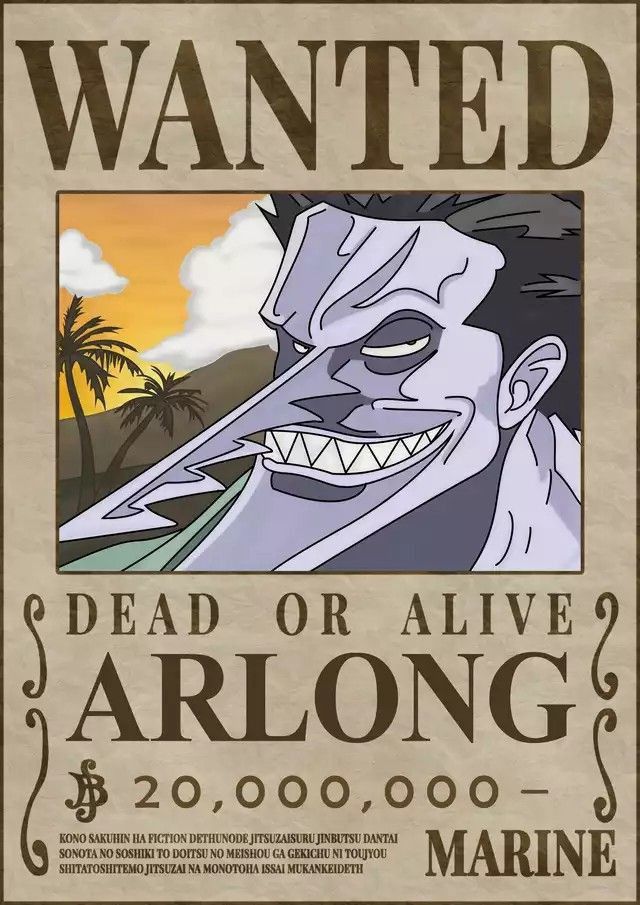
It has been argued that all people in Oda’s world are of superhuman toughness as practically everyone in his story seems stronger, tougher and cooler than a normal person. However that’s not particularly satisfying either. We do see people die in One Piece. The obvious example is Nami’s adoptive mother Belle-Mere, who is executed by the pirate Arlong, but there are plenty of others. Typically they are the friends and family if main characters. This provides us insight into the nature of our cast and an emotional moment to connect them to. Oda is quite good art creating these moments.

However, after writing his story for nearly thirty years, Oda’s patterns are quite clear to anyone who goes looking for them. Deaths in One Piece exist to create emotional moments. The often cruel and arbitrary nature of death in the real world is absent from the world Oda creates. Instead deaths are clearly and deliberately calculated to evoke the strong emotional response Oda desires from his audience. In theory there is nothing wrong with that. I’ve often stated that I believe one of the goals of an author is to create an emotional response in their readership and, over time, I’ve refined that notion to include a corollary, that the best emotion to create in the audience is one in harmony with the characters in the story.

By creating moments where his characters and the audience are both moved to mourn a death Oda pursues this goal. The problem is when he reveals a death he implied took place did not actually take place it fractures this emotional resonance. The characters in the story feel relief, the weight of grief suddenly vanishing from them. The audience realizes their emotions were being manipulated. This shatters the harmony between audience and character and frequently undoes the investment the audience had in the previous emotional moment. In some cases that investment turns into actual hostility towards the creator or the story.

This brings me to the curious case of Jaguar D. Saul and many of the events surrounding him. Saul was a vital character in the history of Nico Robin, one of the main cast of One Piece. We last saw Saul frozen solid on a burning island. Before he was frozen he gave Robin a goal: to live out her life and find friends who would care for her in the place of the family she lost.

Saul was Robin’s last tie to her childhood hopes and dreams. When the audience learned of his death it contextualized one of One Piece’s most complex main characters, who started as a cold and distant antagonist and had slowly been pulled into the fold to become a beloved member of the crew. The Water Seven Saga, where we learned about Robin’s childhood and her brief but impactful relationship with Saul, is widely considered one of the best stories in One Piece. So when it was revealed that Saul was still alive the audience was disappointed, to say the least. To make matters worse, the reveal that Saul was still alive came coupled with not one but two other characters who appeared to die but, in point of fact, did not. These three case studies in “fake out” deaths are illuminating. You see, the audience had no real issue with two of them but a third has really irritated a lot of people. Most interesting is the fact that the fake death of Saul, which had the biggest emotional impact of these three false deaths, is the one the audience has accepted the most readily.

While Saul’s case is the one which prompted this essay I’m going to briefly discuss all three fake out deaths to make my point. But before that, there is one element present in all three cases that most people have cited but I’m going to dismiss by examining Saul’s case on its own. That is the issue of “justifying” the character’s survival.

Saul was presumed dead because he was “frozen solid” by a character with the power to create ice. This is not the first time we’ve seen this power in use nor is it the first time we’ve seen people survive being frozen solid in this way. In fact, Robin herself survives one such attack. When added to the fact that Saul was on the shores of a burning island it’s not unreasonable for him to thaw out in the heat then take refuge in the ocean and thus survive both freezing and burning. At least, not by the logic of One Piece. Given that Saul was also a wanted man, the fact that he never revealed his survival to the outside world but rather retreated to an isolated island where he could lay low also makes sense.

None of this is discussed when people analyze the impact of Saul’s apparent death and survival. That isn’t because the logic of his survival is flawed but rather because the logic is irrelevant. What people are really trying to grapple with is, as I have already stated, their emotional investment in the story and whether it was misplaced. I believe this is also true in the case of Bartholomew Kuma and Dr. Vegapunk, the other two characters who “died” and survived alongside Saul.

Kuma, like Robin, was introduced as an antagonist. Unlike Robin, Kuma was much harder to pin down as friend or foe (and I’m not saying Robin was easy to work out.) Over time we came to understand that Kuma, who was uniquely strong and robust, even in the One Pieceworld, was being used as part of an experimental program to create cyborgs. The project was headed by Dr. Vegapunk. Kuma submitted to the experiments in exchange for medical treatment for his daughter, Bonney, which Vegapunk also oversaw.

However, Kuma was also a wanted man and Vegapunk worked for the government. This created a certain conflict of interests.

In order to overcome that conflict the government demanded that Kuma surrender his free will and allow his consciousness to be completely eradicated, replaced with machine programming. Kuma agreed to this happily out of his love for Bonney. The scene where Kuma and Vegapunk reflect on Kuma’s life before throwing the switch that transforms him into an unfeeling machine is one of the most tragic scenes in One Piece, a series known for making it’s audience weepy. Less than a year later the audience learned that Vegapunk would probably be able to undo the modifications and restore Kuma’s thinking mind.

Of course he was willing to do this because Vegapunk had made discoveries that put him at odds with the World Government and they had ordered his execution. Eventually that execution was carried out and Vegapunk was dead. Except the most brilliant man in the world had made provisions for that, creating a clone and backing up his memories using technology the audience knew he already had.

On a spectrum of audience reactions, Vegapunk surviving his execution is the most disliked by far. Yes, it was in keeping with his character as a forward planner and an inventor but it wasn’t particularly satisfying. While Vegapunk has only been making appearances “on screen” in the story for two years or so he had quickly won the audience over. He was a sympathetic figure to Kuma and his daughter Bonney and he had a certain kind of integrity to him. His death caused a lot of consternation among the cast and the readership. The offhanded reveal that he had a cloned body ready to go just didn’t sit right, even though all the pieces were in place for it. In fact, most people saw those pieces in place and fumed about the inevitable reversing of Vegapunk’s death long before it was made official.

This is a clear case of a moment intended to create harmony between audience and character emotions instead creating dissonance. Oda has been writing One Piece for nearly thirty years and the audience knows his tricks. When we see them coming it prevents our investing in his story even when the emotional moments are fairly good in and of themselves.

On the other hand, the revivals of Kuma and especially Saul were taken very gracefully by the fanbase. The euchatastrophe that Oda offers lands much better in these two cases and I think it’s vital for anyone who wishes to include such an element to at least try to understand why.

The first factor, in my humble opinion, is time. Robin lived for twenty two years from the moment she sailed away from Saul and the burning island of Ohara to the moment she reunited with him on Elbaf. It was a long and trying time for her, full of danger and sorrow. It also gave her the opportunity to meet her closest friends and allies and revive her passion for her childhood dreams. For the audience who read One Piece, the publication history from Ohara to Elbaf spans a period of nineteen years. Nineteen years.

I read One Piece in real time over that entire nineteen year span. I occasionally wondered if, given everything we knew about how Saul supposedly died, we would ever see him again. I watched Robin and the Straw Hats struggle and suffer through all the many cares of Oda’s world. When I heard of Saul’s survival I was a bit surprised, but not terribly. Then I watched as Robin changed her hairstyle to reflect how she looked as a child and got ready to meet Saul again. And eventually, when they met again, for the first time in decades, I was struck by a sudden and surprising sense of relief, as if something I didn’t even know I had been waiting for had inexplicably come to pass.

The moment had been building so gradually I didn’t even realize I had wanted it until it was already past.

The second factor is connection. Saul was a character with a big impact in spite of very little narrative presence. However Bartholomew Kuma has been a mover and a shaker in One Piece for a very long time, appearing in the story for the first time almost twenty three years ago in mid-2002, and having numerous contacts with the Straw Hats over the course of the story. His daughter Bonney appeared six years later, although we wouldn’t know they were related for another decade. We’ve seen Kuma with free will and without it and he has been an antagonist and surprising ally to the Straw Hats over the years.

While Kuma’s actions were often mysterious and his transformation into a machine with no human will was only fully explained in 2023, more than two decades after his introduction, we already knew all we needed to about him through the way other characters acted towards him. The villains of the tale were never fully comfortable with Kuma, even after replacing his mind with a machine, and the love and devotion of Kuma’s friends and daughter spoke volumes about him. That these factors would eventually merge to overcome mere mechanical forces and restore his humanity just makes sense. We’ve seen the tragedy Kuma’s family and friends suffered when they though he was lost. We also get several small moments where Bonney sits quietly with her father, trusting that the man she loves is still in there somewhere, no matter how machine like he behaves at the moment. These moments of connection to Kuma made it much easier to draw him back into the story. They build the emotional harmony between the characters and the audience and make it clear that what we felt when we saw Kuma “die” is not being undone. Rather, that emotional payoff is now the investment in another, even greater moment of resolution.

The third factor is providence. Eucatastrophe is inherently providential, a reaffirmation of what is good and worthwhile in the human condition as stronger than mere fate or circumstance. That Saul fought an ice man on a burning island and was frozen solid in the one place where circumstance would allow him to survive was providential. That the lonely child Kuma would meet and form a family willing to follow him into the worst places on earth and love him even when all his warmth and kindness were gone is nothing short of providential. That added element, the feeling that you can’t quite earn these moments of grace, is ultimately what makes them work. Sometimes the world is just arbitrary and capricious enough that you lose what you love most. Sometimes its providential enough that you get it all back.

Ultimately, I think it’s these three factors that make the difference between “fake” deaths like Saul and Kuma and “fake out” deaths like Vegapunk’s. Vegapunk had no providence in his revival, just his own scientific prowess, he had little connection to other characters outside his role as the most brilliant man in the world (except Kizaru, a subject way outside of the scope for today’s essay) and he hadn’t been around in the story long enough for the sudden reversals in his fate to feel organic.

However there is one other thing to keep in mind if you set out to write a eucatastrophy. The trope is, in and of itself, an idea that revolves around the concept that the universe is created and maintained by a loving and graceful God that desires to know and be known. It assumes that the universe we live in wants us to feel and reciprocate God’s love. Thus, if you seek to write eucatastrophy you are writing a story that mimics that part of the universe in your story – and that notion about the universe has never been widely accepted. It’s very clear, from his persistence in writing One Piece in the way he does, that Oda has simply made his peace with the way the audience reacts to his eucatastrophies. He wants to write them, so he has poured more time and skill into making them the best they can be. If you or I wish to write euchatastrophy, I suggest we make the same peace with whatever response we may get.

When to Press the Button

Have Spell, Will Travel is now published. (If you’re interested in picking up a copy just scroll down and follow the Amazon link at the end of this post.) So what are my thoughts on finally getting a book out? It’s hard to summarize them but I’ll do my best.

It all could have gone a lot faster.

I was nervous about having too many pieces of the process in motion at once, a hesitation I think is perfectly understandable. So I approached launching this book in very piecemeal fashion. I ordered a cover. I got beta readers. I went through the somewhat labor intensive process of running down a program that could make .epub files and creating my own. Then I discovered half the process could have been automated.

In short, I learned a lot that I won’t have to relearn the next time I do this. But the biggest thing I learned is that I really could juggle a lot more of this process at once if I’d put my mind to it. Now, editing and formatting Have Spell, Will Travel was not the only plate I was spinning. This blog was also a part of my creative endeavors and does demand a reasonable chunk of my time, in addition to that thing known as a day job. However the climb to publishing looked a lot more intimidating beforehand. Now that I have crossed the summit I’m not so sure what it was that I was really nervous about.

When I do this again I think I’ll be able to get through it much faster. Commissioning artwork is a fairly painless process, except for the financial aspect of it, and while it does require a good idea of what you want before you start, if you have that most of the work is the artist’s share. Most artists will need a month to six weeks to return you commission, unless something goes off the rails. The artist for Have Spell, Will Travel‘s cover goes by the handle Neutronboar and he works for a reasonable rate. I thoroughly enjoyed working with him.

I think the biggest mistake I made in timing everything was in choosing to wait to begin assembling my revised document until I had the interior art available. That was a process I think I could have done while the artist was at work. Yes, I would have had to go through and add in the interstitial art at a later point but there are ways to make that go much faster than I had originally anticipated.

In order to convert my text document to an .epub file I used a freeware program called Calibre. It is free, which means its UI isn’t the most intuitive and the software itself is not terribly optimized but it does what it needs to do and does it quite well. It can load text files with embedded graphics and turn them into preliminary files with no fuss.

Calibre will also recognize your page breaks and can turn them into a Table of Contents for you. This means that adding page breaks is the easiest way to format your book, something I did not originally appreciate. A few hiccups in the process occurred before I realized that. There is also the option to fill your Table of Contents from the first line of each new block of text, which saves a good deal of time putting that together. Again, I did not discover this option until I had already gone through three or four revisions of the document, filling out the ToC manually. More time lost. Another mistake I hope not to make again.

I think in the future I will put together a list of places where art and page breaks need to go as a separate file. That list will then let me Ctrl+F and search the master document to immediately find the relevant spots. My first formatting pass through Have Spell, Will Travel I just scrolled through the document and added features as needed. It worked well enough but I did miss a few spots on the first pass. And once again, it took up more time than needed.

The real rub to all this is, I’m not sure reading my explanation of the errors I made and how I intend to avoid them will make sense to someone who hasn’t gone through the process yet. The process of putting together an ebook and getting it to market is full of fidgety details. Most of them I never considered until I realized I’d overlooked them. I’ve read several other people discuss their journeys to releasing their first book and I didn’t have enough context from it to understand about 80% of what I’d read. However there was one thing I heard that I did manage to apply.

At some point you have to publish the book. All through this process I continued to find minor tweaks that needed to be made and I received a lot of feedback about story direction, balance, themes and the like. Most of it I implemented as quickly as I could. However some of it, while meaningful and fair, was impossible to make use of without significantly rewriting some chapters. I gave it considerable thought then decided that no, I did not want to make the time commitment needed to revise the chapters to that extent. The time had come to publish.

There is undoubtedly some better version of Have Spell, Will Travel out there, where the pacing is tighter, the dialog is snappier, the balance of exposition and plot advancement reaches Thanos-level perfection. Searching for that version of the book would be foolish. Many would say this is because the book could very well never get published – which is not wrong – but that is ultimately not why I chose to go forward.

Time is it’s own currency and, once spent, it cannot be refunded. While quality is a powerful factor in art it is not the only factor by any stretch of the imagination. Availability is almost as important. Audiences cannot discover what is not available to them. However, even if it is available audiences may take a long time to discover your story and it’s wise of you to give them as much time to find you as you can without sacrificing other factors. Or, at least, sacrificing them as little as possible. Wringing every last drop of quality out of a manuscript is not always worth the sacrifice of time you take away from your audience. Ultimately that is what drove me to press the button and publish the book.

And that is a brief overview of everything I learned while publishing Have Spell, Will Travel. Hopefully it was of interest to you, even if you’re not looking to publish anything on your own any time soon. If you’re interested in picking up your very own copy of Have Spell, Will Travel you can find it over on Amazon by clicking this handy link:

The Pulp Pacing Problem

The pulps were once an incredibly popular medium of entertainment known for publishing stories printed on inexpensive, leftover paper at incredibly cheap prices. These could be formatted as books but were just as often magazines collecting short stories or sometimes serializing novels on a monthly basis. Because there were so many magazines with so many stories they tended towards two major characteristics. The stories were experimental and they were short.

By experimental I mean they hit on any and every genre they could imagine and created a couple new ones along the way. By short I mean shorter than a similar story would be today.

Pulps are often considered to be the peak of fast paced storytelling, quickly setting up a character, situation and stakes and resolving the situation in a few thousand words. Pulp novels rarely last longer than 80,000 words and frequently got down to 50,000. By contrast, the modern novel is usually much longer, running around 75,000 words and up. Most acquisition editors today prefer longer manuscripts to shorter ones.

There is a fair argument to be made that the shortest story that says all it needs to say, and no more, is the ideal. From this point of view long novels are not ideal. In point of fact there are a lot of modern writers who admire the pulp era and strive to recapture some of the brevity and verve of that unique time in their own writing. Brevity being the soul of wit, I wish them the best. However, I think that trying to write in a style from a century ago for the modern reader is a bit of a mistake. After all, the ideal length of a story is the length that says all it needs to say.

The question is, how much do we need to say? Does it change from one era to the next?

This is a topic none of the pulp aficionados stop to examine so let us do so for just a moment or two. At the dawn of the twentieth century the world was a much different place. There were no high speed, intercontinental communications, for example, and schools of pedagogy tended to agree on an established set of classic literature and preferred interpretation. In short, cultures were more homogeneous and shared many cultural touchstones. The importance of this cannot be understated.

Let me reframe this using an example from my experience partaking in Japanese entertainment. There is a form of address in Japanese known as “keigo” which creates a structure of social relationships between speakers. There are loose equivalents for some keigo terms in English. The -san suffix could be thought of as a gender neutral version of a respectful “Mr.” or “Mrs.” while the term sensei refers to a person of learning and is often used for a teacher or a doctor.

There are also many keigo terms which don’t translate well. A senpai is someone who has proceeded you. In what have they proceeded you? It could be anything. A senpai could be an upperclassman, a colleague with seniority in the workplace or just another person with the same hobby who’s been involved with it longer.

A kohai is the opposite of a senpai, someone who came after you. The culture of Japan places a lot of importance on the relationship between senpai and kohai, loading implied duties of respect, care and even affection behind these two words. This cultural weight cannot be directly translated into an English word and often results in one of two things. Either the words will be left as-is, with footnotes or endnotes explaining their meaning and implications, or clunky and illfitting equivalents will be forced into the dialog. Neither one fully encapsulates the ideas the words imply.

All this from just two words in the keigo system, which is full of dozens or hundreds of such terms from different time periods and dialects. It’s a lot to take in for new readers. Both methods of adapting keigo come with considerable drawbacks but the concepts cannot be omitted from the story or the characters will not make sense. This is to be expected from a work written in another country.

They say the past is a foreign country as well.

As I mentioned before, the pulp writers were drawing on shared traditions, shared culture and shared education. If they mentioned Achilles, for example, we could be reasonably sure they were all drawing from the same source. The Iliad was still in on most secondary education reading lists. Just as importantly, there were very few other interpretations of the character to muddle the meaning and significance of his name.

Furthermore, pulps were primarily publishing to people in their immediate area. Books rarely went overseas due to the expense of shipping them, just for starters, but also due to frequent language and legal barriers it tended to be impractical. In the modern era, these obstacles no longer exist. Everything from distribution to copyright law is much simpler and that has made media audiences much broader and yet much narrower. Past audiences were quite restricted in what media they could afford and access. By necessity those audiences engaged with a much broader array of media and were much less picky about its genres and quality.

Now, when an audience can easily access media from anywhere in the world, new problems arise. You can no longer be sure what cultural context your audience comes from. If they find themselves unable to parse your prose there is a real possibility they will simply set aside what you have to offer and move on to something else. Dense prose full of allusion that doesn’t make sense or requires research to understand rarely holds attention now. Audiences are looking for something they can relate to what they know and yet anticipating what they know is harder than ever.

Even if your goal is to tell your story in the fewest words possible you must still face the reality that more words are needed to explain yourself now than in the past.

Added to these hurdles is the reality of modern day mediums. Brevity may be the soul of wit but prose is ill suited to the modern conception of brevity. The shortest, most information dense communication mediums in the modern era are all transmitted via the Internet and facilitated by companies like Twitter/X, TikTok and YouTube. They are multimedia and visual as much as verbal. Audiences craving the brief and concise turn to these places for their media fix. Rather than compete along the lines of brevity most successful prose opts for depth, the one angle of communication where it remains unrivaled. By exploring ideas as thoroughly and deeply as possible prose can still compete for audiences when up against these much more concise, information dense mediums.

It’s all well and good to admire punchy, fast paced storytelling. Again, I have no beef with the pulp fans who want to explore that style of writing in their own work and come back to that kind of writing over and over again. However I am not one of those writers who believes we are on the cusp of another golden age of pulp prose. The media and cultural environment just doesn’t suit it. Audiences who want that kind of story can get it many other places in forms that capitalize on the strengths of pulp far better than the written word. I believe we are now in the era of deep prose, and that is the style of writing I strive to achieve. Perhaps your experience is different, and if so please let me know. In the mean time, it’s probably time I started getting ready for my next project…

In the mean time, if you’re interested in supporting my work check out my previous project give a look at Have Spell, Will Travel, my weird western anthology on sale on Amazon! Give it a look using this handy link:

One Piece of the Puzzle

“One Piece Fan Letter” was a special episode of the One Piece anime series, released after episode 1122 but not counted as one of the numbered episodes. It is a fascinating and touching love letter to the series itself, from fans who have worked their way into positions where they can work on the show they love. This could be a disastrous concept. Fans writing themselves into stories they love has such a bad track record that one of the best known examples of bad writing, Mary Sue, was created as a satire of the practice. (Ironically, Mary Sue succeeds in this satire, which makes her story an example of good writing.)

As an artistic achievement “One Piece Fan Letter” is remarkable. The animation is beautiful, the story skillfully weaves a number of narratives from the book Straw Hat Stories and the characters grow to be memorable and lovable in a very brief window of time. However, I’m not here to break down the approaches and techniques used by directors Megumi Ishitani and Nanami Michibata and their teams. I’m not really the best person to tackle that. I’m pretty out of touch with the anime, its production and it’s history. However it does achieve something I find very impressive. The narrative creates several characters that feel like members of the audience who have ascended into the story, while avoiding the many pitfalls satirized by Mary Sue.

It’s difficult to discuss if you haven’t seen the episode and it’s about 25 minutes long so if you have the time, I’d recommend checking it out. It may not make a huge amount of sense if you’re not familiar with One Piece in some form or another, at least up to the Return to Sabaody Archipelago, but many of the broad strokes are clear even if you’re a novice. You can find it for free here:

https://www.crunchyroll.com/watch/G14UVQ5D5/one-piece-fan-letter

Now that we’re all on the same page, let’s start with the element I find the most interesting. None of the new characters in “Fan Letter” have names. The closest is the Marine captain called the Benevolent King of the Waves, who is known by a very grandiose epitaph. However the rest of the characters are known by their family or profession. The book seller, the wholesaler’s daughter, the green grocer’s boys. In one sense these people exist to be broad archetypes, entities that don’t even need names, because they represent the normal people in a world of pirates. Most normal people never make a name for themselves in any world. That goes double in a world as chaotic and cutthroat as one in the midst of a Golden Age of Piracy.

At the same time, a forgettable, nameless kind of character with a murky background is typical of a self insert protagonist. It could be a marker of lazy writing. But in practice, in “One Piece Fan Letter,” it is an invitation to the audience. These characters are like us, looking up towards the nearly mythical pirates of One Piece from their mundane, dreary lives and dreaming of adventure.

However the closest they can get is a distant admiration.

That brings me to the second element I find interesting, namely the separation between the protagonists of “Fan Letter” and the protagonists of One Piece as a whole. While all the episode’s new characters, including The Benevolent King of the Waves, catch at least a glimpse of the Straw Hat they admire, there is always a degree of remoteness to it.

The Benevolent King finds the tiny Chopper adorable. Yet the King is also a Marine officer with a duty to arrest pirates so he can’t give too much thought or deference to the Straw Hat’s mascot character. Several characters debate the world’s strongest swordsman, unaware that Zorro, one of the contenders, is in the bar with them. The elder green grocer boy admires Monkey D. Luffy. Not because he’s a pirate or even because Luffy did him a favor once. Rather, we see how Luffy’s desperate struggle to save his brother from execution gave the green grocer’s son the extra measure of inspiration needed to drag his own brother out of danger during the Paramount War. They were in the same place but their paths barely crossed for more than a second.

These are not direct connections. These are characters who see the Straw Hat Pirates from a distance and glean a little relief from mundanity or inspiration for the day by admiring them. There is no one this is more true for than the wholesaler’s daughter. When the Paramount War turned her world upside down she saw it as nothing more than a nuisance. In the years since Gold Rogers called the adventurous to the seas many pirates have sailed through her home, flexing their muscles and pushing people around on their quest for legendary treasure. The Paramount War was a particularly bad brush with the world of piracy but Sabaody Archipelago had seen many similar disruptions before and would doubtless see just as many after. The cynical child clearly believed there was nothing she could do about that.

Except one of the pirates responsible for that brush with piracy was Nami. Navigator for the Straw Hat Pirates, a woman with no particular powers beyond her sense for the weather, Nami held her own on that crew through her wits and charm. Over time, the wholesaler’s daughter convinced herself that if Nami could thrive in a world of power and violence so could she. And in the confines of this one brief story, she does just that.

The wholesaler’s daughter is one of the characters that changed the most from Straw Hat Stories to “One Piece Fan Letter” in that there was no such character in the book. The comparable character in Straw Hat Stories was, in fact, a man who admired Nami for… other reasons. This girl is, in my opinion, what really solidifies “Fan Letter” as a story about a self insert characters.

See, Ishitani and Michibata are two women who have had to make their way through the world of entertainment. It’s a world where the powerful often take advantage of the weak. They’ve had to make their way by wit and charm, and they clearly have a great admiration for Nami, who has done the same in a world much the same. They invite us along on an adventure to try and reach the characters that have inspired us over the years. It turns out those characters were much closer to us than we thought. At the same time, there is a gulf between us and them that cannot ever really be bridged, no matter how sincere our admiration or how meaningful the impact their stories had on us.

Stories are real, in a sense, but we cannot cross into them.

Yet we can look into them. If we are very, very lucky we can ever create a part of them. What Ishitani and Michibata chose to do with that rare, precious opportunity was to create a place for all of us to stand and admire those stories from a point just a little bit closer. Through the eyes of the wholesaler’s daughter. The green grocer’s boys. The book seller and the bar patrons and the Benevolent King of the Waves. Together share that admiration with one another for a few magical minutes. That was their love letter to the fans and I am very grateful for it.


I haven’t been fortunate enough to create a part of a cultural touchstone like One Piece but I have created a few stories of my own! If you’d like to support my work the simplest way to do so is to pick up my book Have Spell, Will Travel, available in ebook from Amazon today!