Onwards to New Things!

Well, ladies and gentlemen, at this point we are at the end of the latest round of essay content. From here, I plan to return to fiction starting next week!

Due to a general state of business over Thanksgiving I wound up taking last weekend off unannounced, for which I apologize. Long term readers of this blog are aware that I typically take a week off between essays and the beginning of a new project. Since I took Thanksgiving off I’m going to call that my vacation week, which means we’ll be kicking off my next fiction project on December 13th.

Before diving into that, a few housekeeping notes. After finishing The Drownway I took a slightly longer than normal break for reasons that I did not explain. I feel like I owe you, my oldest audience, an explanation for that. You see, I was cheating on you.

In late August I learned that the website Honeyfeed was running a novel writing contest that ended on September 29th. It carried a generous cash prize and the potential to earn a publishing contract, things which I confess interested me a great deal. So I spent a large chunk of that month chained to my writing desk, writing and publishing a manuscript for that contest. Alas, I did not make it through the initial round of judging. However, the entirety of The 7th Sphere is available there for your reading pleasure! If you wish to check it out I think you’ll find it enjoyable. You can find it here:

The 7th Sphere

My next project is a return to the Columbian West! It’s been a year or so since I set down any of the adventures of Roy Harper and I’ve missed him a lot.

Roy was conceived of as a set of eyes to see the world of Columbia through so I always intended to keep him on the move. One of my intentions was to never show him in the same place twice. However he is a man with a home and obligations as well, and I knew that I’d have to look at what those are like sooner or later. Towards that end I created Oakheart Manor and put it on the shelf, an idea for a tale somewhere down the line. It’s one of the earliest storylines I conceived of when thinking about the character.

Alongside that idea was the difficulty of addressing Roy’s history. I don’t want the stories to get bogged down in naval gazing but Columbia is a setting with a lot of history and I wanted to work as much of it in as I could. Anyone who’s read Roy’s previous adventures can see that. Yet I didn’t want to the novellas to move all over in the time line but instead flow one into the next. (Short stories are another matter.)

All of these ideas and needs came together to weave together into A Precious Cornerstone. It’s a story I struggled with for a while but I’m finally ready to present to you. I hope you’ll enjoy it as much as I enjoyed working it out. If you need to get caught up to speed on Roy’s adventures and you want to support what I do here, be sure to check out my book Have Spell, Will Travel, which collects all of Roy’s adventures up to this point in one convenient package. You can snag a copy on Amazon here:

See you next week!

Empty Laughter

Art is a fascinating and difficult subject. It’s difficult to tell when art is being done well and, even when perfected, it still offers little more than an experience. It’s very powerful but, at the same time, almost entirely intangible. This may be why, for better or worse, art that explores the intricacies of making art is one of the most enduring genres of art in existence.

Akane-banashi is one of the best examples of this genre I’ve read. It’s a rich exploration of the difficulties that come with performing arts in the modern day, along with a meditation the egos and rivalries that make most artistic circles go around. At the same time, it’s very down to earth. The most recent story arc, the Zuiun Cup competition, was a fascinating blending of the all the story’s usual thematic elements with an added twist to it.

This particular story is about the problem of the artist themselves.

Before we talk too much about that, some context.

Akane Ozaki follows in her father’s footsteps, studying the Japanese comedy format known as rakugo. Her goal is to show up the influential figures in the entertainment industry who effectively blacklisted her dad, ruining his career. The name at the top of her list is Issho Arakawa.

After years of studying under Shiguma Arakawa, her father’s mentor, Akane becomes a professional rakugoka (the term of art for a rakugo performer) and begins to make waves under the stage name Akane Arakawa. In time she learns about the history of the Arakawa school and her mentor’s rivalry with Issho. Finally, Shiguma performs an incomplete tale that has been passed down by the Arakawa for some fifty years, hoping she can finish it one day.

Shortly thereafter, Shiguma is diagnosed with throat cancer. The tumor is operable but the surgery leaves Shiguma’s voice too weak to continue performing. Shiguma’s four students are shared out among the four remaining Arakawa masters to continue their education. This is how Akane winds up apprenticed to Issho.

It is he who gives Akane the assignment to enter the Zuiun Cup and tells her to win without making the audience laugh. Let me remind you that rakugo is a form of comedy. As always, Issho is a magnificently obtuse antagonist.

The Zuiun Cup is a particularly noteworthy moment in the story as it hails back to Akane’s first encounter with Issho during the Karaku Cup. This was the moment that defined the conflict between Akane and Issho. Along the way she competed against two other up and coming rakugoka and faced the reality of trying to make a name with traditional artforms in the modern day. Clearly, our story is coming full circle in order to make a new point about Akane’s journey.

The full story of the Zuiun Cup is too long to examine fully here. What is important is that Akane comes into the competition with something to prove. (So do her two rivals, who have also made a return from the Karaku Cup, but they’re not important to this analysis.) Akane’s constant state of low key irritation with her mentor, along with Issho’s cryptic demands, has left her with a chip on her shoulder.

Not that this chip is a new thing but it is bigger these days.

The problem Akane faces is that her life has been lived making other people laugh. In many ways the tragedy that befell her father pushed her deeper into this way of living, creating a way for her to cope with the sudden transformation of her home life. Humor is a core part of her identity. She loves making people laugh and doing that is also her primary coping mechanism when she, herself, is upset.

Her challenge in the Zuiun Cup stems from the fact that rakugo is a highly traditional art form where each story is an entity in and of itself. These stories are guarded quite jealously. Before a story is entrusted to a new teller, the rakugoka must first prove that they understand the story. In order to do that they must put the story first.

What Issho challenges Akane to do is put herself aside, her own desire for laughter, her own grudges, and put the story first. However he does not say this directly. As always, he speaks in riddles. He does this in the hope that as his student struggles with his lesson she will develop a deeper appreciation for the artform than if he just handed her answers. Akane succeeds in this challenge but it’s a difficult thing for her to achieve.

After all, Issho isn’t asking her to master a skill but instead asking her to master herself.

The importance of this to art cannot be understated. In most forms of art you are asking people to believe something, moving an idea from within your mind into their mind via a medium of transmission that ranges from spoken word to sculpted stone. They must invest in the idea as much as you have, to the point where the fact that it isn’t real doesn’t matter. In storytelling we call this “the willing suspension of disbelief.” 

The catch to this is that belief must rest on something.

The more the creator inserts themselves into the art the more the creator is asking you to rest your belief on them, rather than on the idea they are conveying. That can work, in certain contexts. The more the art is about you the more sense it makes for your art to rely on how believable you are. (Of course, you must actually be trustworthy, as well, but that is neither here nor there.)

The problem arises as art becomes less and less about you and more and more about something else. All art contains a part of its creator, of course, but that’s not all art is. Truth, excellence and beauty are all important factors in art as well. More than that, art is often about people other than you.

When you bring your own agendas and priorities to stories about other people your own ego obscures what you are asking the audience to believe. At that moment you are undoing your own art. This creates a tension which can never be fully resolved and thus requires the constant vigilance of the artist.

The solution is to do exactly what Issho makes Akane do. Go back to basics and strip your art down to its essence. Pull as much of yourself out of your art as you can and see what you have, then only begin to let yourself back into the art once you are confident in its integrity. That way you can be sure there is room for the audience to invest as well.

The prize for this is not great. It is only the integrity of your work. However, the artist who doesn’t have that has nothing at all.

The Last Crime of Fisher Tiger

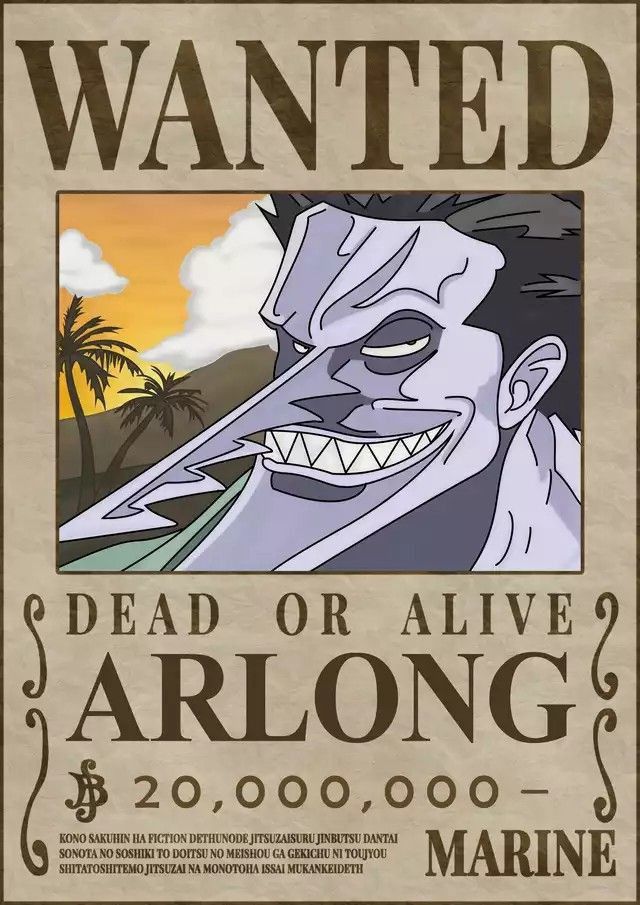
Behold, Arlong the Saw.

Long considered one of the first landmark villains of One Piece, Arlong casts a long shadow across the history of Oda’s pirate epic. In spite of appearing in only two significant story arcs and last appearing in the pages of Jump over a decade ago, he remains a formidable figure in Luffy’s rogue’s gallery. There are many reasons for that.

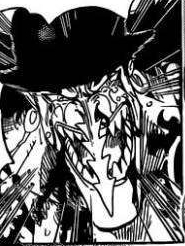
The first is the most obvious, which is his striking physical appearance. Oda isn’t known for his standard character designs but Arlong is extreme, even for him. The serrated nose and wild, glaring eyes makes the Fishman captain uniquely memorable, so much so that when his sister appears, a decade after Arlong’s last appearance, their shared pupils made it immediately obvious to most that the two characters were related.

Arlong’s physical stature is significant in no small part because of how closely tied it is to his other memorable characteristic – his bigotry.

The pure contempt Arlong holds for human beings comes from an obvious source. As a fishman, he is bigger, stronger and tougher than a human and he can breathe underwater to boot. He routinely demonstrates all those qualities to keep the people who pay him tribute in line. When they don’t pay up he feels no qualms in destroying their livelihoods or ending their lives in order to serve as an example to others. Why should a fishman care for the lives of humans, after all?

Arlong’s insistence on categorizing people by species eventually sets him at odds with the protagonist of One Piece, Monkey D. Luffy. Luffy is unable to grasp why human or fishman are such important categories to Arlong. However, as is often the case, Luffy would have been perfectly happy to ignore Arlong’s ugly prejudice and brutal regime if not for one little detail.

Luffy was trying to recruit a member of Arlong’s crew. The only human member, in point of fact.

Yes, as odd as it sounds the crew known as the Fishman Pirates had a bonafide human girl serving as their chief cartographer and navigator. Arlong brought on the orange haired girl when she was only eight. Nami offered to serve Arlong after the fishman murdered her mother, on the condition that Arlong would allow her to buy back her village for the measly price of 100,000,000 beri, the world’s standard currency. (For those wondering, that’s the rough equivalent of $1,000,000 USD circa the year 2000.)

Luffy meets Nami when she’s in the process of robbing another pirate crew and eventually follows her all the way back to Coco Village and the eventual showdown with Arlong. For the entirety of the storyline, we’re primed to hate Arlong. This is a carefully balanced thing on Oda’s part, because the story goes to great pains to make it clear not all fishmen are like Arlong. In particular, Oda introduces us to the character of Hachi, Arlong’s first mate.

Hachi is a very likeable character. He’s cheerful, helpful and never demonstrates any of the overt prejudice that so clearly defines his captain. He just seems to like people until they give him a reason not to. In this respect, he’s not that different from Luffy. However, Hachi is agreeable to Arlong’s bigotry, so he’s not perfect by any stretch of the imagination.

Yet Hachi is important. Of all the characters introduced in the Arlong Park he is the only one Luffy will meet again.

For the next seven years, more or less, of One Piece’s publishing history very little happens to change our mind about fishmen. We only meet one who isn’t a villain. We meet several more we don’t really care for. Then the Straw Hats arrive at Sabaody Archipelago, an anchorage on the doorstep of Fishmen Island, and they run into Hachi again.

They find him in a cage. He has been captured by human traffickers, who are using him as bait to capture prisoners for a slave auction. This, we learn, has been the fate of fishmen for centuries.

Sabaody Archipelago tells us a lot about the state of the world but for our purposes the most important thing it tells us is the fate of the fishmen. Arlong’s hatred for humanity was ugly and evil. However it sprung up from a fertile soil of other evils such as slavery, ostracisation and dehumanization. That context opens us up to a new understanding of the fishmen we’ve seen before. It prompts Nami to forgive Hachi for his role in Arlong’s pirates. And, ultimately, when we arrive on Fishman Island, it prepares us to hear the story of Fisher Tiger.

The great explorer Fisher Tiger is one of the heroes of Fishman Island and he stands in sharp contrast to the other major figure his story is intertwined with, Queen Otohime. However, in order to understand the crime of Fisher Tiger she is unimportant. So I plan to set her half of the storyline aside and those curious about it can read it at their leisure. They are quite separate stories, for the most part.

What is important to understand about Fisher Tiger is that he lived and died in the past. Luffy and the Straw Hats hear his tale from Tiger’s first mate, a fishman named Jinbei. Among the fishmen, Fisher Tiger is a legend. He united the forces of Arlong and the Fishman Pirates with many powerful warriors from the Ryugu Kingdom, Jinbei first among them, to create the Sun Pirates. Then he dedicated his life to raiding ships and freeing slaves.

To Fisher Tiger, the species of slave did not matter. Slavery was an equal opportunity evil and both humans and fishmen suffered from it. And Tiger was a man particularly suited to recognizing the evil of it, as Tiger himself had suffered the humiliation of being a slave. He was wise enough to see that freeing every slave would create a larger push to abolish the institution than just freeing a few. So he fought against all slavers, although the fishmen may have benefited most from it.

At the same time, Tiger forbid his pirates from senseless killing. While fighting carries the risk of death Tiger knew that any killing beyond that would undo all the work he was doing towards abolishing the system and set fishmen and humans at odds for decades to come. 

The combination of these two strategies made Fisher Tiger very effective.

Unfortunately, it only made him effective in creating pressure to abolish slavery, it did not do much to improve the reputation of fishmen in the wider world. This would eventually lead to his downfall. When not hunting slavers and freeing slaves the Sun Pirates would help liberated slaves find their way home. When they freed an eight year old human girl named Koala they naturally set out to do so.

However, Koala’s home village was fairly far inland. The whole crew couldn’t go with her, so Fisher Tiger took her there himself. Once Koala was reunited with her family Tiger headed back towards the sea but along the way he was ambushed by Marines.

The people of Koala’s village had notified the World Government there was a fishman in their town and they showed up to arrest Tiger. When he refused to surrender they opened fire. Tiger managed to escape this ambush but he was badly wounded. The Sun Pirates were also attacked and lost their ship but managed to capture the Marine ship instead.

Most of the Sun Pirates were fine but Fisher Tiger needed a blood transfusion to survive. The Marine ship had plenty of blood in stock in the sickbay but when it was offered to Tiger he screamed, “No! I would rather die than have their blood inside me!”

In the end, Fisher Tiger lost his long battle against the hatred he had harbored and died saying, “It’s foolish to die and leave only hatred as a legacy. I know that! But my reason is overpowered by the demon in my heart… I cannot love humans. Ever.”

At that moment this was Arlong the Saw.

At that moment, he was me.

After escaping Marine custody due to the influence of his crewmate Jinbei, Arlong would set sail for the eastern oceans with a bone in his teeth. He would take his vengeance on the humanity of those seas, saving his cruelest treatment for an eight year old girl he found begging for the freedom of her village. 

Thus the circle closes and we see the full weight of the evils that had piled up. Arlong was just one final stone in the ever growing pillar of prejudice, hatred and abuse that had been building and building over generations. Yet he might not have been as vile if he hadn’t watched his captain try to break that cycle and fail. If the cycle hadn’t looked so inevitable perhaps even Arlong could have been someone different.

The crime of Fisher Tiger wasn’t that he tried to change the world and end slavery. It was that he tried to change himself and couldn’t.

Around these parts I have a simple concept. That the goal of art is to create an emotional response in the audience. If you are telling a story, try to make the audience share that emotion with a character in the narrative. I call this emotional synchronization.

This storyline, what I call The Last Crime of Fisher Tiger, is buried in four larger story arcs told across a dozen years of publishing history. It is one of the greatest examples of the power of emotional synchronization I have encountered. Through the use of it Oda showed his audience a person they despised.

And let me tell you, we despised Arlong in those days.

Then, over time, Oda gradually maneuvered the audience until we experienced an overwhelming wave of sympathy for Arlong when we saw him heartbroken by Fisher Tiger’s death. This moment was quickly tied back to the Arlong we saw torture Nami, creating a powerful dissonance in the audience. Never have I seen a moral message so seamlessly integrated into a story with such clarity.

Anyone can say, “You, too, would be a monster.”

To take the hand of the audience and slowly and patiently walk them through the path that would make them a monster demands incredible skill. Many writers today wish to tell morality tales. Yet so many of those who attempt it fail miserably. Fisher Tiger is a powerful model they would do well to learn from.

But that isn’t all they should learn from.

After the death of Fisher Tiger a strange custom takes root in the Ryugu Kingdom. The fishmen there refuse to share their blood with any human who passes through their ports. The kingdom isn’t strong enough to directly defy the World Government and this becomes their way of protesting.

In modern times the Ryugu Kingdom is not a peaceful place. Luffy takes up their cause and fights on their behalf, doing much to warm the hearts of Fishman Island towards humans. But things don’t end cleanly. Luffy suffers quite a bit in the battle and at the end he’s in danger of bleeding out. His own crew doesn’t match his blood type. Yet none of the fishmen he’s just saved will help him.

So it falls to Jinbei, Fisher Tiger’s first mate, to break the custom and offer his own blood to Luffy. When Luffy recovers he finds himself linked to Jinbei in more ways than one. So he smiles and says, “Jinbei, join my crew.”

With that, for the first time in centuries, the wound is closed and the crimes of Fisher Tiger are redeemed by his successor. The dawn of the world grows a step closer, and we raise our sails with hope once more.
When to Press the Button

Have Spell, Will Travel is now published. (If you’re interested in picking up a copy just scroll down and follow the Amazon link at the end of this post.) So what are my thoughts on finally getting a book out? It’s hard to summarize them but I’ll do my best.

It all could have gone a lot faster.

I was nervous about having too many pieces of the process in motion at once, a hesitation I think is perfectly understandable. So I approached launching this book in very piecemeal fashion. I ordered a cover. I got beta readers. I went through the somewhat labor intensive process of running down a program that could make .epub files and creating my own. Then I discovered half the process could have been automated.

In short, I learned a lot that I won’t have to relearn the next time I do this. But the biggest thing I learned is that I really could juggle a lot more of this process at once if I’d put my mind to it. Now, editing and formatting Have Spell, Will Travel was not the only plate I was spinning. This blog was also a part of my creative endeavors and does demand a reasonable chunk of my time, in addition to that thing known as a day job. However the climb to publishing looked a lot more intimidating beforehand. Now that I have crossed the summit I’m not so sure what it was that I was really nervous about.

When I do this again I think I’ll be able to get through it much faster. Commissioning artwork is a fairly painless process, except for the financial aspect of it, and while it does require a good idea of what you want before you start, if you have that most of the work is the artist’s share. Most artists will need a month to six weeks to return you commission, unless something goes off the rails. The artist for Have Spell, Will Travel‘s cover goes by the handle Neutronboar and he works for a reasonable rate. I thoroughly enjoyed working with him.

I think the biggest mistake I made in timing everything was in choosing to wait to begin assembling my revised document until I had the interior art available. That was a process I think I could have done while the artist was at work. Yes, I would have had to go through and add in the interstitial art at a later point but there are ways to make that go much faster than I had originally anticipated.

In order to convert my text document to an .epub file I used a freeware program called Calibre. It is free, which means its UI isn’t the most intuitive and the software itself is not terribly optimized but it does what it needs to do and does it quite well. It can load text files with embedded graphics and turn them into preliminary files with no fuss.

Calibre will also recognize your page breaks and can turn them into a Table of Contents for you. This means that adding page breaks is the easiest way to format your book, something I did not originally appreciate. A few hiccups in the process occurred before I realized that. There is also the option to fill your Table of Contents from the first line of each new block of text, which saves a good deal of time putting that together. Again, I did not discover this option until I had already gone through three or four revisions of the document, filling out the ToC manually. More time lost. Another mistake I hope not to make again.

I think in the future I will put together a list of places where art and page breaks need to go as a separate file. That list will then let me Ctrl+F and search the master document to immediately find the relevant spots. My first formatting pass through Have Spell, Will Travel I just scrolled through the document and added features as needed. It worked well enough but I did miss a few spots on the first pass. And once again, it took up more time than needed.

The real rub to all this is, I’m not sure reading my explanation of the errors I made and how I intend to avoid them will make sense to someone who hasn’t gone through the process yet. The process of putting together an ebook and getting it to market is full of fidgety details. Most of them I never considered until I realized I’d overlooked them. I’ve read several other people discuss their journeys to releasing their first book and I didn’t have enough context from it to understand about 80% of what I’d read. However there was one thing I heard that I did manage to apply.

At some point you have to publish the book. All through this process I continued to find minor tweaks that needed to be made and I received a lot of feedback about story direction, balance, themes and the like. Most of it I implemented as quickly as I could. However some of it, while meaningful and fair, was impossible to make use of without significantly rewriting some chapters. I gave it considerable thought then decided that no, I did not want to make the time commitment needed to revise the chapters to that extent. The time had come to publish.

There is undoubtedly some better version of Have Spell, Will Travel out there, where the pacing is tighter, the dialog is snappier, the balance of exposition and plot advancement reaches Thanos-level perfection. Searching for that version of the book would be foolish. Many would say this is because the book could very well never get published – which is not wrong – but that is ultimately not why I chose to go forward.

Time is it’s own currency and, once spent, it cannot be refunded. While quality is a powerful factor in art it is not the only factor by any stretch of the imagination. Availability is almost as important. Audiences cannot discover what is not available to them. However, even if it is available audiences may take a long time to discover your story and it’s wise of you to give them as much time to find you as you can without sacrificing other factors. Or, at least, sacrificing them as little as possible. Wringing every last drop of quality out of a manuscript is not always worth the sacrifice of time you take away from your audience. Ultimately that is what drove me to press the button and publish the book.

And that is a brief overview of everything I learned while publishing Have Spell, Will Travel. Hopefully it was of interest to you, even if you’re not looking to publish anything on your own any time soon. If you’re interested in picking up your very own copy of Have Spell, Will Travel you can find it over on Amazon by clicking this handy link:

One Piece of the Puzzle

“One Piece Fan Letter” was a special episode of the One Piece anime series, released after episode 1122 but not counted as one of the numbered episodes. It is a fascinating and touching love letter to the series itself, from fans who have worked their way into positions where they can work on the show they love. This could be a disastrous concept. Fans writing themselves into stories they love has such a bad track record that one of the best known examples of bad writing, Mary Sue, was created as a satire of the practice. (Ironically, Mary Sue succeeds in this satire, which makes her story an example of good writing.)

As an artistic achievement “One Piece Fan Letter” is remarkable. The animation is beautiful, the story skillfully weaves a number of narratives from the book Straw Hat Stories and the characters grow to be memorable and lovable in a very brief window of time. However, I’m not here to break down the approaches and techniques used by directors Megumi Ishitani and Nanami Michibata and their teams. I’m not really the best person to tackle that. I’m pretty out of touch with the anime, its production and it’s history. However it does achieve something I find very impressive. The narrative creates several characters that feel like members of the audience who have ascended into the story, while avoiding the many pitfalls satirized by Mary Sue.

It’s difficult to discuss if you haven’t seen the episode and it’s about 25 minutes long so if you have the time, I’d recommend checking it out. It may not make a huge amount of sense if you’re not familiar with One Piece in some form or another, at least up to the Return to Sabaody Archipelago, but many of the broad strokes are clear even if you’re a novice. You can find it for free here:

https://www.crunchyroll.com/watch/G14UVQ5D5/one-piece-fan-letter

Now that we’re all on the same page, let’s start with the element I find the most interesting. None of the new characters in “Fan Letter” have names. The closest is the Marine captain called the Benevolent King of the Waves, who is known by a very grandiose epitaph. However the rest of the characters are known by their family or profession. The book seller, the wholesaler’s daughter, the green grocer’s boys. In one sense these people exist to be broad archetypes, entities that don’t even need names, because they represent the normal people in a world of pirates. Most normal people never make a name for themselves in any world. That goes double in a world as chaotic and cutthroat as one in the midst of a Golden Age of Piracy.

At the same time, a forgettable, nameless kind of character with a murky background is typical of a self insert protagonist. It could be a marker of lazy writing. But in practice, in “One Piece Fan Letter,” it is an invitation to the audience. These characters are like us, looking up towards the nearly mythical pirates of One Piece from their mundane, dreary lives and dreaming of adventure.

However the closest they can get is a distant admiration.

That brings me to the second element I find interesting, namely the separation between the protagonists of “Fan Letter” and the protagonists of One Piece as a whole. While all the episode’s new characters, including The Benevolent King of the Waves, catch at least a glimpse of the Straw Hat they admire, there is always a degree of remoteness to it.

The Benevolent King finds the tiny Chopper adorable. Yet the King is also a Marine officer with a duty to arrest pirates so he can’t give too much thought or deference to the Straw Hat’s mascot character. Several characters debate the world’s strongest swordsman, unaware that Zorro, one of the contenders, is in the bar with them. The elder green grocer boy admires Monkey D. Luffy. Not because he’s a pirate or even because Luffy did him a favor once. Rather, we see how Luffy’s desperate struggle to save his brother from execution gave the green grocer’s son the extra measure of inspiration needed to drag his own brother out of danger during the Paramount War. They were in the same place but their paths barely crossed for more than a second.

These are not direct connections. These are characters who see the Straw Hat Pirates from a distance and glean a little relief from mundanity or inspiration for the day by admiring them. There is no one this is more true for than the wholesaler’s daughter. When the Paramount War turned her world upside down she saw it as nothing more than a nuisance. In the years since Gold Rogers called the adventurous to the seas many pirates have sailed through her home, flexing their muscles and pushing people around on their quest for legendary treasure. The Paramount War was a particularly bad brush with the world of piracy but Sabaody Archipelago had seen many similar disruptions before and would doubtless see just as many after. The cynical child clearly believed there was nothing she could do about that.

Except one of the pirates responsible for that brush with piracy was Nami. Navigator for the Straw Hat Pirates, a woman with no particular powers beyond her sense for the weather, Nami held her own on that crew through her wits and charm. Over time, the wholesaler’s daughter convinced herself that if Nami could thrive in a world of power and violence so could she. And in the confines of this one brief story, she does just that.

The wholesaler’s daughter is one of the characters that changed the most from Straw Hat Stories to “One Piece Fan Letter” in that there was no such character in the book. The comparable character in Straw Hat Stories was, in fact, a man who admired Nami for… other reasons. This girl is, in my opinion, what really solidifies “Fan Letter” as a story about a self insert characters.

See, Ishitani and Michibata are two women who have had to make their way through the world of entertainment. It’s a world where the powerful often take advantage of the weak. They’ve had to make their way by wit and charm, and they clearly have a great admiration for Nami, who has done the same in a world much the same. They invite us along on an adventure to try and reach the characters that have inspired us over the years. It turns out those characters were much closer to us than we thought. At the same time, there is a gulf between us and them that cannot ever really be bridged, no matter how sincere our admiration or how meaningful the impact their stories had on us.

Stories are real, in a sense, but we cannot cross into them.

Yet we can look into them. If we are very, very lucky we can ever create a part of them. What Ishitani and Michibata chose to do with that rare, precious opportunity was to create a place for all of us to stand and admire those stories from a point just a little bit closer. Through the eyes of the wholesaler’s daughter. The green grocer’s boys. The book seller and the bar patrons and the Benevolent King of the Waves. Together share that admiration with one another for a few magical minutes. That was their love letter to the fans and I am very grateful for it.


I haven’t been fortunate enough to create a part of a cultural touchstone like One Piece but I have created a few stories of my own! If you’d like to support my work the simplest way to do so is to pick up my book Have Spell, Will Travel, available in ebook from Amazon today!

Get Have Spell, Will Travel Today!

For those who haven’t seen it yet, my first book went on sale a week ago! At $3.99 it’s a great pick-up for Cyber Monday so if you enjoy what I do here and have been looking for some way to support me this is a great way to chip in with no subscriptions or signups needed. Get it on Amazon today.

They Come in Pairs

One of the seminal manga of the early 21st century was Himoru Arakawa’s Fullmetal Alchemist. It’s a gripping story full of interesting characters living in a deep and fantastical world with a clear and understandable “magic” system. The story began simply and spiraled out into seemingly ever more complex layers. At the end, however, the place we began turned out to be the place we arrived at: The maxim that mankind cannot gain anything without giving something of equal value in return. The fundamental law of alchemy proved to be the fundamental law of the story.

Arakawa has a flair for characters and simple but striking visuals in action scenes, skills she has levered in her artwork for other series. However she hasn’t produced her own fantasy story in over a decade. Silver Spoon, her love letter to the farmers of her home island of Hokkaido, is a great story but also a very mundane one. When I heard she had launched Yomi no Tsugai (localized as Daemons from the Shadow Realm, a literal but somewhat cringey translation), a new fantasy work, I was immediately interested.

First, and perhaps most interesting, Yomi no Tsugai is set in contemporary Japan. While Arakawa’s previous original creation was set in the modern era adding a layer of the supernatural on top of that added a level of depth and, just as importantly, gave her the opportunity to add a rich symbolic language to her story like she did in Fullmetal Alchemist. I cracked open the first chapter with great anticipation.

I was not disappointed.

That said, I was very, very surprised by the nature of the story Arakawa presented. Fullmetal Alchemist featured what is known as a “hard” magic system, where there is a system of supernatural occurrences that work on a series of concrete, almost scientific rules. The story’s titular alchemy has several solid, predictable maxims. Mass must be conserved. Energy needs to come from somewhere. The dead cannot come back to life. Our protagonist, Edward Elric, is a man of knowledge and reason, as befits a master of what is essentially a branch of science in his own world. Edward and his brother Alphonse are as close and brothers can be. The bonds between Edward and his family are a central driving force in his life and he relies on them from beginning to end.

Yomi no Tsugai has what is known as a “soft” magic system. There are few or no hard and fast rules in a soft magic system, they represent the bizarre and inexplicable forces in life that mankind have always struggled to understand and live with. In this case, these forces are called tsugai, spirits of the netherworld that bind themselves to certain people. Tsugai have abilities based on what they are and usually follow some kind of theme. They’re unpredictable and often hard for people to understand. There’s only one concrete rule about tsugai; but more on that in a moment.

Our story opens on the birth of our protagonist. This is not a normal place to start, in fact it would be downright inadvisable except that Yuru and Asa are children of prophecy – twins born on a day where light and dark are equal, one at night and one during the day. This condemns them to a cruel fate. They have the potential to access phenomenal abilities for the low, low cost of dying once and, whether they want to pay that cost or not, others are happy to force it upon them.

The twins are cruelly separated and then cruelly brought together again. Circumstances conspire to destroy all trust between them and Yuru, our protagonist, is forced to leave his home and doubt almost every meaningful connection he has formed in his entire life. Even the village he was brought up in was a lie. Yuru has been raised in a society still living in the middle ages and when he leaves he finds himself in modern day Japan, with all the culture shocks that come with that. It turns out that Yuru is totally ignorant of the world he lives in. The only thing he has to rely on are Sayuu-sama, the guardian deities of his home village. Sayuu-sama are tsugai, the spirits that live in two stone statues that defended the gates of the village for four hundred years. This brings us to the one hard and fast rule of tsugai.

They come in pairs.

The statue on the Left and the statue on the Right are as opposite as they can be. The Left is a stoic woman, not given to expressing herself much, with a hard attitude and a tendency to go out and solve problems proactively. The Right is a boisterous, outgoing man. He defends what he cares about, expresses his fondness for others readily and encourages Yuru to think for himself. Only their stone bodies and dedication to their master Yuru join them together.

What’s fascinating is that, just like equivalent exchange in Fullmetal Alchemist, this paired yet opposite nature of tsugai is reflected in every aspect of the story. Yuru and Asa are fraternal twins, a boy and a girl. Through the story we quickly learn that they pair day and night, light and dark, binding and release, stoicism and emotivism. They are caught between two warring factions, one of which pursues modernity, the other which tries to restore the past. Asa chooses to align herself with a faction, Yuru announces his intention to stand alone.

It’s as if every aspect of the story is slowly revealing itself as another tsugai who’s character, powers and intentions we have to wrap our minds around in order to understand the narrative. It’s brilliant but also exactly what I should have expected from Arakawa. She’s very deliberate with her storytelling. Perhaps far more so than I ever anticipated. It was only when I got current with Yomi no Tsugai and went back to reread Fullmetal Alchemist while I waited for more of Yuru’s story that I made the final discovery. I’ve hinted at it already. That is, of course, that Yomi no Tsugai and Fullmetal Alchemist are also a pair.

They pair hard and soft magic. A fantasy world and a world like the present. A protagonist of science and reason with intact relationships and a protagonist of ignorance and naivety who’s trust has been broken. The thematic core of Yomi no Tsugai looks like it has been implemented in such a way as to duplicate that theme even when it’s just sitting on a shelf next to Arakawa’s previous work! That’s a very meta inference to make, I know. And yet creating a good story requires such care and intentionality that I can easily believe that Arakawa went to that level when crafting Yomi no Tsugai.

Is it true? I don’t know. But I certainly intend to keep reading ’til I find out.

A Secret Unshared

When Rachel Griffon finds a stone statue of a woman with bird’s wings standing abandoned in a forest she’s perplexed. She’s heard of creatures like women with dragonfly wings. She’s heard of creatures that look like women with wings instead of arms. She cannot think of anything like a woman with bird’s wings growing from her back and that’s particularly unusual for Rachel because she never forgets anything.

This striking and memorable scene is our first clue to the mystery at the heart of Rachel Griffon’s life.

You see, Rachel lives in a world where a powerful society of secret magic users lives alongside normal people, hiding their existence with guile, magic and secrecy. Rachel attends the Roanoke Academy of Sorcerous Arts where – wait! Wait! Come back!

It’s true, the core concept behind L. Jagi Lamplighter’s Rachel Griffon story is pretty well trod ground at this point. However, there’s more to Rachel than a Harry Potter clone. For starters, unlike most of what I read in Harry Potter and the Sorcerer’s Stone, Roanoke Academy has a very realistic feel to the social dynamics that swirl through its halls. Rachel spends a fair chunk of her time navigating that social minefield without that side of things getting ridiculous or oppressive, which is a nice touch. While teenage drama is not my cup of tea I think the intended audience will find it engaging and Lamplighter shows how a teenager handles those challenges without endorsing any of the bad behavior that inevitably results from some of these hurdles.

However, Rachel’s story is not primarily a social drama, it’s a hero’s story. While the social battlefield is part of the story it’s not the primary focus, rather the focus is on the mysteries that result in Roanoke becoming a very dangerous place. Rachel has a unique tool for solving these mysteries in her photographic memory. It actually lets her slip out of mind altering spells with shocking ease and makes it very easy for her to remember all the details of her lessons – to say nothing of all the little clues that didn’t mean much at first but eventually all point to the source of whatever problem she’s facing in a particular tale.

However, where Rachel is a very powerful mystery solver she’s not a very powerful wizard. She can’t tackle these problems on her own. She doesn’t have a whole lot of magical muscle to put behind her spells, she’s incredibly tiny so she doesn’t have regular muscle either and she’s a little naive in the way she looks at other people. She has to rely on her friends and family to overcome many of the challenges she faces. For some protagonists that could be an issue. However, Lamplighter takes pains to construct each of her stories in ways that let Rachel play an active role in every stage of the narrative by playing to her strengths.

Rachel has strong morals that often put her in conflict with others who find the occasional compromise acceptable and drive her to right wrongs, whether or not that’s something a young girl should be responsible for. She has a strong sense for deductive reasoning which allows her to leverage her excellent memory. And she has an ability to connect with people quickly that allows her changing social landscape to present opportunities without dragging her along on a railroaded plot. Finally, Rachel has an incredible ability to keep secrets.

Every Rachel Griffon story revolves around some kind of secret or another and Rachel is often the first to figure it out. However she’s not always the first to share it. Rachel finds a special thrill in knowing things others don’t and being able to share those secrets at the moment where they will make the most difference. She knows this is her power. That she’s so proactive in using it and takes such joy in using it to help others is a credit to her, even though sometimes she does misuse it.

You have to understand that in order to understand Lamplighter’s masterstroke. You see, Rachel’s entire story is structured so that we can share this thrill with her because we know something she does not. We know that the stone woman with bird’s wings is an angel. The strange orphan words that seem to have no meaning in Rachel’s world – words like steeple and saint – encompass ideas that mean nothing to Rachel but are commonplace to us. You see, the core mystery in Rachel’s story revolves around something we know that her entire world has forgotten.

For a girl with a perfect memory that’s a terrifying thing to contemplate. She may also be the only one who can remember it again. So she tries to piece together the threads and figure out why someone would hide a piece of history away, why strange creatures like the one called Moloch are forcing their way into the world by violence and deceit and why a lion and a raven were arguing in her bedroom one night. She doesn’t even realize that conversation is one of the most important clues she has. But we know.

We know that Rachel’s world has forgotten Christ and His Church. But a secret on that scale cannot be kept for long.

Rachel’s entire story gives us a chance to keep a secret until the moment she’s ready for it. So far, she hasn’t reached that point but the ride to this point has been wild. I can’t wait until we reach the moment when it’s all revealed.

Unexpected Fun With L. Jagi Lamplighter

If you were to walk through the forest and happen across a statue of a woman with feathered wings sitting in a clearing beside a long abandoned stone building, what would you think? Most likely you would assume you’d found an old church, long abandoned by its congregation. Perhaps you’d share a moment of comradery with the place’s guardian angel before continuing on your way. Regardless, you probably wouldn’t find that much out of place with it. 

When Rachel Griffon happens on such a scene at the beginning of The Unexpected Enlightenment of Rachel Griffon that’s not at all how she reacts. 

Rachel has no idea what the statue is when she discovers it and that takes some real doing since she has a flawless memory and has read every travelog, adventure tale and bestiary in her grandfather’s library. Her grandfather was one of the foremost scholars in the World of the Wise, for him to not know something takes quite a bit of doing. It is the mystery of the winged woman, along with a dozen other small things, that forms the core of Rachel’s drive through the course of the story. She wants to know the secrets of the world. Then she wants to share them, for it’s the thrill of revelation that truly fascinates her. 

As a twelve year old girl, nearly thirteen, you might expect the secrets that most interest her to be of a particularly mundane variety. However, while some mundane middle school drama afflicts Rachel, it’s not the focus of the story. The Roanoke Academy of Magical Arts has a great deal more going on in its ancient hallways than just puberty driven angst. 

Anyone remotely familiar with the Harry Potter franchise will immediately understand the core premise of L. Jagi Lamplighter’s series. Rachel Griffon is newly enrolled in magic school and in the halls of that school she will find far more of an education in far more things than she expected. The hidden wizards of her world – the Wise – live far more complicated lives than she expected. Rachel herself isn’t quite what you’d expect of a Harry Potter knockoff. 

Now before I go on let me address that obvious issue you may be raising right now. “Nate,” you say, “middlegrade fantasy is a very worn out genre. How can you expect me to get invested in yet another tale of magical teenagers going to magic school?

I understand this objection. But Lamplighter brings a sense of myth that is badly lacking from a lot of middlegrade literature. Many books written for teens try to tap into the sense, so common in young people, that the world is new and undiscovered and everything that exists just came into existence moments ago. Lamplighter, on the other hand, presents us with a world that is ancient and shaped by strange forces that have left Rachel and her friends in very unenviable postions. Yet those forces are not all hostile or malevolent. Some of them are but most of them are just consequences of big decisions made ages ago, they are signposts of a history that must be understood and lived in by our heroes if they ever hope to make anythign of themselves or their world.

It’s a much stronger approach to worldbuilding and character growth than I’ve found in most middlegrade writing, and that alone makes it worthwhile. Add in the mysteries and character dynamics that Lamplighter does so well and you have a very strong read for just about any audience.

Back to our protagonist. She’s a well bred young woman with loving parents and a noble lineage. Magic was always something she knew of, while her mother held a fondness for the mundane people – the Unwary – that helps her keep a fairly nuanced perspective on the world around her. While a flawless memory helps her with the study of magic, she’s no great talent. Many of her peers pick up their lessons faster than she does. 

Rachel doesn’t even have a grand destiny laid out before her. Some of her friends are fated for heroics, but Rachel herself isn’t one of them. If she wishes to do some great thing for the world around her she’ll have to find that work and take it on herself. 

The conflicts at Roanoke are deeply steeped in the history and lore of Lamplighter’s world. As you might expect of a story starring someone who never forgets, connecting details of past events to unravel current problems is an ongoing theme in this story. Rachel delights in gathering facts, making connections and revealing her secrets at the right moment. We delight in seeing whether she’s chosen the right moment (which she does often) or if youth and naivety have deceived her and she’s misread the situation (which isn’t rare). 

Beneath all the flashy magic spells, shadows of old evils and standard schoolyard drama, however, Rachel faces deeper issues. One touch I really liked came in the third novel. After several weeks of chaos, emotional strain and traumatic events, Rachel finds herself on the verge of a very believable mental breakdown which is resolved, as so many things in her life, by the unexpected but totally coherent application of her flawless memories. It’s hard to describe more without spoiling the moment, so I’ll leave it at that – suffice it to say this is one of my favorite moments in the series so far. 

Another interesting deep current running through Lamplighter’s novels is the twin questions of purpose and allegiance. Rachel is constantly looking at her loyalties to friends and family and comparing them to her own wants and goals. She’s a very driven character, but also a very devoted one. Reconciling her strong sense of duty to principle and loyalty to others is difficult for her. Her principles are challenged and some are worn down in ways that don’t benefit her. Five novels in and Rachel still doesn’t have a clear cut, highest standard for her life. Yet. 

But there are hints. 

One of the greatest achievements Lamplighter reaches with her series is inviting the audience to share Rachel’s delight in knowing a secret. Yes, we follow her adventures and know many of the secrets she knows. However, things go a layer deeper than that. You remember our opening thought experiment, of finding a guardian angel by a ruined church? This is a secret we know that Rachel does not

There are other hints to that secret in the early pages of the first book. Rachel owns a model of broom known as a steeplechaser. However, no one knows the meaning of the word steeple. It’s an orphaned word, like saint, so old that its meaning is lost even though people still use it. And, of course, there is the familiar. All the students at Roanoke have familiars but Rachel’s roommate brought a particularly unusual one. A lion, miniaturized for convenience. A lion that talks to a raven on the windowsill in the middle of the night. Even among the Wise, even among the enhanced creatures known as familiars, animals don’t talk

But these two do. The lion isn’t supposed to be there, the raven says. He was called, the lion explains, and where he is called no earthly power can keep him from answering. Not even in a world where knowledge of him has been locked away. 

This is the secret we know, but Rachel does not. We know the Lion of Judah and we get to watch Rachel slowly discover him in spite of the painstaking efforts made to hide him from view. In spite of the fact that the lion here is behind enemy lines. In spite of all the other things clamoring for her attention. This part of Rachel’s story is what truly gripped me as I read Lamplighter’s books. It was a brilliant idea, executed in a way that did a wonderful job of holding my attention. If watching someone discover that secret seems like a worthwhile tale to you, I would highly recommend this tale. 

Mary’s Wedding – Simple Excellence

I recently had the opportunity to go and take in a little theater. The name of the show was Mary’s Wedding by Stephen Massicotte and I went in with very few expectations. I’d never heard of the play and the description didn’t tell me much beyond it being set around World War I and the two actors portrayed a young couple in love. It didn’t exactly inspire confidence. I had confidence in the group producing the show, all for One Productions doesn’t go for saccharine stories after all, but I sat down in the theater with some reservations. 

I needn’t have worried. 

Before we break down the story itself let me say a few words of praise for the production itself. First, the cast of Jessica Munsie (Mary, Flowers) and Cooper Beer (Charlie) did fantastic work. Their performances were sincere, emotive and engaging. They studied horseback riding to add authenticity to some of their scenes and it showed. They had great chemistry with each other and the audience. The set was also perfect, built in two layers and full of props used in surprising and interesting ways. From the use of wheeled railings as doors and horses to the upper level’s many duties as hills, bridges and the deck of a ship, the minimalist set did everything it needed to and more without ever straining belief. 

Many people say seeing how a trick is done makes one appreciate it less. Mary’s Wedding is the kind of show that convinces me that the opposite is true. I caught a dozen little flourishes, like the causal setting of a hat on a platform as an actor walks around behind the stage, that speak to the practice, dedication and proficiency both actors developed while preparing for the show. It made me enjoy the performance more and not less. Well done, one and all. 

Now for the story itself. Mary’s Wedding focuses on the titular Mary as she dreams on the eve of her wedding. We are introduced to this dream by one of its chief figures: her sweetheart, Charlie. He tells us we are seeing a dream, and as it is a dream we must understand it follows its own logic and its own sense of time. It’s a great opening soliloquy, drawing from concepts we often see in Shakespeare and intended to lull the audience into the theater of the mind. Many plays do this, in one way or another, because the sets and costumes may be great but we know, deep down, they’re not real and the illusion of the stage is not as powerful as, say, that of the movie screen. 

A good storyteller knows how to weave the spell that creates this illusion of reality for audience and sometimes that’s as simple as asking them to step into the narrative with us. It’s a bold approach, and Massicotte deserves props for taking it. I know it worked for me. 

From this simple introduction a clap of thunder snaps us into the narrative itself – Charlie, seeking shelter from a thunderstorm and Mary calling out to him. This ominous opening gives way to Mary and Charlie’s first meeting, as they both hide from the rain in a barn. Mary is recently arrived in Canada from England, Charlie is a longtime resident of the area so they’ve never had opportunity to meet before. Mary helps Charlie overcome his fear of the thunder by coaxing him to recite poetry. Charlie only knows The Charge of the Light Brigade so that is what he quotes. 

This is when I realized this story didn’t have a happy ending. 

The dire stanzas of Tennyson’s poem weave throughout the play, a simple foreshadowing for a simple man. Charlie is like the cavaliers Tennyson describes – fixated on his duties and carrying them out. He knows things could end badly for him, but he presses forward regardless. This is contrasted with the poem Mary cites as something she has no wish to live out: The Lady of Shalott.

Subtlety, thy name is Stephen. 

All joking aside, these simple allusions give Mary’s Wedding a chance to weave these grandiose and romantic notions of duty and heartbreak into a very simple romance story. Mary and Charlie are from different worlds and different social standings but they fall in love. We see their relationship as it struggles to survive awkward meetings in the town streets, flubbed meetings with families and ultimately Charlie’s decision to join up and fight in the Great War in 1914. Interspersed with stories of the growing romance are stories of Charlie’s time in Europe, told to Mary through letters he sends home from the front. 

Both aspects are told in a blunt and straightforward way. This is not a Hollywood romance or war movie. Much of the pretense of such stories are stripped away, with Massicotte focusing on very realistic dialog and motivations for his characters. Charlie’s letters home sound very much like those I’ve read in compilations of first-hand accounts from any number of wars from the present day back to the American Civil War. Mary and Charlie’s relationship is free of flowery promises or generic statements of affection. 

Many stories could be fairly criticized for trying to characterize their protagonists using well know works of literature. But, while Massicotte is doing that in his script, he is also doing something a little more complicated than that. He is showing his characters use these poems to try and express themselves to each other. The Charge of the Light Brigade grapples with many philosophical questions that people think about but rarely try to articulate to each other. When forced to explain the horns of a dilemma like that which Tennyson describes, the average person will fail to put their thoughts into their own words. So, they turn to the poets. 

It is this, I think, that makes Mary’s Wedding work. It shows us simple, everyday people as they put their hand to every tool at their disposal to connect with each other and share their struggles. It’s an impressive achievement. 

The portrayal of Flowers, Charlie’s commanding officer during his time in Europe, is another fascinating device. Flowers is portrayed by the same actress who plays Mary. When Flowers and Charlie first meet Charlie is on the troop ship headed to Europe, smoking while watching the ocean at night. Flowers finds him and asks what he’s thinking about, to which Charlie admits he’s thinking about a girl back home. Flowers warns him not to do that, or soon enough he’ll be seeing her everywhere – which, of course, he already is. The close friendship the two develop is illuminating and powerful, and Jessica Munsie’s portrayal of Flowers was so excellent that I never confused her with Mary in my mind. It provides us a look at another side of Charlie, one we need to really appreciate before the story concludes or the conclusion will not be as powerful as it should be. 

Ultimately, Charlie never comes home. 

Charlie only lives in the dream, now, and soon enough Mary must wake up and continue on with her life. Her wedding day is coming. There is still a good life ahead of her, even with all the grief and regret that came from her parting with Charlie. That is the promise at the end of Mary’s Wedding. It’s a bittersweet ending, but the only ending their story could possibly have had. The thunder we heard at the beginning of the story is quiet now, and the rains have left poppies in their wake. And just like Mary, we must wake from the dream on that stage and leave Mary, Charlie and Flowers behind. 

As nearly as I can tell, while many of the events in Mary’s Wedding actually happened, Charlie and Mary were not real. Their story was a dream we shared for a moment. But we can carry that simple dream with us in our waking lives, a reminder that the peace we have was bought at great sacrifice. A reminder that after loss we can still carry on. Those simple messages are a powerful gift, and one I am grateful to have.