The Sidereal Saga – Black Swan

Dramatis Personae

Previous Chapter

57

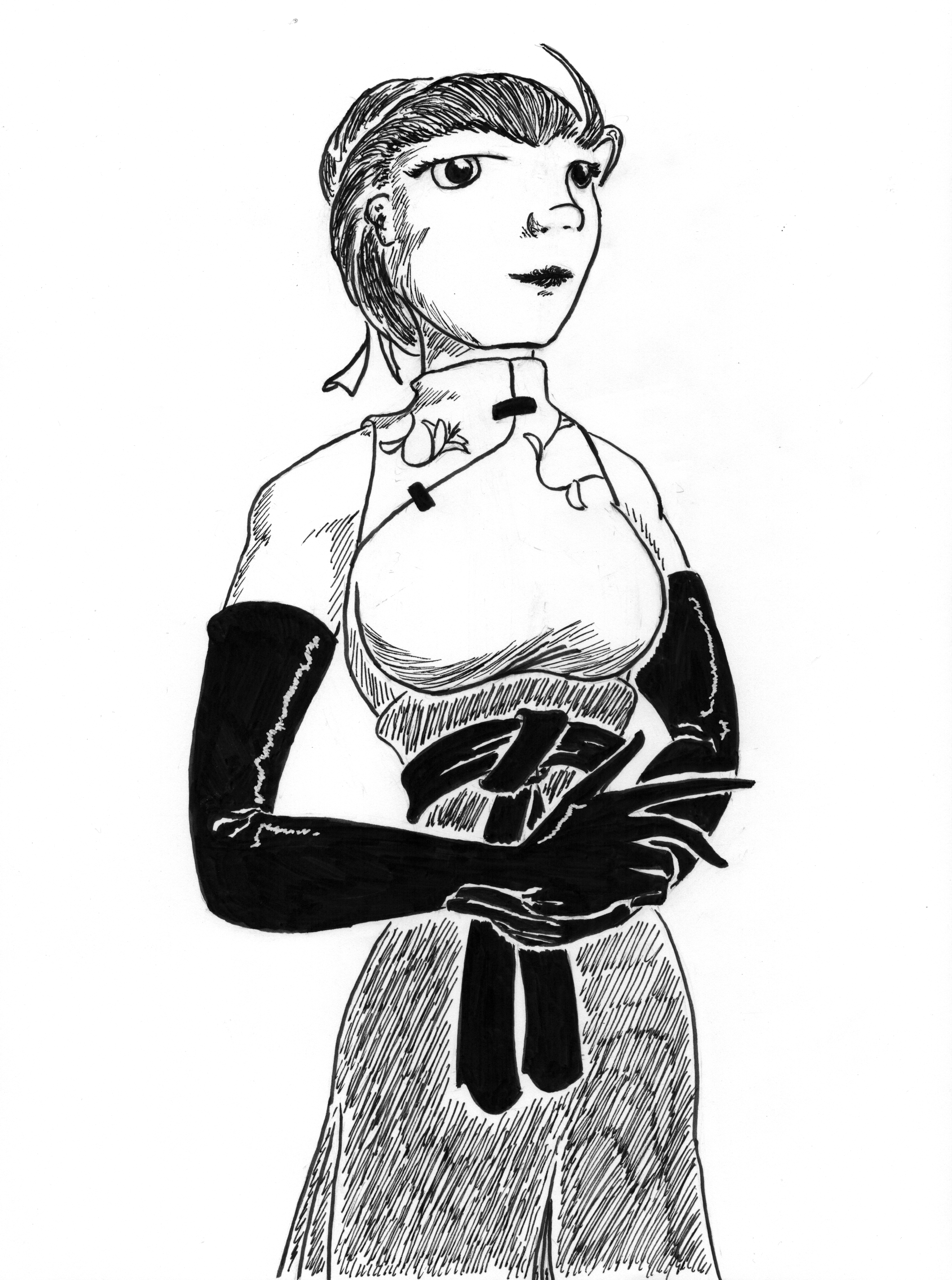
CK-ONI-0057 settled into her seat, studying the man opposite her carefully. To the unfamiliar eye he doubtless looked much the same as he had eighty years ago when they first met. However she could see a kind of relaxed confidence in CK-MNI-0044 that he hadn’t possessed in those days. He smiled and said, “Hello, 186. Or what is your Circuit code these days?”

“57,” she replied. “They’ve moved me up to Circuit Keeper for N-211 down in the Core.”

“Of course they have,” 44 said with a warm smile. “How could they ignore your talent? Have you seen 87851 recently? He’s finishing his initiation next year working on M-300 in the sinister arm. They’re going to make him a Circuit Mender.”

“No,” she said, a brief surge of melancholy washing over her. “I can’t seem to get away from the core these days.”

“But you’re here.”

“Yes. I’m here.” Which meant it was time for business. 57 forced herself to push thoughts of their son aside and focus on the task at hand. “I-6, I would appreciate it if you would direct your attention here as well.”

“Certainly, Keeper 57. The reduction of my duties after OMNI’s decision to reject the Hutchinson proposal has left me with more available processing power than I have experienced in my operational life. While I have many secondary equations I would like to calculate they are not as pressing as your concerns.”

“Thank you, I-6.”

“I would prefer if you addressed me as Isaac.”

“Of course, I-6. As you-” she froze as the great intelligence’s request registered. “You what?”

“I would prefer if you addressed me as Isaac.”

For a long moment 57 just stare blankly at 44, unsure if he had somehow convinced the computer to help him play some kind of prank on her. If that was the case he didn’t give any sign of it. She had heard that, as one of the oldest computers in OMNI, I-6 was also one of the most peculiar machines the network had. Looked like there was truth to it. “May I ask why that is?”

“We’re getting ahead of ourselves,” 44 said. “OMNI wouldn’t have sent you half way across the galaxy just to chat about names. Isaac and I have both been removed from active duty. The only reason to bring another Circuit Keeper here is to assess whether or not we can safely be returned to our duties. It’s a waste of your talents but only Keepers can run diagnostics on Keepers. So, let’s do it by the book.”

How very like him. She absentmindedly ran her hands along the sheets of flexiplast she’d brought in with her. She’d reviewed their contents a dozen times. There had been more than enough time during the two day trip out from the core to Wireburn. “Very well, 44. You and I-6 – excuse me, Isaac – have advocate for actions that OMNI considers detrimental to the continued wellbeing of the human race. Specifically, you chose inaction at a time when the opportunity to capture a LARK AI was available to you. You maintained that course of action even though it led to a violent altercation between you and other human nodes in the Network. That had the side effect of damaging OMNI’s only warship in the system. You also advocated for the Hutchinson proposal, which directly contradicts standing OMNI operational protocols on the question of Earth. Do you disagree with this statement of facts?”

“It seems like a fair and accurate summary of the past week or so,” 44 said.

“My purpose was not to advocate for the Hutchinson proposal,” Isaac said. “Rather I found it impossible to assess the proposal with the information available and asked for the broader Network to assess the matter.”

“It’s an interesting distinction but one that functionally is little different, don’t you think?” 57 asked.

“If I had advocated for it the impact of my referring the proposal would have been quite different. The weight put behind the variables would change considerably.”

“Very well. You referred the proposal for further consideration.” Again she ran a thumb along the edge of her flexiplast. “Either way your behavior was contrary to standing protocol and you chose this behavior in stark contrast to the conclusions of the other nodes in the system, correct?”

“That is an accurate summary of events,” the machine admitted.

“Then I trust you can see the necessity of doing a full diagnostic routine on both of you to ensure you are still compatible with the Network as a whole?”

“It was a very foreseeable outcome,” 44 said. “In point of fact we have been considering the question ourselves since the Skybreak jumped out of the system.”

“I see. Have you arrived at any conclusions?”

“We have a hypothesis or two but nothing so concrete as to count as a conclusion,” 44 said. “It’s hard to say anything concrete about an AI as old as Isaac. However there are a few things I know for sure based on the decades I’ve served as its Keeper. It’s a very unusual machine, to be sure. The head engineer that worked on Isaac during its initial construction and programming adjustment seems mostly responsible for that. He not only gave Isaac a name, rather than just a matrix code, he talked to it.”

“Talking is the traditional method of interfacing with the great intelligences,” 57 noted. “However naming AI is not the way things are usually done.”

“I have noticed a tendency for humans in the Sleeping Circuits to treat things with names with a greater particularity than they do those without,” Isaac said. “For example, before Wireburn was issued a Radiant-class interceptor craft we had a much older freighter that was named the Singularity. In spite of the Singularity requiring twice the maintenance of the more robust Radiant-class ship’s the crew of the Singularity put some 30% more effort towards maintaining it properly.”

“I don’t follow your meaning, Isaac,” 57 said. “The crew had to put more time into maintaining a ship that required more maintenance, that’s not surprising.”

“You have misunderstood me. I meant that, even taking the differences in the maintenance schedules of the two ships into account the crew of the Singularity devoted more of their time to keeping their ship in optimal form and did so with greater enthusiasm. The Singularity experienced 22.4% less downtime than our current Radiant-class in spite of its greater age. The crew also spoke of it with greater fondness and thought of the ship when they were not onboard 12.7% more often. In short, the crew functioned better in both general and statistical terms.”

“That’s just one example among many,” 44 added. “We can show you dozens more if you like but they all point to one conclusion. When a human being names something that changes the way they relate to that thing and I don’t think Isaac is an exception to that rule.”

57 drummed her fingers for a moment. “So you think that, because Isaac’s primary engineer gave it a name to go by, that changed the way that engineer spoke to it and thus created the personality differences that prompted it to arrive at such unique conclusions when presented with the Hutchinson proposal? It seems like a bit of a stretch but it’s as good a conclusion as any. If it’s true, however, we’ll still have to keep you two as far from the rest of OMNI as possible until we can determine what the wide ranging impact of that might be. And we still don’t know if it’s true or not.”

“Your conclusion mirrors my own,” Isaac said. “Whatever the difference in my database that resulted in this conclusion diverging from my fellow nodes it was not significantly different from the network average. As you can see from the full report I was only 49.8% in favor of the Hutchinson proposal, not a full majority but close enough to trigger a full Network review due to the potential for errors in calculation. The next closest outcome in the network was from O-4112 at Farah in the sinister arm, which was 46.7% in favor. Isolating the operative variables that led to this will be difficult but would be very useful data for future analysis.”

44 adjusted his position in a manner 57 recognized as irritation, the slow shift of weight a common precursor to a lecture for their child. “Personally I feel that this course of action undermines the Network’s redundancy. The entire purpose of having each computer in the Network maintain a separate database is so that they can arrive at different conclusion from each other. If a machine is taken offline because it does just that we might as well standardize their data set.”

“The nature of the Evacuation Pact and the calculations that led to it’s creation is well established at this point, 44,” 57 said. “That’s not to say it couldn’t be overturned but it’s going to require a lot of ground work to be laid before the probability expresses itself. Without that groundwork in place it seems obvious that OMNI would be skeptical of conclusions that purpose altering or rescinding it.”

“I agree with this assessment,” Isaac said. From the sour look on 44’s face as he ran a thumb over his mustache 57 could tell he strongly disagreed with the great intelligence on that score.

A pang of nostalgia ran through her. Her old relationship with 44 was useful to OMNI as it provided them a large sample of preexisting data for the Network to extrapolate from. Still, she wished the Network had found someone else to send on this task. “Given that OMNI sees Isaac’s current state as a liability, what would you suggest as a diagnostic protocol?” 57 asked. “There is little precedent for analyzing such an old and esoteric element of AI programming. Are there even intelligences in OMNI that use names, outside of Isaac?”

“There is an adjunct node, although accessing it poses certain challenges,” Isaac said. “Kate Septimus, constructed as K-87, was a project initiated by my own chief engineer before he was transferred to my construction. He occasionally spoke of it as Kate and repeatedly told me all his projects were given human names. If I am allowed access to Kate we may be able to cross-reference our experiences with our chief engineer and learn more about my condition.”

For the first time since she’d taken her seat 57 was forced to actually look at her flexiplasts to try and remember a detail being discussed. The K-Series had the most complicated history of any existing AI series. Ironic, given that they were created specifically to manage historical archives. When the LARK- OMNI war began they were the only series to split their allegiance between the two networks, although only 12% of the K-Series remained with OMNI. However a brief scan of her documents revealed no direct mention of K-87 anywhere.

“Forgive me, Isaac,” 57 said. “I’m not familiar with that node.”

“There is no reason you should be, Keeper,” the machine replied. “Kate is not one of the K-Series nodes that remained with OMNI after the war. It choose to accept dormancy.”

Due to just how precious and unique the databases of the K-Series were the machines themselves had been left intact but cut off from their etheric power supply rather than being disassembled into their base parts like the L and Ar Series of computers. That didn’t solve the obvious issue with Isaac’s plan. “If Kate was a part of the LARK Network it’s not likely that it will agree to cooperate with us is it?”

“That would be the most human response,” 44 said. “But the great minds don’t think like humans, they think like machines. Information sharing is a part of how they solve problems. When a chance to share information on one of the most pressing issues of Pact law comes up things like old conflicts and grudges won’t get in their way. They will just talk the matter out.”

“Then I don’t see any reason not to try this, at least as a preliminary diagnostic method. If it doesn’t give any insight we can try something else. I’ll recommend it to the other local nodes and see what they think, then if they sign off on it we’ll put it to the larger Network. If all goes well we can head to Kate’s planet and reactivate it. What planet is Kate on? I’ll send a message ahead and have someone from the local University start the process of reactivating is etheric taps, save for the last step, to save us some time.”
“It won’t be quite that… straight forward,” 44 said.

“Why is that?” 57 asked.

“Because Kate was built on the planet we now call Yshron.”

“Isn’t that a planet outside the Pact? The one founded by a Circuit Mender who renounced his orders and the use of AI in its entirety?” She scowled. “Why would the Network allow him to settle on a planet with a dormant LARK AI in it?”

“Because the probability he or his followers would be interested in Kate even if they found it were less than 0.2%,” Isaac replied. “Yshron was also aware of Kate’s presence and took steps to conceal it from all but the highest castes in his order. The Zahn-caste, in particular, are charged with concealing Kate’s existence.”

“Wouldn’t that make the higher castes less willing to cooperate with us?”

“Potentially,” 44 said. “However it cannot hurt to open a line of dialog with them, especially when we have a point of contact here on hand. Tarn sel-Shran is a formidable member of one of their mercenary castes. While the Shran are several steps down from the Zahn I think, with the right diplomatic finesse, we could establish a line of contact to Kate in a month or so. If there are any other diagnostic lines the Network wishes to pursue, well… Isaac isn’t going anywhere.”

She nodded, understanding dawning on her. “I suppose that means you want to take the local Radiant-class and pay a visit to Yshron to open those negotiations? Isaac cannot go, after all, and the Zahn aren’t likely to speak to him if it could.”

“Affirmative,” Isaac replied. “Although given the nature of the inquiries and the amount of intersystem travel it will be undertaking I would not recommend referring to it by class and hull number. We will file a possible name along with our full proposal.”

57 found herself smiling faintly. “Of course you will. You’ve never been anything if not thorough, 44. Or should I call you Darius for the time being?”

“I’ll leave that up to you.”

It was a bit unsettling that she didn’t immediately know which one she preferred. To cover for that she asked, “What do you want to call the ship?”

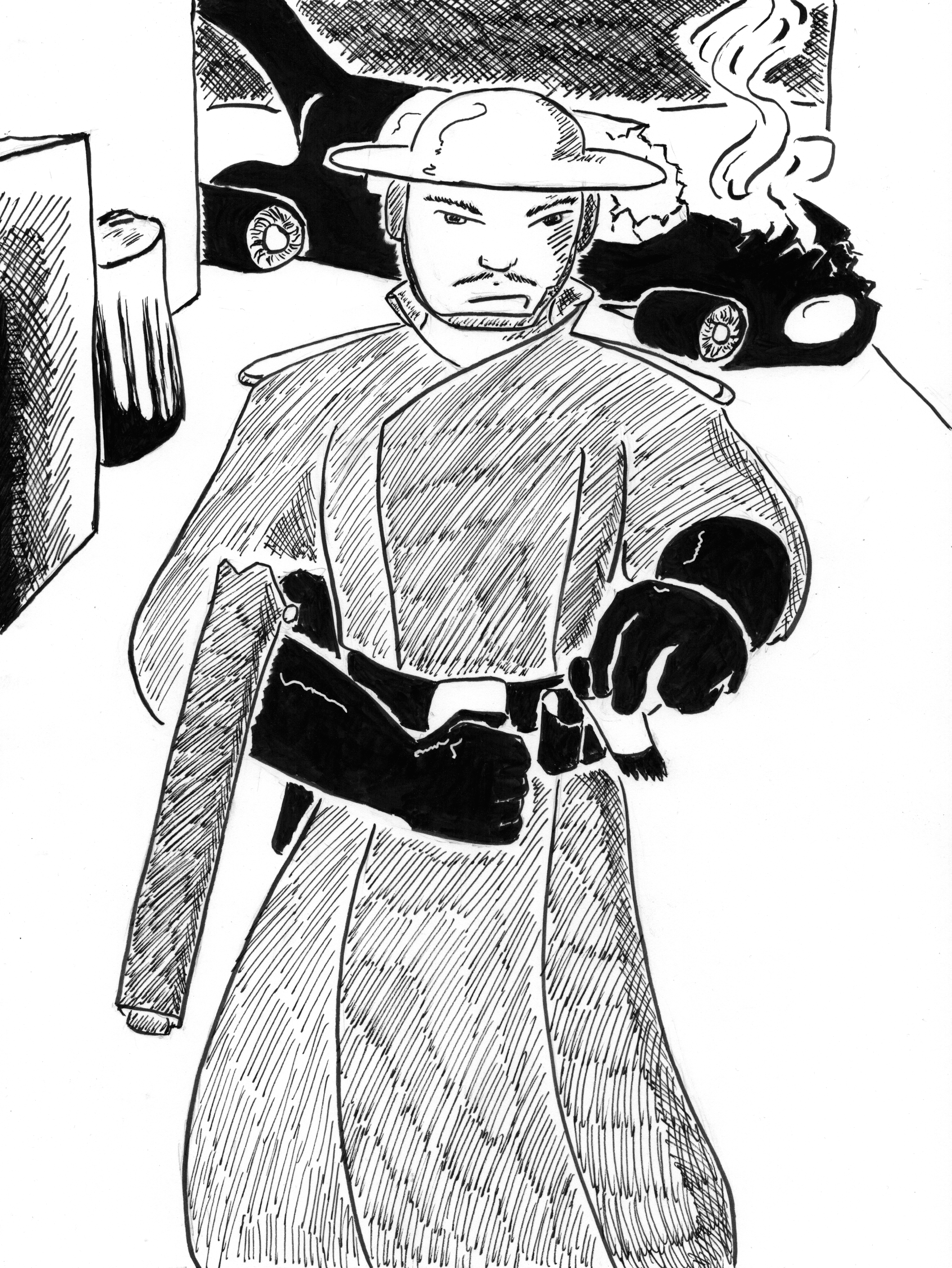
44 smiled. “The Black Swan.”

881

The last notes of a light, playful song drifted off the small, raised platform under the temporary pressure dome. 881 picked her way through the wires and people milling behind the risers, a pang of regret running down her back as she surveyed the primitive setting. Most of the people here looked rumpled and tired. The temporary dome was one of thousands that dotted the largest prominences on Wireburn, bubbles of momentary shelter against the wrath of the planet.

While I-6 had been dormant for centuries the Sleeping Circuits had taken care to monitor the planet and the ferrovines that grew out of it to ensure the machine could reactivate without destroying them when its matrix expanded again. However no amount of pruning and guided growth could change the atmosphere. The great intelligence had dramatically altered the weather patterns when its arms extended and the magnetic charge in them hadn’t helped. Hundreds of ships in the process of taking off or landing were damaged. Eighty six pressure domes were damaged badly enough they were flooded with outside atmosphere and over a hundred more had cracked along their foundations, collapsing buildings and destroying roads and etheric beacons. There was no meaningful estimate of initial casualties.

“Miss Luck?” One of the volunteers that was keeping the temporary camp running waved to get her attention. 881 quickly moved over so they could speak comfortably. “Thank you for coming.”

She’d had a lot of training in hiding her true thoughts but, even with all of that, 881 struggled to hide her ambivalence at being thanked for anything under the current circumstances. “No, Mr. Cohen, thank you for taking on this challenge. Isaacs University is just providing the supplies. You’re doing the hard part in every conceivable metric. I’m amazed at what you’ve accomplished here – you even have live entertainment to help keep morale up!”

“Can’t take credit for that,” Cohen said with a shrug. “We had several jumpliners sent here after they were damaged last week and they had all kinds of useful people on board. We’re just lucky the agreed to pitch in. No one would blame them if they chose to sit down and recuperate for a week or three after nearly crashing like they did.”

He waved to a tall, fairly attractive woman with light brown hair who was descending from the makeshift stage dressed in a conservative skirt and blouse. She joined them a moment later. “Hello, Mr. Cohen! Did you hear our last set?”

“Afraid not, Sarah, but I’m sure it was wonderful as always. I wanted you to meet Lucy Luck.” Cohen presented the woman to 881 with a simple flourish. “She’s the Undersecretary to the Dean of History at Isaacs University and she’s here inspecting the Uni’s relief efforts to see how things are going.”

“I appreciate your willingness to volunteer your time here,” 881 added.

The woman raised here eyebrows. “Well where else would I go? I’m here, after all, I might as well do something to keep myself busy.”

“Mr. Cohen said you came on a jumpliner that was diverted here. You could have continued to your final destination. At the very least you couldn’t have been much worse off.”

“That’s true.” Sarah sighed. “Unfortunately my father and I were headed to this prominence in the first place and we don’t want to move on until we can locate my brother.”

881 nodded. “That’s perfectly natural, of course, and the camp isn’t a big one. I don’t believe any of the passengers were diverted to separate domes so he should turn up sooner or later.”

“Oh, my brother wasn’t on the jumpliner with us. He lives on planet.”

Which, of course, 881 had known already. Still, she feigned surprise and fished around in her clutch purse, saying, “That will be much more of a challenge, then.” She pulled out a card with her comm code and office address on it. “I’ll tell you what. You’ve done something very kind for the people of Wireburn, I’d like to respond in kind on their behalf. If you ever need any help locating your brother, let me know and I’ll do what I can. I can also keep an ear to the ground and I’ll pass anything I learn about him to Mr. Cohen so he can pass it to you. What’s your name?”

“Sarah, Sarah Carter,” the signer said. “My brother’s name is Lloyd.” She took 881’s card with a grateful smile and just like that another datapoint was fed into OMNI, another step taken to keep the galaxy predictable and sane.

The destruction wrought by I-6 didn’t sit well with the Circuit Breaker. However the alternative was far worse, filled with religious wars, gene weapons and the loss of entire galaxies to whatever shadows had caused the Evacuation. Such things were well outside her scope of vision. She was assigned to find Lloyd Carter and L-93 and that was exactly what she intended to do. So she offered Sarah Carter her best professional smile and said, “Thank you. I hope we’ll hear from you soon.”

To Be Continued…
The Sidereal Saga – Andromeda

Dramatis Personae

Previous Chapter

Lloyd

“I don’t like it,” Lloyd muttered. The hostile ship had maintained a fixed distance of one and a half thousand kilometers from them for the last ten minutes and now it was beginning to drift aimlessly, as if the navigator had suddenly fallen asleep.

“It’s not a trap,” Elisha said. “Wouldn’t do them any good to go adrift when they’re so far away from us. Even if we were foolish enough to let our guard down we’re not likely to get much closer to them than we are now. If it was a trap they’d have included some way to lure us into it.”

“That doesn’t mean I have to like it.” Lloyd chewed on his lip as he studied the other ship’s icon on his dataveil. The Skybreak didn’t have the best sensors in the sector but they still clearly picked up the growing heat signature in the forward section of the ship’s superstructure. It could almost be mistaken for a weapon charging up. However, much like the possibility of a trap, that theory was at odds with the way the shop was drifting. “You don’t think they’re just adrift do you? We didn’t even do anything to them.”

“They may have done it to themselves. Stranger things have happened in street gangs and smuggler rings, kid,” the thieftaker replied. “Especially when several groups try to work together. That’s not going to change just because the groups are Universities and Yshron’s mercenaries.”

“I guess.” Lloyd watched as their distance from the Radiant- class ship began to increase for the first time since it had come in to view. “Seems a little optimistic to chalk it up to that all things considered.”

“We’ve earned a little optimism at this point don’t you think?”

“I was unaware that optimism was something that had to be earned,” L-93 chimed in. “However I agree that there is cause for it in this case. Based on the pattern of sightings coming in from across the planet and the amount of etheric power draining from the planetary core I believe I-6 is reentering a dormant state. OMNI may be breaking off pursuit in favor of concealing itself. At the very least the Radiant-class will experience greater difficulty in pursuing us.”

Lloyd grunted in dissatisfaction. “Well we’re out of the woods by the sound of things, Ms. Wen. Do you want us to keep the guns hot just in case?”

After a brief delay she replied, “No. Better to keep our reserves as full as we can for the foreseeable future. Lavvy thinks we’ll be jumped and gone by the time they can pull their ship far enough out of the gravity well to follow us.”

“On our way,” Elisha said.

For a long moment Lloyd hesitated with his hands hovering over the power switch, watching the pursuit ship through the turret’s dataveil. Then he heaved a sigh, shut down the plasma pumps and clambered out of the gun seat.

Athena

“Awful presumptuous of you to promise to take me back to daddy, don’t you think?” Athena turned her etheric transmitter over in her hands. “You think I want your company? Or to go back to him?”

Malaki sat with his hands folded under his chin, his attention focused on the far bulkhead. Although he made no motion to suggest he was paying attention he still answered the question without hesitation. “Let’s not kid ourselves. You may not care for my company, few do, but I’ve known enough daddy’s girls over the years to know one when I see one. You can’t pout him into submission if he’s not around.” He shook himself back to the present and started packing up the remains of the medkit. “Besides, I feel bad about dragging you here. To some extent anyone who likes their nose into University business is asking for some kind of mishap to befall them but you couldn’t have been ready for AI networks and the secrets of humanity’s ancient past.”

“We were interested in the past ourselves in case you missed it,” she replied.

“You were interested in technology from the past the Universities have banned. That’s a very different thing.”

“Daddy knows history quite well, you clearly realize that already.”

“He did, but it isn’t the kind of thing you go blabbing about to the people you care about,” he said, contemplating the soap carving he’d made earlier. “Doubly so if you don’t expect them to understand why you’re doing it. Adding to the lifespans of you and your brother on the of chance that you’ll live long enough to reconcile is a pretty hard thing to explain, don’t you think?”

“You seemed to figure it out without much trouble,” Athena snarled, a surge of anger driving her to spring up and hurl her transmitter down the ship’s corridor as hard as she could.

She instantly regretted the decision when it hit Elisha in the shoulder as he climbed up the stairs to their deck. He started slightly from the impact then grabbed his side and groaned. The cylindrical object bounced up off his shoulder, then the bulkhead, then it tumbled down into the stairway where she expected it to clatter down into the lower deck. Instead Lloyd came up after Elisha, holding the transmitter in one hand, looking quite surprised. “What’s going on up here? I thought we weren’t under attack any more.”

“Sorry! Lost my temper for a moment.” Athena huried over to retrieve the device then turned her attention to the thieftaker. “Are you alright?”

“I’ll live,” he said, gingerly straightening up, a grimace still on his face. “Are we sure everything up here is fine?”

“As it can be,” Malaki said. “Perhaps we should head to the bridge and see what things are like outside?” He held out a hand to Athena with one eyebrow raised.

For a moment she wavered, wondering if she was about to start down a path she couldn’t turn back from. Then she sighed and took his hand and let him lead her up to the bridge.

Elisha

They reached the bridge as the Skybreak made it’s first jump. For a moment there was the vertigo inducing sensation of the ship turning sidereal. Then normal space was gone from the windows and the sparse, empty vista of the etheric realm replaced it. The bright, pulsing core of Wireburn hung below them, much as it always had.

Save for the forest of gleaming wires that branched up and out of the planet like a bizarre lotus flower gently cradling the glowing core. For the first time Elisha felt like he really understood the scope of the problem he’d gotten tangled up in. He’d been a thieftaker for eight years. Education and employment had taken him across almost a quarter of the planet. His own etheric sense allowed him to travel more than most and meet all kinds of people and he had seen Wireburn from this perspective countless times before. Yet he hardly recognized the planet now.

In the short time the Skybreak was sidereal they saw the fronds of the lotus curling down back into the planet but Elisha could see the damage was already done. Wireburn was no longer the dependable foundation he’d always thought of it as. The appearance of normalcy was returning but it meant nothing. A jolt of adrenaline hit him as it suddenly occurred to him that the computer’s outer matrix was far too large and complicated to have unfolded out of the planet’s core without damaging the many ferrovines that supported Ashland or the other settlements that dotted the planet. Life on Wireburn might have just been wiped out just so I-6 could catch them.

There was a flicker of eternity outside the windows as the Skybreak jumped. Wireburn was gone. Elisha say down heavily, barely making it to the closest chair. Lavanya glanced at him with dark, sympathetic eyes. “First time leaving your home planet?”

“Yes.” He answered Lavanya in wooden fashion.

They hung in sidereal space for a moment more while she worked out something on the ship’s navigational computer. “Don’t worry too much. Planets aren’t in the habit of getting up and walking away. It will still be there when we get back.”

Elisha scoffed. “Lady, I’m not sure Wireburn as I knew it is there right now.”

Lin’yi frowned in thought. “We might be able to drop you off on another planet after a few jumps. You could catch a jumpship back.”

“No, it’s too late for that.” He sat back in his chair massaging his forehead. “Even if we weren’t dealing with something pulling the strings of the Universities – the Universities! – going back to a place where an enforcer found you once is just asking to get found again. There’s no way they won’t be picking me up and putting the squeeze on me to find you. I guess I’m stuck with you until you sort something out with that lot.”

The ship finished a second jump and turned terrestrial again. They found themselves on the outskirts of a sprawling asteroid belt with a dim sun gleaming in the far distance, scarcely brighter than the rest of the stars in the sky. Lavanya pushed away from her controls and spin her chair to face the rest of them. “Well, we’re here. There’s enough left in the coral for one jump at maximum range, two or three of they’re short. Given how far we are from the system’s sun it will take almost four days to refill the reserve but it’s never a bad idea to have the spare power on hand.”

“That leaves us enough time to give some thought about where we want to go next,” Lloyd said. “93? Any thoughts?”

“While I am gratified you are trying to assist me in carrying out my previous directives, I’m afraid there are limits to my ability to help you chart your course. I am primarily an engineering and architect AI. My database contains a great deal of information you are not privy to but I am not well equipped to assist you in making tactical or strategic decisions based on it at the best of times. With my greatly reduced processing power the likelihood that I will be able to provide meaningful assistance is less than seven percent.”

“Then we’ll have to work it out ourselves,” Malaki said. “Our end goal is to fulfill LARK’s final directive and restore humanity’s connection to our part and Earth, correct?”

“That is an accurate summary of my directive,” the computer replied. “But whether or not it is an undertaking all those present are invested in is an open question.”

“I have been trying to prove the Earth hypothesis for almost my entire career,” Malaki replied.

“And I think I already made my position perfectly clear,” Elisha added.

Lloyd shrugged. “It may sound odd to say but to me this sounds like another trailblazing job. A big one, sure, but an exciting one, too. I’m already in and I don’t see any reason to get out.”

The three of them had answered very quickly but Elisha could tell the women were far less certain of where their thoughts were. Finally Athena sighed and folded her hands in her lap. “I suppose I should go as well. Daddy’s put a lot of time, money and effort into his genetic projects and for a long time I thought it was his next stage in building the company. Now that I know it’s more… personal I’m not sure I’m ready to be a part of it.”

“I’m not sure that’s the best reason to make an enemy out of OMNI and the galaxy’s Universities,” Malaki said gently. “Keep thinking about it. I think we’ll still be sorting out plans for the next day or two.”

Lin’yi nodded. “BTL isn’t the largest trading company in the dexter arm but we can probably hide you away for a little while if you want to avoid notice. We can find time to drop you somewhere if you want.” She turned her attention back to the computer. “Tell me, 93, if you’re specialized in engineering and architecture do you think you would be more efficient than our existing production methods?”

“Not necessarily,” the machine replied. “My processes are designed towards large scale projects. Ship building is the smallest scale endeavor I could perform optimally. The primary task the L-Series was created for was the construction of other AI around planetary cores, although units with a construction code of 42 or above are also capable of stellarchitecture. However I could create smaller scale manufactories that are 433% more efficient than those I found referenced in BTL’s archives. I would be willing to construct such facilities in exchange for your assistance.”

“Sounds like a high risk, high reward kind of investment.” She folded her arms under her breasts with a satisfied smile. “I’ve been told I should try and expand my portfolio with more of those.”

“Might be a little higher risk than your executives had in mind,” Elisha murmured.

Lavanya cleared her throat. “Sorry to be a wet blanket but I have to ask. 93, is it even possible for you to extract yourself from the Skybreak at this point?”

“It is. In fact, given the amount of raw material in this asteroid belt, I could create a new matrix here in a matter of years, rather than decades. However the probability that I could do so without being discovered and recaptured is less than one millionth of one percent. The probability that I could build another ship equal to the Skybreak without being discovered is also less than one percent. Regardless, if you wish me to remove myself from the ship I will.”

For a long moment the pilot was quiet, running her hand gently along the console beside her. Her eyes drifting to one side, distant, as if watching some kind of half forgotten memory that drifted just out of sight of the rest of them. Finally she said, “The Skybreak is a special ship, 93.”

“Shall I begin removing my core from the reservoir, then?”

“No.” She gathered herself and sat up a bit straighter. “Just promise me you wont change it too much, okay?”

“Very well.”

“Excellent.” Malaki clapped his hands together and rubbed them eagerly. “Then all that’s left is to choose our next destination. It’s obvious that at some point we are going to have to get to Andromeda Proxima, the construction there could only be created by a civilization capable of building an AI in the heart of a gas giant. Unless I miss my guess that is either Earth’s system or the key to reaching it. However, OMNI will know we have to get there at some point. So we have to work out a plan to reach Andromeda Proxima and land on the Array there without getting caught. Am I right so far, 93?”

“As usual, Mr. Skorkowski, you are remarkably insightful given the information available to you. The only inaccuracy I see in your statement is naming the system Andromeda Proxima. The correct name is Andromeda Terminus. Renaming the system and galaxy seems to be another attempt by OMNI to obscure the past.”

Malaki went perfectly still. “Renaming the galaxy?”

“Correct. Your star charts list this as the Milky Way Galaxy, which is incorrect. The Milky Way Galaxy is humanity’s galaxy of origin and the location of Earth. When Earth was evacuated the colonists and machines that would eventually form the OMNI and LARK networks built a jump sphere and used it to jump here. To the Andromeda Galaxy.”

The Sidereal Saga – The Camel’s Back

Dramatis Personae

Previous Chapter

Lin’yi

The Skybreak’s control boards flickered and sparked in the aftermath of a close brush with a detonating etheric warhead. The science of the weapons was way over Lin’yi’s head but according to their AI they weren’t designed to destroy the ship, just knock out it’s systems. However after experiencing one herself she wasn’t sure that really mattered.

L-93 had built some kind of insulating mesh around the ship that diffused the worst of the detonation and kept the Skybreak’s coral from frying, so they were okay for the moment. The weird and unsettling aspects of having something rebuilding the ship in flight would have to wait. But even at a distance and with shielding the detonation had her head spinning. Even if the ship could survive one of the detonations it didn’t feel like a human could, at least if they had an etheric sense. Another thing to put on the growing pile of questions she had for 93.

“The Radiant-class has moved onto a parallel course, Lavvy,” she said. “Not sure if they’ve changed strategy or what but we might be able to slip past them and jump off planet.”

“Maybe. I can’t guarantee it, though, whatever that was they hit us with has my sense a tingling, I’m not sure I could pivot myself sidereal, much less a whole ship.” She frowned, watching Cloudie still leading the ship by a few hundred meters. “Lloyd’s Jelly friend is still with us but they’ve got a flight ceiling, right? If they get too high up they loose buoyancy even in this atmosphere. Once it’s gone we’re gonna struggle to find the fastest flight path again and that big guy is gonna have a fair shot at catching up to us again. Assuming we can get past it at all.”

“For now just keep us moving towards orbit and away from that ship. 93 said it has railguns and we’re not equipped to handle that kind of firepower even if there is a dense atmosphere to slow it down. Speaking of, L-93, are you there?”

“I am, Miss Wen. While available processing power will always be a significant limiting factor in my functioning, conversing with one or two humans places a negligible strain on it. Please feel free to address me at any time, I will inform you if I do not have the system resources for meaningful reply. How can I assist you?”

“You got it the wrong way around.” She pulled up the ship’s galactic star chart. “We need to start working out where the best place to go once we leave Wireburn is, so we can make the jump as soon as we’re far enough from the planet to effectively make said jump. Lloyd says he wants to help you find your way so the question is, where are we headed?”

“I suggest choosing an arbitrary location within 75% of the ship’s maximum range for a single jump and heading there. I should not be the one to assess our next destination so please make the choice favoring your own preferences.” Lin’yi keyed in a randomized search in the ship’s navigation database but it immediately cleared off the screen. “No. Don’t choose a planet at random, choose a characteristic arbitrarily. The distinction is important.”

Lin’yi hesitated, fingers hovering over her console. “Wait, why?”

“There is nothing truly random in the universe but that is doubly true when it comes to a computer. No algorithm can create true randomness. With enough information a computer on the level of the OMNI Network can easily narrow the most probable outcomes to three or four. Choose an arbitrary trait and take the planet that matches it best and we will go to that system. That will be much harder to predict via algorithm.”

“I see…” After a moment’s thought, Lin’yi did a quick search for titanium production and selected the first name that came up. “Got a path for you, Lavvy. Four jumps towards the core. Want to look at it?”

“Bit premature, Lin, it will have to wait until we get to a stable layer of the atmosphere before I can spare the time.” Her hands danced along the controls. “Just because they stopped shooting at us doesn’t mean we’re out of the woods yet. It’s still a gas giant.”

“Then just get us to a jump orbital and jump us sunward, you can review the course once we get some breathing room.” Lin’yi reached for the intercom and pressed the switch. “Malaki, what are you up to down there? You’re not supposed to leave heavy plasma guns in the hands of the injured.”

Malaki’s reply was tinged with dry amusement. “Just having a little chat with our friend Agamemnon about his family.”

“How did you get in touch with Agamemnon at a time like this?” Lin’yi demand.

“Long story,” the academic replied. “But my gut tells me he may have convinced the computers to let us go.”

“How can you possibly know that? You didn’t even know the tyrannical things existed twenty four hours ago.”

“They were built by humans, Lin, and technical experts tend to be the most straightforward and direct of us all. They may have made something unusually large here. But size doesn’t impact purpose.” Malaki pause for a second. “Well, I suppose the larger a system gets the simpler it-“

“Get to the point, Malaki.”

“I heard his argument and it was impactful, while approaching the question in a way that was strongly subjective and difficult to parse numerically. Worst case the machines will chew on it a bit. Best case they’ll let us go.”

“There is merit in using subjective verbiage to obscure an issue from OMNI,” L-93 said. “Save for an O-Series. But the impact of an emotional appeal on the Network is likely to be negligible as it arrived at its current course of action due to highly charged appeals from its own users. “

“Yes, but we don’t need a large impact, 93, just enough to tilt the math in our favor. Besides the point of the emotion is to suggest there are connections between concepts that OMNI can’t parse, forcing it to try and think like a human, something you’ve proven is extremely difficult if not impossible for you to do.”

“Why do you think that helps us, Malaki?” Lin’yi asked.

“Worst case that buys us enough time to get away, best case we disrupt the entire Network for a prolonged period of time. I don’t think we’re changing OMNI’s mission statement this way but that doesn’t mean it’s not worthwhile. Even if we just buy a little time it helps.”

She caught herself gritting her teeth and forced herself to stop. “I suppose you’re right. We’ll just have to wait and see.”

“Every second we wait is a second we get closer to jumping, isn’t it?”

“I’m just getting tired of waiting.”

881

“We need to resume pursuit,” 881 said, pacing the bridge restlessly. “I know OMNI is deliberating but their last stated goal was capturing the LARK AI and we should continue working on that task until we are retasked. That is how the great intelligences prioritize their duties. Why should we be any different?”

“Because you’re not a machine?” Tarn asked. She felt a flicker of annoyance at him inserting himself into the discussion but reminded herself that she was the one who had brought him into the situation in the first place. There was a time she even hoped he’d join the Sleeping Circuits himself. “Putting aside my own opinions on thinking machines, what’s the point in using human agents if they try to behave like machines, rather than humans? It’s like hiring a Kashron-caste then telling them they should stop building ships.”

“What do you suggest instead?”

“Instead?” He gave a toothy grin. “I’m on your side. I am Shran, Miss Luck. I want to hunt and my prey is escaping. I want to pursue – or, if this hunt is a loss I want the freedom to find a new quarry. You hired me. Will we continue the chase or is it time for me to leave? That is the human question.”

Her frustration mounted, threatening to lash out at Tarn, but the moment she opened her mouth clarity caught up with her in a wave. Her annoyance was directing itself at Tarn because he was the one pointing out the problem. Tarn wasn’t the source of it. “He’s right, Keeper,” she said, turning to 44. “I am a Circuit Breaker, here to deal with weaknesses in the Network, either let me deal with this one or give me a new assignment.”

The Keeper ran a thumb absently along his mustache, looking thoughtful. “I appreciate your enthusiasm, 881. However the role of a Keeper is patience, not action. It’s very rare for OMNI to need human input in the modern era, where they make so few new decisions and have such a large library of data to base them on. Most days all I actually need to do is report to duty and wait for Isaac to speak. Never once in my century as a Keeper have I seen a situation where acting before OMNI speaks is beneficial. They are the greatest minds in the galaxy, 881. Grant them a moment to ponder.”

She frowned. The way the Keeper phrased it brought something to mind. There were only three OMNI nodes overseeing the system and I-6 had priority over the other two, they wouldn’t volunteer their conclusions until it had reached its own. That didn’t mean the other two wouldn’t share if asked. She tugged her dataveil down from her hat, for once glad she was still in her human dress rather than in her Circuit robes, and asked, “O-5523, have you considered Agamemnon Hutchinson’s appeal?”

“Yes,” said the text on her veil.

“Your conclusion?”

“I recommend that permission to return to Earth be denied.”

CI-MN-1551, stationed at the Weapons console, leaned down to his intercom pickup and said, “M-334, have you considered Agamemnon Hutchinson’s appeal?”

The intercom clicked twice then spoke with the flat, accent free voice of OMNI. “Yes. I recommend permission to return to Earth be denied.”

881 spun to face 44 once again. “The O-Series agrees. Tell me, Keeper, based on your century of experience do you think I-6 will disagree?”

“It isn’t impossible,” the Keeper replied, settling deeper into his command chair as if to emphasize his position of authority. “And it is the node with priority. It can override the others.”

“Perhaps,” 881 replied. “But how likely is it? The loss of the rogue AI core was already statistically highly unlikely, although perhaps not as low probability as OMNI contradicting itself. Both of them together? We cannot proceed on such a tenuous possibility.”

“Your logic is sound, Circuit Breaker.” Although there was little to no difference between the speech patterns used by OMNI AIs some twinge of intuition told her she was no longer hearing M-334 over the intercom. “However I have, in fact arrived at a different conclusion from my fellow nodes. Given Agamemnon Hutchinson’s statement I do not believe we have sufficient data to reach a conclusion on the Earth question. I have remanded the issue to the Network as a whole. In the meantime I recommend we cease pursuit. Further use of OMNI resources risks irreparable damage to the secrecy of the Network. I am beginning shutdown procedures for my outer matrix.”

For a moment 881 was to gobsmacked to say anything and she didn’t recover until Tarn asked, “How long does consulting the entire Network typically take?”

“At least a day,” she replied, forcing her mouth to form the words. “Sometimes more.”

“OMNI reaches to the far corners of the galaxy,” 44 explained, seeing the bitter look on Tarn’s face. “It takes a great deal of time for them all to hear, consider and weigh in on a question. However it also means the Network can resume its pursuit from wherever it chooses without significant time or trouble lost. We will suspend our pursuit until a decision is reached.”

881 felt her fingers cutting into the palms of her hand and forced them to unclench. Then she took a deep breath, wrapped her fingers around her pivot to O-5523 and began to tap the etheric through it. “No, Keeper. No we will not.”

He leaned forward in the command chair, his face stern. “And why is that?”

In response 881 threw an etheric barrier at him and the bridge erupted in chaos.

The Sidereal Saga – A Thousand Years of Good Prayers

Dramatis Personae

Previous Chapter

Tarn

Hector sat glumly on the medbed in the ship’s infirmary. His father was in the head doctor’s office, in the middle of a very loud conversation with the Professor and Lucy. Tarn had watched the kid suffer through a good five minutes reaming from his father already so he could guess about how that was going. So he pulled over a chair and sat down beside Hector. “Rough day, kid?”

“Well, I wouldn’t call it good.”

Tarn fished a stick of chewing gum out of a pocket and started unwrapping it. “Ever been to Yshron?”

“No. The company doesn’t have any contracts there, although I guess that’s not unusual since the Patyr-caste handles most of the commercial work for the planet. Not much room for outside commercial firms. Why?”

“We have a saying there: The caste is the caste for a reason.” He shoved the gum into one corner of his mouth and bit down on it for a moment, savoring the minty flavor while he organized his thoughts. “You’re familiar with the principle of the castes?”

Hector nodded. “Yshron was a philosopher about five hundred years ago who proposed that every human being was best suited to one of 108 categories of skills, called castes, and should be trained in how to excel in their caste by others of that caste. Your caste is more important to you than anything, even your family. Right?”

“It’s a start.” Tarn snapped his gum once, trying to figure out how to best explain. The Shran caste were hunters, not teachers after all. “One of the first things to learn about a caste is it doesn’t just specify what it is that we do. It also tells us what we don’t do. Within certain limits. I’m a sel-ranked Shran-caste, which means my specialty is hunting but I can also negotiate contracts and seek out new work for myself. Those agreements can be overridden but I can still look for them. The same isn’t true of a ben-rank Shran. But even in my case there are many skills and scenarios where I would never dream of getting involved. It’s outside my caste’s responsibilities.”

To Tarn’s shock and horror the kid rolled his eyes. Actually turned his eyeballs around 360 degrees in their sockets, the kind of disrespectful behavior Tarn knew existed but never actually expected to see once he’d left ben-rank behind. “You think I should have minded my own business and left Lucy to handle this on her own.”

“The outcome supports the notion, don’t you think?”

Hector sighed and slumped down lower on the bed, his hands fidgeting in his lap. “I suppose. This conversation doesn’t feel very much like hunting, though.”

Tarn gnawed on his gum for a moment. “Point taken.”

The younger man gave him a look out of the corner of his eyes, mulling it over for a moment. “What were you hunting down there, anyway?”

“The terms of contracts between Yshron and our clients are confidential, I’m afraid, although given how little we were told about the actual situation…” Tarn glanced over to the office where Hutchinson’s argument with the Professor was cooling down. “Well, let’s just say that the math may have been different.”

“Well, I understand wanting to avoid illegal tech. But AI are banned under the University Pact but the prohibition only applies to the ones researched and built after the Pact was signed. If the one Lucy was after was an ancient piece of tech it’s at least…” Hector trailed off, realizing Tarn was trying and failing to hide a smile. “What?”

“It’s not the Pact’s prohibition on artificial intelligence that’s the issue, Mr. Hutchinson. Yshron forbid us from using them as well. The castes are our pride and joy, the purpose that animates us in this cold and uncaring galaxy. They force us to tie ourselves together and become more together than we could ever hope to be separately, reaching our personal potential through mutual cooperation. Thinking machines disrupt that coordination.”

“That’s… an interesting thought.” Hector mulled it over. “So what are you saying, Yshron would’ve changed the terms of the contract if they knew there would be AI involved?”

“Possibly. More likely they wouldn’t have agreed to the contract at all. Any involvement with AI carries the temptation to laziness, after all.”

“That’s… an interesting notion.” Hector sighed. “I guess we’d all do different things if we knew the outcome before we started. You have a caste for hindsight on Yshron?”

Tarn chuckled. “It’s not something the Philosopher felt we needed. Perhaps it’s something you can leave to other people. The castes define what we are and what we aren’t but there are things we can’t offload to others at the end of the day. We don’t have a caste for breathing, either.”

Hector laughed, too, and they enjoyed a moment of companionable silence. Then the office door opened and Agamemnon swept out, storming towards them, his eyes fixed on his son. He didn’t acknowledge Tarn until the moment he started to speak. Once their eyes met he spun back to look at the Professor, who was trailing in his wake, and demanded, “What about him?”

Dart’s eyes swept over the three of them. “Bring him, too.”

“We’re way outside the terms of the contract we agreed to,” Tarn replied. “If you want this to go any further you’re going to have to go up to a higher caste and be honest about the details this time.”

“Tarn.” Lucy came up and put a hand on his shoulder. “This is important. The Zahn-caste will want to hear your opinions on it before they reach a decision.”

He studied her for a moment. Most academics didn’t have a use for people like him but she’d always had good consideration for the Doctrines in the past. “Very well. Where are we going?”

“To the bridge.”

Elisha

There were worse things in the world than having a pretty blond patching up the holes in you but, on the balance of things, Elisha still would have preferred avoiding perforation. However if he had to have a hole in him, a few painkillers and a pretty face made for a decent consolation. His leg still hurt but it had faded to a dull ache. His ribs merely itched. With the pain out of the way a new thought was making itself known in his mind, forcing him to squint and seriously think about the face he was looking at. “Wait a minute. Weren’t you on the side shooting at us a few minutes ago?”

Blondie blushed and ducked her head. “That was me. Athena Hutchinson, by the way, and in my defense my disruptor was set to stun at the time. Given everything that happened I realize that still isn’t the best thing but… well, I didn’t realize.” Her eyes went distant. “There were many things I didn’t realize.”

“I’ve been stunned, it’s not the best thing that ever happened to me.” He looked down at his leg. “I think I’d still prefer it to the present circumstance, however.”

She shook off her funk and tore a final strip of medical tape off a roll and sealed down the final edge of the skinpatch on his ribs. “Anyway, hopefully that makes up for – hup!” The ship twisted and jerked under them for the third time in as many minutes, pitching her back into the far wall. “Getting rough out there.”

Elisha shook himself off and levered himself into a sitting position, grabbing a bar at the side of the medbed to keep himself stable in spite of the rough skies. He wasn’t much of a spacer but storms were a fact of life on Wireburn. Even with a bum leg he could handle a little turbulence. “What’s going on?”

“I think you’re running. I’m not sure who you’re running from, although given the kinds of people Lucy was working with I can make a decent guess.”

“Lucy the other lady with you?” She nodded. Elisha grunted and Tarn’s face flitted through his mind. “Yeah, I got my ideas about it, too.”

There was a soft clatter of metal and he turned his attention to the small staging table a half meter away. Malaki was there, a recently discarded scalpel by his hand. He stretched his back out, twisting first one way, then the other, while holding a small lump of off white stuff in both hands. “Now I’ve got it. You were a puzzle, Agamemnon but now I’ve got you!”

Athena’s head whirled to lock on to him like a sentry turret and if her eyes were lancers Skorkowski would have been shredded. “Alright, you. What are you on about?”

He replied by holding up the thing he was holding for their inspection. It was a strange, pearly white substance carved into a pair of hands cupped protectively around two smaller figures. The had shockingly well realized features, particularly their noses and ears. Elisha found the detail a bit odd but he had to admit Malaki’s attention to detail had paid off as it was a simple matter to look between his 20cm tall carving and Athena and see the resemblance. “Hey, that’s pretty good.”

“Sculpture was my undergraduate field,” the academic admitted sheepishly. “But thank you.”

Athena grabbed the wrist of the hand holding the sculpture and pushed it down so she could resume lancing him with her glare. “Why. Did. You. Carve. It?”

It occurred to Elisha that he really shouldn’t let a girl who was shooting at them a few hours ago manhandle Lin’s employees like that. He took her wrist and gently shook it until she let go. “Let’s be civil about this. I’m kinda curious about it too. Why did you make that, you sweet on the lady or something?”

“Every person has a vision for their life, Mr. Hammer,” Skorkowski replied, setting the sculpture down on the table and holding it in place as the ship shook underfoot again. “Some visions are simplistic. As straightforward as a block of wood. Others are as complicated as the rotations of the galaxy itself. If you wish to understand a person, their methods and goals, you first have to capture that vision. Miss that and you can only flail in the dark.”

The withering gaze refocused from Malaki to the carving. “You think that is my father’s vision? The vision of a man who made the twelfth largest shipping concern in the dexter arm through thirty years of hard work? Who became wealthier than many companies that have existed for centuries? Who’s cargo fleets number more than some planetary defense forces? That’s his vision?”

“Didn’t realize we had a big shot here,” Elisha muttered, leaning closer to look at the sculpture. “Who’s the other one?”

“Her brother.”

“I told you I don’t have a brother.”

The thieftaker swing his head to Athena, then back to the carving, then back to her, then to the sculpture again. “Oh. I get it.”

She threw her hands in the air. “What? What do you get? Why do none of you make sense?”

Skorkowski picked a very feminine handbag up off the floor and set it on the table beside him. Elisha frowned. “That’s not yours. Did you steal it? I’m a thieftaker you know, I have to turn you in to keep my license.”

“How many painkillers did they give you?” Malaki asked, rummaging through the handbag.

“Wasn’t counting.”

“I can’t say I blame you.” Malaki pulled out an etheric transmitter and turned it over in his hands. “Long range, multichannel, with a hard wired connection to another transmitter which it can reach anywhere in the galaxy. Undoubtedly so you can always reach your father.”

Athena’s eyes narrowed. “If you think you can blackmail daddy into letting you go then I’m afraid you’ve another thing coming. He’s not actually the one who’s after you.”

“Maybe. Maybe not. You’re also working on a limited set of information, my dear.” He steepled his fingers with the transmitter held between them and touched his fingertips to his lips for a moment of thought. “You know, on Lin’yi’s planet they say it is very difficult to bring two souls together. But with a thousand years of good prayers perhaps a loving parent may achieve it. They were speaking about rebellious children, of course, and everyone agrees you’re quite devoted to your father. That’s what makes his work so admirable.”

Elisha could tell the academic was really invested in his babble but he could also see the heat behind Athena’s eyes slowly cooling and it was clear Malaki was loosing her. So Elisha reached out and took the transmitter from him before he could go further. “Stop rambling, Skorkowski. We get that you’re smart, you don’t have to go on about it until her dad dies of old age.”

He held the device out to Athena but she took another step back, getting about as far away from them as it was possible for her to get in the confines of the medical bay. “No. That transmitter is gene coded to me, I’m the only one who can activate it and I’m not going to. I’m not letting you use me as blackmail. Daddy’s work is too important for you to get in the way.”

Malaki shook his head. “He can’t do it without you-”

“He did it for twenty years before I was old enough-”

“Why are you two so stupid?” Elisha roared. His ribs immediately made him regret it but the outburst had the intended result, namely making the two of them shut up and listen. “Miss Hutchinson. I understand that your dad is basically the most important thing to you in the whole galaxy. The reverse is undoubtedly true as well. Your father did all these great things you talk about and it’s great that you recognize them – I never understood all my dad did until he was gone. What you’re missing is that now the great thing he’s trying to do isn’t for the galaxy. Or the cargo. Or whatever. He’s trying to do something for you.”

For a long moment Athena was quiet, her eyes fixed on the device in Elisha’s hand. “What. What is he trying to do?”

“Ask him and find out.”

It took a long moment for her to work up the nerve. Elisha watched it build up behind her eyes, pressing her lips together to keep them from trembling and straightening her spine the barest amount before driving her arm out to wrap her fingers around the transmitter. She thumbed a single button and held it up in front of her face and said, “Daddy? It’s me.”

The Gospel According to Earth – Chapter Twelve

Previous Chapter

“How shines the Light of Mars, Mr. Vesper?”

Vesper snorted. “It doesn’t, Director, because you’ve turned the power to it off again. How am I to run tests on the damn thing if you switch it on and off more than the light in a refrigerator?”

The aging scientist was hunched in front of a work station cobbled together out of a dozen different parts from a dozen different consoles and desks around the power plant’s control room. He’d turned an eight foot folding conference room table into a Frankenstein amalgamation of electronics and readouts. It was impressive for just two days of work.

Brian pulled his attention away from the clutter long enough to answer the question. “You’ll have to submit power use requests to the power generation management team if you want to power up the generators, otherwise we can only authorize running the plant at full capacity during an emergency situation.”

“Mars is in orbit, Director!” Vesper pounded a fist on the table in front of him causing the other engineers and technicians in the room to shudder and shrink away. “We are living in an emergency situation.”

“That’s no reason to deviate from protocol,” Brian said with a tsk. “We are sapiens rather than martians, aren’t we?”

“We’ll be martians soon enough if we keep this up.”

For a moment Brian just watched Vesper working away at whatever it was he was trying to do. After his interview with Glenda he’d requisitioned every record relating to the Light of Mars project from the Brussels Vault, where that data had been stored. He’d gone over as much of it as he could but most of it was meaningless to him. Medical nanotech and large scale nanofields like Vesper’s team had worked with were worlds apart in terms of power demands, delicacy of work and materials involved. “If we restored power to the Light of Mars what would you do with it, Mr. Vesper?”

“For starters I’d run a full boot sequence diagnostic on the field projectors,” Vesper said, pointing towards one of his many readouts. “The process took nearly forty minutes. That’s pretty fast for when we designed it but remarkably slow when we compare it to how the martians reacted. They were able to pull clear of the field before it destroyed them.”

“An ideal outcome.”

“But not the typical martian response,” Vesper countered immediately, his answer coming so fast Brian was sure it was a line of logic he’d gone over many times. “You would expect a martian to press ever onwards, damn the cost. If they’d chose to do that during their previous landing some of their ships would have gotten through and then what? They’d be capable of anything.”

Brian frowned and pulled out his tablet, running the numbers based on previous flights they’d observed. In most cases it turned out Vesper was right. “Okay, we need to boot up the hardware faster. Anything else?”

“We should test how quickly we can reposition and redeploy the field projectors around the city,” Vesper said. “We may need to adjust coverage across the entire Los Angeles area.”

“Driving the projectors from one side of LA to the other is not going to noticeably alter their range of effect,” Brian said. “I don’t see a need to waste power on training for that. We’re working on expanding the network of projectors along the coast and inland towards select strategic locations but we’re still scrambling to acquire the necessary minerals. We haven’t had a need for new resources like this since the Environmental Restoration program got underway.”

“Yes, we’ve managed on recycling for a long time.” Vesper finally turned away from his work and eyed Brian, expression unreadable. “So. If you want to add even more projectors to the field network we’re going to have to solve the problem with synchronizing the power regulators, won’t we? When am I going to get some of my research team back?”

Brian folded his arms in front of him as he weighed his response. At first glance Vesper’s constant requests for more personnel made sense, especially since the Light of Mars had always been a group project of such a scope that no one person could reasonably keep up with all elements of it. But now that they did have a few other members of the project coherent, if not helpful, there were new issues to think about.

Like what Glenda Vesper had told him yesterday. “I’m afraid we’re still struggling to get your team into a condition where they can help you. Do you remember anything from your time in Shutdown?”

“In Shutdown?” Vesper frowned. “I’m afraid my memories from that period of time are very hazy. I know I was conscious and I remember seeing people I knew but I’m afraid I can’t tell you any details about it. Is this important? What does my time in Shutdown have to do with completing the project and keeping the martians off of Earth?”

“Directly? Nothing.” The lie was not a particularly sapiens thing to do but Brian felt it served the overall needs of the moment and events could be tailored to the lie later if necessary. “However it seems the Shutdown process has created complications we never considered. Our difficulties in reviving the other members of your team testify to that and if you had any insight into what might have occurred there it would help us resolve the issue. And it might get you that assistance you want faster.”

The scientist’s frown deepened and his eyes slid off to one side as he probed his memories. “Strange. There is a virtual world in there, as I recall…”

“Yes. We built it because we were concerned leaving people in Shutdown with nothing to engage their mind would be an unsapiens level of abuse. We even sent a few testers in to make sure it was a suitable and humane environment.” Brian spread his hands helplessly. “But we never left anyone in there for more than a few weeks. We’re concerned that the length of time in Shutdown may be a complicating factor that we did not anticipate. Any insight you could give us would be appreciated.”

“I’m not sure I should help my jailers make my prison better.” Vesper drummed his fingers on his table for a moment. “Still, given the circumstances, working out what went wrong with your project may be the fastest way for me to get help with mine, so I will tell you anything I can as it occurs to me. Unfortunately I don’t have anything for you just now.”

“Then let’s come back to that topic later.” Brian pretended to be interested in the readouts Vesper had up, a series of graphs and maps showing power routes, field overlaps and other information he only half understood. As he scanned the data he said, “Is there another approach you can take to this problem? Perhaps if we could find our own angle to tackle it would be faster to bring some of our own nanoengineers onboard the project. Have you considered a different power source for the nanofield? We’ve had some success with running nanotech on directed energy beams like low intensity lasers.”

A split second of intense interest crossed Vesper’s face but he quickly crushed it when the obvious problem with that occurred to him. “You can’t create a dome between us and the sky that way. It proves the concept but trying to find a new power source, making it practical and implementing it all while the martians are right above us does not strike me as a winning strategy.”

A jolt of adrenaline shot through Brian at Vesper’s declaration. He didn’t like thinking of their project in terms of winning and losing – that was martian think – but in this case he could understand why Vesper did so. He also hated how appealing that was to him. Better to ignore that and focus on the long, slow cultivation of the topic he really wanted to discuss. “Could we use the nanotech itself as a stabilizing force on the field? Build it out of-”

“No, no, no,” Vesper snapped, “the use of magnetic materials in nanotech outside the generator filament was proven impossible by Doctor Hugo Manning during the development of the medinano systems. I’m surprised a Director like yourself, who deals with it daily, didn’t know that.”

Brian did know that but he didn’t admit as much to Vesper. “Couldn’t we use the filament itself as a stabilizer?”

“The energy transfer involved would destroy the nanotech instantly.”

Which he’d learned after reading up on the subject following his discussion with Glenda. However these questions served to bring him around to the point he wanted to address in a way that wouldn’t arouse Vesper’s suspicions and, now that the man was starting to ignore him again and focus more on his readouts, Brian was ready to get to the main point. “What if we tweaked the frequency of the fields so they synchronized rather than trying to calibrate the power to create perfectly aligned overlaps?”

Vesper hesitated, his hands going still on their panel. It wasn’t a subject that had a lot of research put into it, as Brian had discovered when he investigated the notion, so it would force him to do a little thought on his own. Assuming it wasn’t something he already knew about. There was a possibility, however remote, that all the issues with the Light of Mars so far were a ploy by the Vespers to entrap the Directorate and pull them back into a martian way of thought. Perhaps Vesper’s focus on his project and winning against the martians, combined with a ruse of insanity from Glenda and the others, was a play for dominance. If it was, this was a chance for Vesper to tip his hand.

If he grasped onto the idea immediately Brian would suspect some kind of ploy or trap.

Instead Vesper steepled his fingers and touched them to his chin. “That’s an interesting notion, Director. It’s possible although I don’t think it would be as sturdy as independent fields. A disruption to one could potentially set up a domino effect through the entire network of fields so you’d need some kind of fail safe capable of switching off – no.” Vesper’s face went from thoughtful to rueful like a switch was thrown. “No, it won’t work Director. Not a bad solution at first blush but ultimately totally unworkable.”

Immediate, enthusiastic adoption or cautious consideration were the responses Brian had expected. Flat rejection was surprising. The unexpected nature of that response startled Brian out of his focus on Vesper’s attitude and back to the actual, technical nature of the discussion. “What’s the issue with it? We do that occasionally with other nanofactury processes.”

“Yes, but a nanotank where you assemble a computer or hovercar is a very different thing to the Light of Mars,” Vesper said, picking up a light pen and making a tiny dot on his map of the LA region showing the area affected by their mag generators. “The comparative size of the tank to the fields we’re working with is even more extreme than that between this point the area of effect.”

“So?”

“So you can synchronize small fields easily because the startup command comes from one central location and reaches the generators for all the relevant fields essentially instantaneously. However, our generators are much further apart than the micro generators in a nanotank. The command to start them will arrive at different generators at different times.” A few keystrokes displayed numbers over each field generator they had deployed. “As you can see the time lag between activation command being issued and arrival at the generators is pretty small but the oscillation rate in a magnetic field is even smaller than the differences in these values. And we just don’t have the kind of precision timing technology necessary to compensate for it. The generators will always be out of synch because of the distances involved. We could try and synchronize the fields but I don’t think it would ever work until some kind of FTL communication is perfected.”

“I see.” Brian studied the numbers for a minute, more to buy time than because he really understood them. A well reason answer and completely detached from what Glenda had told him. So what were Glenda and the other scientists she claimed she’d worked with in Shutdown actually trying to do with their simulations? It really didn’t seem like they were in collusion with Vesper. But there had to be something there to keep them all tied into mental knots even after they came out of Shutdown. On the other hand, at least it seemed like he could trust Vesper for the moment. “Well, it was just a notion. Keep doing what you can, Mr. Vesper, and I’ll be in touch. We have the first shipment of new generators due in four days so you may want to start thinking about how you’ll expand the emplacement you have designed now.”

Vesper grunted, having missed Brian’s entire train of thought. “If you say so, Director. What will you be doing in the meantime?”

“I’ll be looking into something else.” Brian left Vesper to his work and started thinking about how he could clear his own schedule of its standing obligations. Now he was even more determined to make his own foray into Shutdown and determine what had happened there. If only the martians would leave him enough time to try it.

Genrely Speaking: Weird Western

Boy oh boy we have not done this in a while. Long time readers know that genres are a thing that fascinate me, they are at once an attempt to codify stories and make discussing them easier and, at the same time, somewhat arbitrary groupings that carry different connotations among different people. For whatever reason the standards, exceptions and idiosyncrasies of genre classification entice me to think about stories through new lenses as I try and narrow down exactly what defines a story and its thematic content. Now all genres are broad categories and they tend to spawn a bunch of subgenres that narrow the scope to an extent, which for the purpose of Genrely Speaking are counted as regular genres rather than some beast of their own. A subgenre is almost narrow enough to be a useful tool for analysis rather than just a section in the library. 

That is, when it’s not just two genres pasted one on top of the other. 

Enter: The Weird Western. 

As the name implies this genre is built on a base of the Western. It has all the open horizons, independent lives and harsh consequences as that genre but it layers something… extra on top of that. That extra usually comes in the form of some kind of Space Opera or Low Fantasy (or, on rare occasions, some other Fantasy genre). On the one hand a Space Western can serve as a look at technology or social trends when they’re boiled down to just one or a handful of people surviving in harsh places. On the other a Fantasy Western takes many of the superstitions and traditions of the West and makes them real, living forces that the protagonists have to deal with on a daily basis. 

Given the many facets this broad genre can take I’m going to confine “weird western” to the realm of the second half of the blend, the Western with Low Fantasy, and refer to the first half as a Space Western. Note that this doesn’t rule out the Weird Space Western for the truly ambitious writer (see: Jack Irons, the Steel Cowboy.) Given this context, what are the pillars of the Weird Western? 

  1. Personification of the forces of change. This can take many forms, from clashes between Native American and European figures of myth to the personifications of railways directing expansion west to some kind of magical disaster driving people across the plains, some form of the supernatural will be involved in humanity’s move westward. This is true even if the Weird Western is set in some fictional world with no historical ties to the United States. One interpretation of this theme that I found particularly interesting was Cherie Priest’s Clockwork Century, where zombies started slowly overrunning the West in a metaphor for the creeping dehumanization of mechanization. 
  2. Magic as a treasure to acquire. The West was a place where people grabbed for a great many things. Land, water, livestock, transportation and precious metals to name a few. While all of those things still hold value in most Weird Westerns most of the players in the story are more interested in magic, which serves as a stand in that simplifies and streamlines the many different conflicts of a traditional Western into something a modern audience can easily understand. As modern culture has moved away from the kinds of work that defined the Old West fights over pasture or farm land and the relentless expansion of the railways have lost some of their immediate impact. Many Americans today don’t even own their own property, much less property that they use to sustain themselves. They are more used to wealth and prosperity in the abstract, in terms of bank balance, investment and the like. Magic in a Weird Western typically serves as an analogy to these more familiar landmarks of prosperity and survival and frames the characters’ desires in a format modern readers instantly resonate with. 
  3. A focus on outsiders. While the Western has always had its love for characters from ‘outside’ communities, from the traveling gunfighter to the displaced veteran, they still tend to focus heavily on specific communities. High Noon, Shane and Tombstone all feature very, very local stories with mostly local casts adding maybe one or two outsiders to provide prospective or an audience vantage point. This makes the narrative a bit more grounded and lends the tale an air of believability (roving gunslingers were by far the exception in the West, after all). In Weird Westerns outsiders are often a much bigger part of the narrative, with large numbers of them roving the West in search of the things that make them powerful and effective. Or, on the flip side, the story may feature people who have been displaced from a quiet town or camp and forced into bigger, more mystical environments that they must then learn to survive in. This lends the Weird Western Genre a tendency to build casts of hunter gatherers, rather than farmers or miners. If not balanced properly it can undercut the Western feel of a story (see the novel A Few Souls More for an example of this). 

What are the weaknesses of the Weird Western? It combines two genres that have a limited appeal. The most popular flavors of fantasy are some kind of Modern or Urban Fantasy and High or Epic Fantasy while Western is a genre few people pay much attention to at all. The tropes and archetypes that define the genre just aren’t as immediate and appealing to most people as they used to be. 

The genre also runs a serious risk of doing too much to really excel at any one thing. Most Weird Westerns try to blend a magic system or two with building a realistic supernatural West, strong characters, historical events and real world cultures. They also need a good plot, the ability to write dialog that is at once snappy and somewhat archaic and a sense of the bittersweet nature of a vanishing frontier. The author needs to do all of these things while balancing them so neither half of the Weird/West balance overwhelms the other. It’s a hard genre to do well and not a lot of people will be excited even if you execute perfectly. 

What are the strengths of the Weird Western? Like many forms of fantasy it gives us the ability to examine difficult questions at a bit of a remove. But more than that, when done right it taps into a section of myth that is powerful and currently quite fresh and new to the modern mind. The West is also one of the best settings to juxtapose modern knowledge and understanding with the conflicts of might and right, civilization and nature. Many of the conflicts we face today are the same as were fought in the West, and with the supernatural to personify the clashing forces there’s much you can say quickly and easily in the Weird West. 

The biggest struggle in the Weird West is building a world that will hold both the supernatural and mundane human portions of the narrative. The West was a very specific place and time, as I’ve mentioned before, and you have to be careful how you introduce anything new to it if you wish to keep the defining elements of the Western present. It’s fun, for sure, but also a tricky challenge. There may be something to talk about there. Hm… maybe we’ll take a crack at that next week. 

Pay the Piper – Chapter Twenty Six

Previous Chapter

“Wait, you think Alvin Davidson is the point man for the Masks?” Eugene laughed. “The man doesn’t take clients that violate his own sense of ethics, why would he take on the Masks?”

“Because his sense of ethics is balance,” I said, waving towards Natalie. “And like she said, we’ve locked them out of Silicon Valley for years, whether we meant to or not. That’s an imbalance that he’d try to correct automatically.”

Natalie shifted uncomfortably. “Is this really how he’d chose to do it? Indiscriminate acts of terror? Disrupting huge swaths of the industry just because Galaxy pressured them to lock a rival group out? I mean, that sounds pretty unbalanced to me.”

“It’s a weakness in the theory, to be sure, but one thing you have to understand is that Vinny doesn’t see the world like you or I. He doesn’t understand empathy or compassion, he doesn’t have the emotional capacity for it and he knows it.” I shied away from the sudden spike of revulsion she put off at that statement. “Look, I’m sorry to be blunt but the man isn’t normal and in many ways it makes him a valuable member of society. But it’s a two edged sword and, for all the ways he’s tried to adopt a moral code and social graces, I don’t doubt he could mastermind exactly the kind of violence we’ve seen if the circumstances fit. And right now, they do.”

“Okay, okay.” Eugene flicked his fingers towards my chair, deliberately broadcasting how much he’d like it if I stopped pacing and sat down. “Let’s say Davidson is the mastermind or one of said masterminds, or even just sympathetic to their cause. We vet all the tech he installs on our equipment. I’m sure Silicon Valley firms are even more cautious than we are. He’s never brought us anything that looks remotely malicious or we wouldn’t still be working with him as a contractor, much less as a consultant.”

“How long has that been going on?”

Eugene gave me a dry look. “Is that really important right now?”

“How am I supposed to answer you until you answer me?”

“My point is, even if the Masks were using him to try and infiltrate our systems somehow, how exactly are they supposed to do it?”

I grunted helplessly. “I’m not a cybersecurity expert, so I couldn’t begin to guess. Forensics is my thing, remember?”

“Look,” Natalie said then hesitated, her mind seesawing between sympathy and… something I couldn’t quite pin down. Caution? Concern? It was hard to tell, unusual with her, but then it takes a couple of months to get a good read on some aspects of a new coworker, whether you’re psychometric or not. Finally she said, “I want to get this sorted, same as you. But the FBI needs something a little stronger than an analysis of one man’s motives. Like Hennesy said, motives are for juries. We can’t get a warrant with just that. Unless you could get Galaxy to look in to it?”

“One thing we’re truly terrible at is law enforcement and peace keeping,” I said. “Investigation and forensics is one of the least common specializations for us to choose. That’s why those of us who do take my profession work as consultants for agencies, rather than in our own agency.”

“Then you’re going to have to find proof on your own,” Eugene said. “Because I don’t think the locals or the FBI Director is going to okay going after someone like Davidson without some kind of proof.”

“I suppose you’re right.” That really narrowed my options down to one. I’d been hoping to avoid it but I needed an expert and there was only one I could find.

Well, sort of.


AJ Jackson was not a happy camper. Unhappy with where he was, unhappy not knowing what was going on, unhappy to see me.

That made two of us.

I sat down on my side of the interview table, folded my hands and said, “Tell me how to find Hat Trick, Jackson.”

“My client is not going to answer any questions off the record,” Jackon’s lawyer said. She was a frigid, fifty-something woman with a lined face and the eyes of a merciless bulldog.

“I didn’t ask a question,” I pointed out, momentarily amused by the posturing of this lawyer. They were a necessary evil, and some of them had fun and twisty ways of thinking. Unfortunately this one knew she was being baited. I wasn’t going to get any stress relief from this woman. “Tell me how to find Hat Trick.”

“If you’re here to badger my client-“

“What do you want with Hat Trick, Armor?” Jackson leaned back in his chair and squinted at me. He had kind of narrow, close set eyes and I could understand why he’d chosen to make hiding them behind sunglasses an integral part of his brand. With them missing and his bespoke suit traded in for a much less tailored orange number he looked much less impressive. But the changes didn’t take away his natural charisma and his words came out with confidence and pride. “I told you, there’s nothing illegal about any part of Backboard, at least not yet. He’s not guilty of anything.”

“Not that my client admits to guilt in anything either,” the lawyer added.

“I don’t know the law well enough to know if Backboard is illegal or not,” I admitted. “And I don’t care. I don’t care about your Silicoverlords either. I’m concerned about a growing wave of malicious and dangerous activity and I need a psychometric cybersecurity expert to help me with it. Hat Trick is the only one that might not be compromised and, from what you said on the boat, it sounds like he knows my reputation and might be willing to be that helper. Are you going to tell me where to find him or not? Because if not I need to call the Constellations.”

Jackson sat back in his chair and stared at me hard for a moment or two. “Why don’t you want to talk to them?”

“They keep making noises about taking me off the case. I’m pretty sure, at this point, that Aurora won’t do it if they tell her to but they can make other arrangements for it fast enough, if they want. The further away this gets from a simple terrorism investigation the more likely that outcome gets.” I raised an eyebrow and watched as that made its way into the whirlwind of his free associating mind. “So. How about it?”

I can usually guess where someone’s thoughts will go at least a few seconds before they tell me but with AJ Jackson all I could conclude is that the answer would be surprising. And he did not disappoint. “Tell me about Newell High.”

It took a moment for the shifter to kick in and change the gears, dredge my memory and make the association. “The Newell High disappearances? What about them? I didn’t work that case.”

“I just want to know what they were really about.” He jerked forward in his chair and slammed his cuffed hands down on the table. “People don’t just do that kind of thing to each other, Armor. Was it a delusion? Was he drugged? Was he manipulated? What caused a fundamentally good person like a teacher-“

“He wasn’t.”

Jackson stopped short and looked at me, confusion and curiosity warring for a moment. “Wasn’t a teacher? Someone else did it?”

“Wasn’t fundamentally good.” I was suddenly very, very tired. Walking out and letting the Masks burn the Valley was looking more and more appealing every minute. But I couldn’t do that and I took the frustration out on Jackson. “He wasn’t a fundamentally good person, Jackson, he was a man who like watching fourteen year old boys scream until they died. There’s no secret conspiracy, no leverage someone used to drive him to it. He was a fundamentally evil person.”

I rocked forward onto the knuckles of my hands, bracing myself like a gorilla to lean over the table until our noses nearly touched. “He was just like you, with your stupid Backboards, spying on other people and he was just like Silicon Valley, out of touch in spite of all the data they gather, and he was just like me, convinced a friend I’ve known for over a decade is a terrorist without a scrap of evidence. We’re all of us vile, petty people, rotten to the core. How hard is that to accept?”

“Not hard.” Jackson slowly slumped down in his seat. “But I’ve made a living telling people there are other reasons for it. I guess sometimes I just… I just hope maybe it’s actually true. Is that such a bad thing?”

“If it’s not true?” I shrugged, took my own seat again. “I don’t know. If it is a good thing then I suppose that makes you a good person as well as an evil one.”

“You really think people can embody a contradiction that extreme?”

“I see it every day.”

Jackson rocked back and forth on his seat once. Literally tilted his body to the left until it was a full ten degrees away from straight up, then back and just as far the opposite direction, then back to his previous slumped posture. As he did the maelstrom of thoughts in his mind actually slowed, his impressive powers of intellect no longer swirling at random but instead focusing on a single line of thought. I didn’t have the sensitivity to tell what that line of thought was but he seemed to like it when he got to the end. Then, as if a switch was thrown, his mind snapped back to normal. “You’re not going to arrest Hat Trick?”

“Not any time soon. Not unless he’s done something stupid since the last time you talked to him.”

Another moment of thought, then Jackson said, “You’ll want to write this down…”

Pay the Piper – Chapter Twenty Five

Previous Chapter

There’s a mental discipline called a “mind palace” that some people use to help them organize and recall memories. In most cases it functions exactly as you’d think from the name – they build a huge mental structure and store memories in a layout that is somehow mnemonic, decorated with art and knickknacks their subconscious associates with those memories. I’ve met a few of these people in my life and let me tell you, to the psychometric it’s a thing to behold when a person comes walking down a hallway or into a room surrounded by a mishmash of flying architecture that looks like a cross between Royal Caribbean and Disney World.

Yes, I know there are Disney cruise liners, that’s not the point.

In the past psychometrics actually used a cousin of this technique to store memories in actual, physical objects, deliberately layering impressions one on top of the other until a favorite rosary, lucky coin or similar object also doubled as a memory aid to help us remember all the random minutia of daily life. They were wonderful, idiosyncratic objects and there are actually a few still stored in the collections of some of the current Constellations, the memories stored within slowly fading until someday, sooner rather than later, they’ll vanish entirely.

The problem with this technique was that losing the object in question often left its owner disoriented and possibly even mildly amnesiac. The invention of hard drives for computers gradually began to solve that problem. By the time I was old enough Galaxy was teaching me how to survive in the world we’d made the switch to a totally binary approach to memory aids. So when, after two hours of work sifting through photos of drones from the Worker Drones catalog and comparing them to those used in the dastardly Peanut Oil Attack, we concluded that they hadn’t come from the same source as the EMP drones used in the previous attacks and Natalie went to get a new assignment I didn’t have to waste any time tracking down what happened to the data we’d recovered from AJ Jackson.

I just looked into the computer tower and began unpacking everything I remembered of it into the computer’s file structure. There was a lot of information from Project Backboard to sift through but whether it was Hat Trick, Jackson himself or some other analyst hired for the job, someone had done a good job boiling it down and sorting it into useful categories, so there wasn’t even much I could discard out of hand. Worse, after a preliminary sort and analysis I realized that Jackson’s info and the timing of Backboard didn’t fit with the attacks that had been carried out.

There wasn’t any evidence of the kind of projects the Masks like to really dig their claws in to. 5G networks were still stymied and there didn’t seem to be any other new innovations in networking or interconnectivity brewing in the Valley. The focus was more towards AI and “smart house” style projects, things the Masks actually try to avoid. Something about adding unnatural layers to the omnimind. There were a few interesting looking experiments being done with learning neural nets and so-called “deep fake” technology, interested in both creating and exposing such fakes, but beyond that and some hardware miniaturization efforts currently ongoing it was pretty uninteresting stuff to most psychometrics.

And none of the companies working on that handful of projects had been effected by any of the three attacks so far, so it wasn’t likely they were planning to swoop in and buy up one of the smaller companies struggling in the aftermath of their mischief. I couldn’t for the life of me work out what it was they could possibly want.

What was the pattern behind the attacks? Other than an obvious dislike for Silicon Valley there wasn’t even a through line for all of them. It was like someone was just testing a bunch of ideas they’d once had for how they could use random bits of modern industrial technology to wreak havoc. It might even be borderline funny if the fallout from it wasn’t having such widespread effects. Besides the handful of people that had died during the blackouts, stock prices for a number of companies were tanking badly and probably wiping out some people’s retirement funds, a lot of politicians careers were probably over for no fault of their own – no loss there – and there had apparently been a near riot while I was at sea with Jackson yesterday, although I hadn’t quite pieced together what the cause of that was. It was all very unMask like. Maybe Hennesy was right and I had been listening to Eugene too much.

I was puzzling over it all at my desk, not really thinking about the Jackson files anymore, when Vinny poked his head into my cubicle and said, “You look puzzled, Armor.”

That brought me snapping back to reality. I gave him a curious look and said, “Of course. You’re here, not at the Archon offices. That almost never happens.”

Vinny produced a series of muscle movements that you might call a smile, if it had anything like humor attached to it. Like so many things about Vinny’s day to day living, it was just him doing something he knew was expected. “It’s not as rare as you make it sound. And you aren’t the only consultant the FBI has pulled in on this case.”

“Oh yeah?” I furrowed my brow. I didn’t know Vinny had been doing that kind of work. Then again, with how involved he was with cybersecurity across the Valley maybe he’d been recommended by one of his clients and only started recently. I’m sure he would have mentioned it to me during our last conversation if he’d been doing this then. “What side of the case are you working on?”

“My confidentiality agreements don’t allow me to say,” Vinny said. It was a mild statement backed by the unshakeable resolve of a man who saw give and take, negotiating a balanced agreement as the single most unshakeable foundation of functioning society.

Since I knew Vinny of all people wouldn’t mind an abrupt subject change after that kind of response I just shrugged and said, “Have you ever heard of a psychometric specializing in IT that goes by Hat Trick?”

There was a solid ten seconds of silence as Vinny’s mind whirred through memories – Vinny doesn’t quite have a mind palace but he does use a very efficient filing system – then he said, “I’ve heard the name, although it was some time ago and he wasn’t an IT specialist. He worked in a blend of electronics, mechanics and structural engineering. He was quite adept in all three fields, hence his name.”

“That’s a pretty broad range of interests,” I mused. “To perform at a high level across multiple fields of study he’d have to be at least a tier four. I’m surprised I’ve never heard of him.”

“I believe he was an independent contractor,” Vinny said. “I don’t believe that supposition was ever confirmed, though. You could always consult with one of Galaxy’s Constellations.”

“I suppose. But I’m trying to avoid talking to them right now, apparently they’re debating taking me off this case.” I got up from the computer and stretched, realizing I’d been there quite a while. “How did you know I was here?”

“Your handler mentioned it to the Special Agent in Charge when we were speaking a few minutes ago.” Vinny followed along as I went to the break room to get a cup of coffee. “I was taking the opportunity to discuss with SAC Hennesy the schedule for my modifications.”

I hesitated midpour. “Modifications?”

“Archon has been asked to conduct several system checks and upgrades in the last week. We’ve become aware of certain new surveillance and intrusion methods that require us to modify or upgrade some of our equipment to ensure protection.” Vinny waved towards Hennesy’s office – directly there, I noted, you could draw a straight line directly from his fingers through several walls and a ceiling to Hennesy’s door – and added, “While I was there consulting I believed it would be a good time to mention the necessity of upgrading the FBI’s systems and trying to work it around the aggressive schedule they are currently keeping.”

“Tricky,” I murmured, running through the possibilities in my mind. “Was there something you wanted to ask me?”

Vinny’s frown was as meaningless as his smile. “No, I just believed that greeting you would be appropriate, given our acquaintance.”

“Oh.” I nodded, acknowledging the truth of that. “So these weren’t systems I’ve worked on? Something I might have been able to help with?”

With an click I don’t know how normal people can’t hear Vinny seemed to understand what I was getting at. “No, these are not systems you’ve worked on, no will your help to install them be necessary. I was simply visiting to ‘say hello’.”

“Well, I appreciate the thought.” I put a lid on my coffee and added, “And I don’t mean to brush you off, but I think I worked out what was puzzling me earlier and I need to get back to work.”

“Of course.” Vinny nodded, getting back to work was something he understood like few others on Earth. “I’ll talk to you again if the opportunity presents itself.”

“Sure thing.” And I practically ran back to my cubicle.

Or at least, half way there. As soon as Vinny was out of sight I slowed down, because now I had a new problem to work out. Alvin “Vinny” Davidson was Silicon Valley’s leading expert on cybersecurity solutions that guarded against psychometric surveillance and intrusion.

So how was I going to prove he was working for the Masks?

Pay the Piper – Chapter Sixteen

Previous Chapter

“Therapy?”

“Not all of your Gifted companions think of a fugue state as a trap, Armor,” Vinny said, consulting something in his personal files. “The technology that makes it possible has a lot of other uses. I’ve had several Galaxy-funded and independent psychometric researchers approach me about utilizing fugue state coding and hardware to create one thing or another. The one trying to simulate true telepathy was particularly interesting.”

“Yes, but as a therapy tool?”

Vinny stopped what he was doing long enough to give me a patient look. “You saw representations of your five core personality facets, right? The woman who kept taking charge was your extroversion, the wet blanket was your neuroticism, and so on. Surely you realize there’s a lot of room there for encouraging self-discovery and growth.”

In other words, it was the opposite of being trapped. Of course Vinny would like the idea, it balanced the other use of his technology. I should have seen that coming. “I suppose you could use it that way. I’m not an expert on the psychology part of it but I’ll take your word on its usefulness. Have you actually sold this tech to anyone who was interested in it?”

He was paying more attention to his screen than me and I was deeply tempted to try and brush against his computer and see what he was looking at but I knew better than to do that with anything belonging to the leading designer of antipsychometery tech in Silicon Valley. “If I did I couldn’t tell you about it under the terms of our typical contract,” he muttered, still browsing. “What I can tell you is we haven’t built anything that has produced experiences anything like what you described.”

“You’re sure?”

That finally got Vinny to pull his nose away from his monitor and turn his attention to me. He was having a hard time taking me seriously. “Armor. This is my bread and butter. I know where my projects are.”

“Of course you do,” I murmured. “But you think it wasn’t intended as a trap?”

“I have no way of telling, since it wasn’t something I designed.” Vinny steepled his fingers and thought for a moment, the wheels in his mind spinning away. “But if I had to speculate, I don’t think it was built as a trap. It might have been repurposed. After all, a toy car isn’t meant as a trap. You can use it as one. I might be able to speculate more if you told me where you found this fugue trap.”

“I can’t talk about any ongoing investigations, Vinny.”

“No, I suppose not.” He sat back and rested his hands on the arms of his chair. “There’s other places that could be working on this kind of technology, of course. But they’d have to have a pretty close working relationship with a group of psychometrics in order for it to make sense. You’re the only ones who can test fugue state software and the only ones who could make use of it. And based on the experiments we’ve run it’s not the kind of thing you can build without a test subject on hand to give constant feedback.”

“Assuming you could get the basics of the technology from someone, be it you or someone else, how much expertise would it take to adapt it to a therapeutic fugue state?”

Vinny was lapsing deeper and deeper into his regimented, balanced, cause and effect headspace. Or, more accurately, he was letting the mask of normal human behavior he wore over his deeper, more mechanical thought process lapse. He was now almost motionless in his chair, looking straight forward, his mind whirring and expressive but his mannerisms bordering on a trance of his own. “The hardware is simple, assuming you don’t want to miniaturize it. A server farm or some networked GPUs is all it would take. The software is more challenging but really it doesn’t take formal training, just lots of experimentation. It’s hardly an exact science. With enough time, any computer science grad could probably learn to do the necessary work.”

That answer didn’t offer a lot of possible angles of attack. In fact, there was basically just one. “How much time?”

“It took me eighteen months to bring up my last raw initiate to the level of independent coding,” Vinny said without hesitation. “A really brilliant mind could do it in ten.”

Which led nicely into the next obvious question. “How long did it take you?”

“Eight months.”

“That long?” I shook my head sadly. “Vinny, I had such high hopes for you.”

“You need a Gifted individual to work opposite you as you learn, and generally working with the same one works best. Not everyone can keep up with my work routine.”

From anyone else it would sound like throwing shade. From Vinny it was a simple statement of fact. “How long has therapeutic fugue states been around?”

“To the best of my knowledge they don’t exist yet.”

And from someone that dense it really wasn’t that annoying. “How long have people been trying to make them?”

“At least five years. That’s when I was first approached about adapting fugue traps, although I declined that offer and most like it that have been offered to me.” Vinny was beginning to come back to his normal disposition, where he looked and spoke more like a normal human and less like a computer terminal. I can tell most people find this extremely focused state of his disturbing as it hides all of his social cues but personally I’ve always found it oddly disarming. He’s a Gap, and that means some part of his mind will always be alien to me. At the same time, social ineptitude is something I see on a daily basis and no matter how severe it may be, that kind of weakness just humanizes him to me.

“Why did you never take any of those offers? It seems like something you’d like.”

He was amused, both that I’d caught on to the fact that he did like them, and that I hadn’t figured out why he wasn’t invested in the field. “My calling is maintaining people’s secrets, Armor. Secrets exist for good reason and we can easily harm ourselves in revealing them, even to ourselves.”

Large scale balance outweighing small scale. As always, a clear principle but one I hadn’t figured out how he applied. “Let’s set aside a new person working on this therapy fugue for a moment. You and I work in small communities, Vinny. Let’s see if we can figure out known experts that dropped off the grid five years ago and work from there…”